
OMAR MIRANDA: Designing Intimacy Through Space and the Human Body
Born in Cuba and now based in Madrid, architect and designer Omar Miranda approaches architecture as something deeply human — shaped by bodies, gestures, and the way we inhabit space. From oversized showers that celebrate intimacy to lamps made from underwear, his work explores the surprising places where design, desire, and daily life meet.


@omar_amor__ by @papagnimeca
GWF: Where are you originally from, and where are you based now?
I was born in Cuba and grew up there, but for the past thirteen years Madrid has been my home.
GWF: How did architecture become your primary language of expression?
I have always known that I wanted to study architecture. I have always been fascinated by spaces, materials, and architecture’s ability to embrace our lives and make us feel in many different and enriching ways. Having the opportunity to create spaces where people live their lives is an enormous privilege. It is also a discipline that intersects with many other fields that interest me and that I enjoy exploring in parallel.
“I’m very interested in the body’s capacity to generate both space and objects”
GWF: You describe your work as relating to spaces, objects, and the body — how do these three elements connect in your practice?
I’m very interested in the body’s capacity to generate both space and objects, and in how these, in turn, are produced in relation to the body. Architecture is always conceived in relation to the scale of our bodies. If we think about it from a material perspective, architecture is also built from a series of pieces that we could consider objects.
One example that fascinates me is traditional Arab roof tiles. They are an element—an object—that forms part of the universal history of architecture. Their shape originates from the way they were traditionally made: formed over the thighs of potters. In other words, roof tiles are thighs. In this way, the roofs of many buildings in our cities and towns are a repetition of touching thighs, a succession of intertwined bodies.
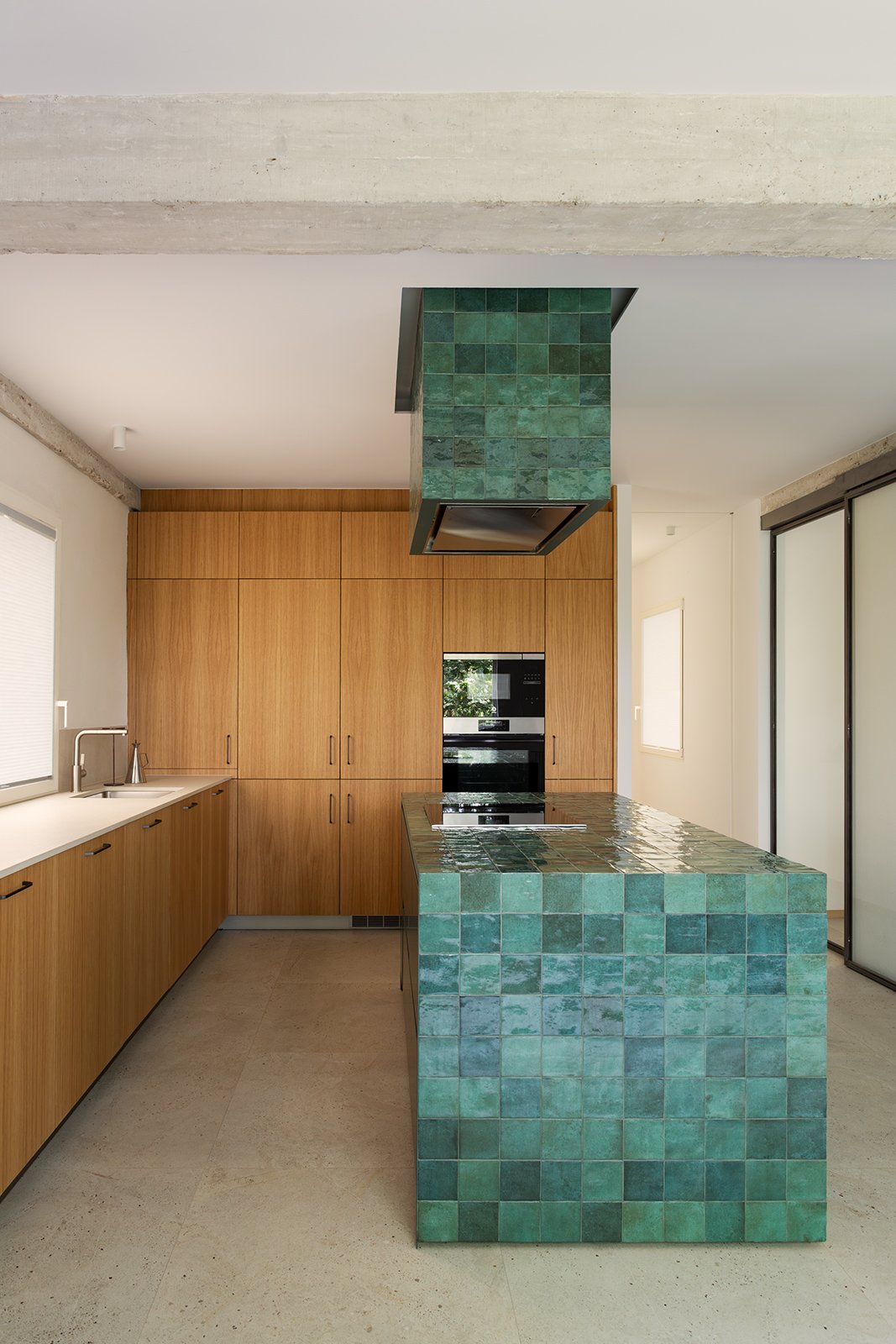
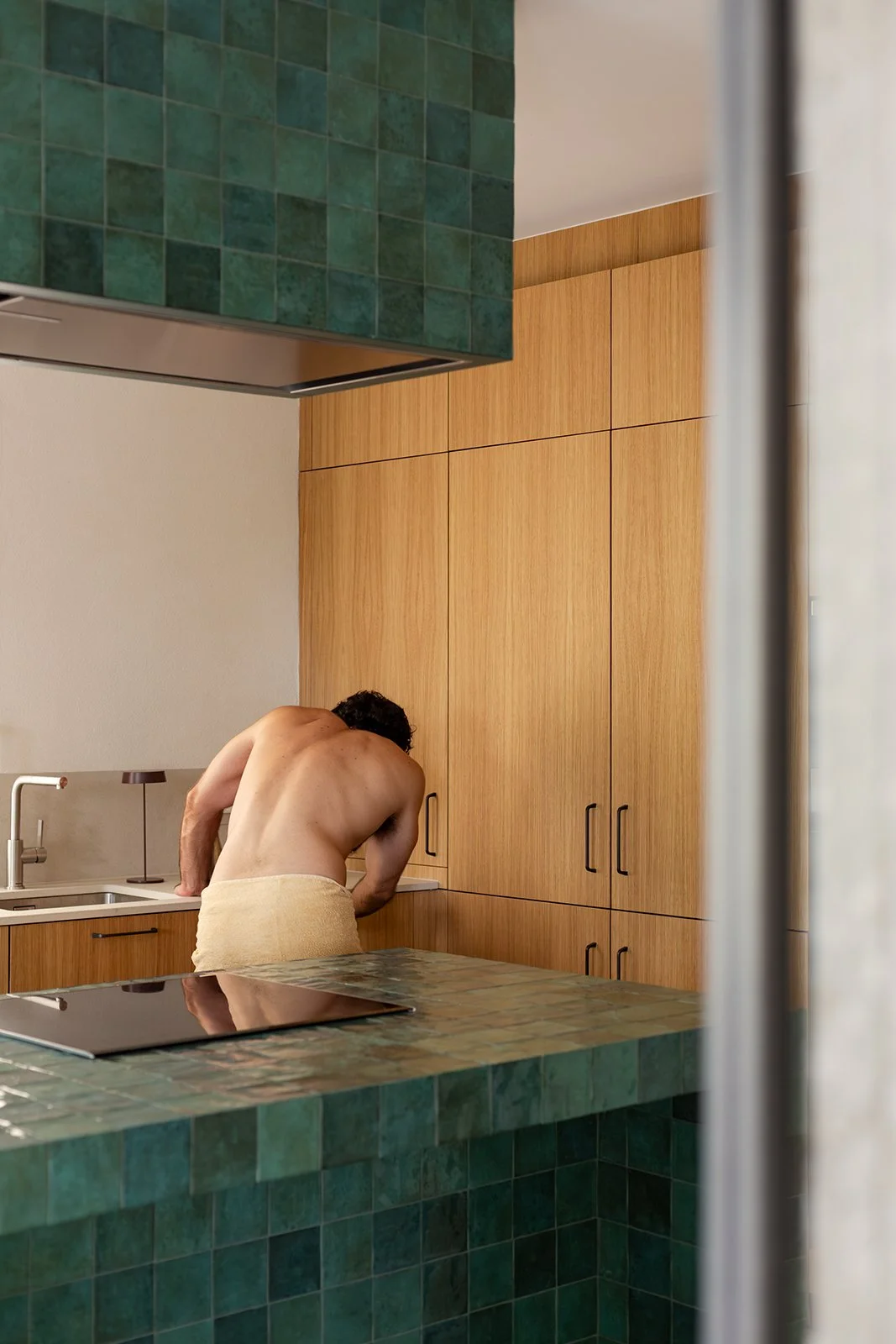
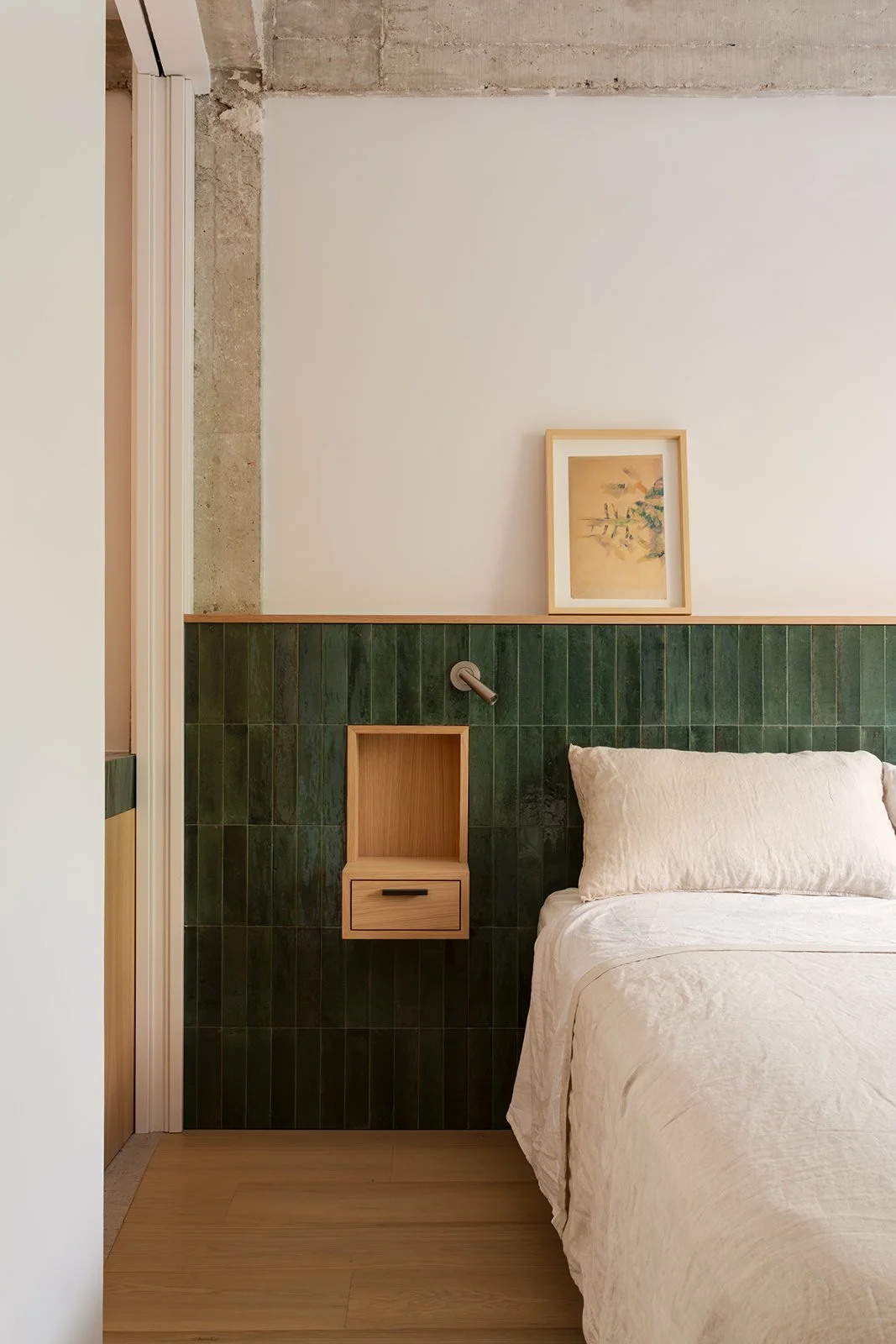
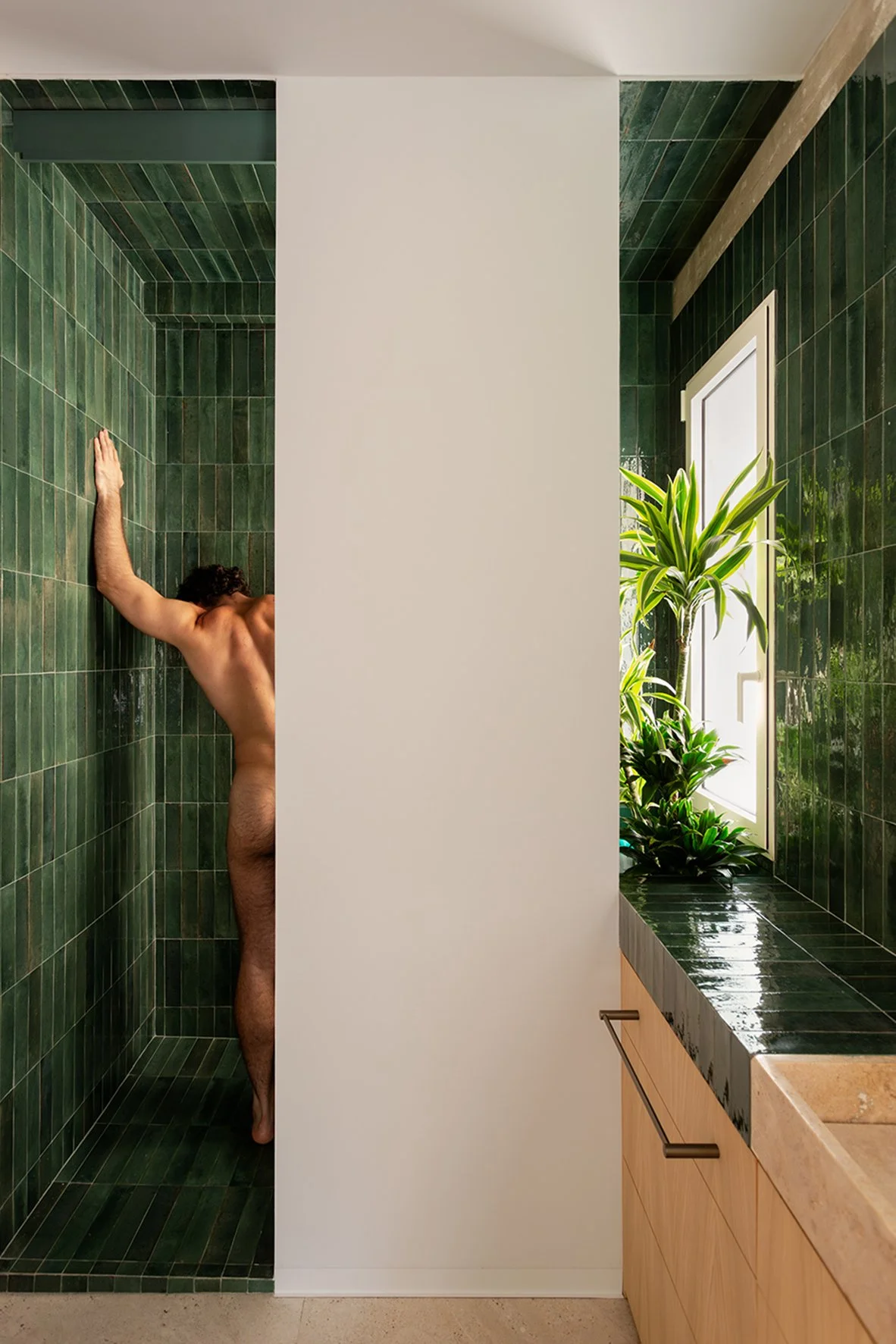
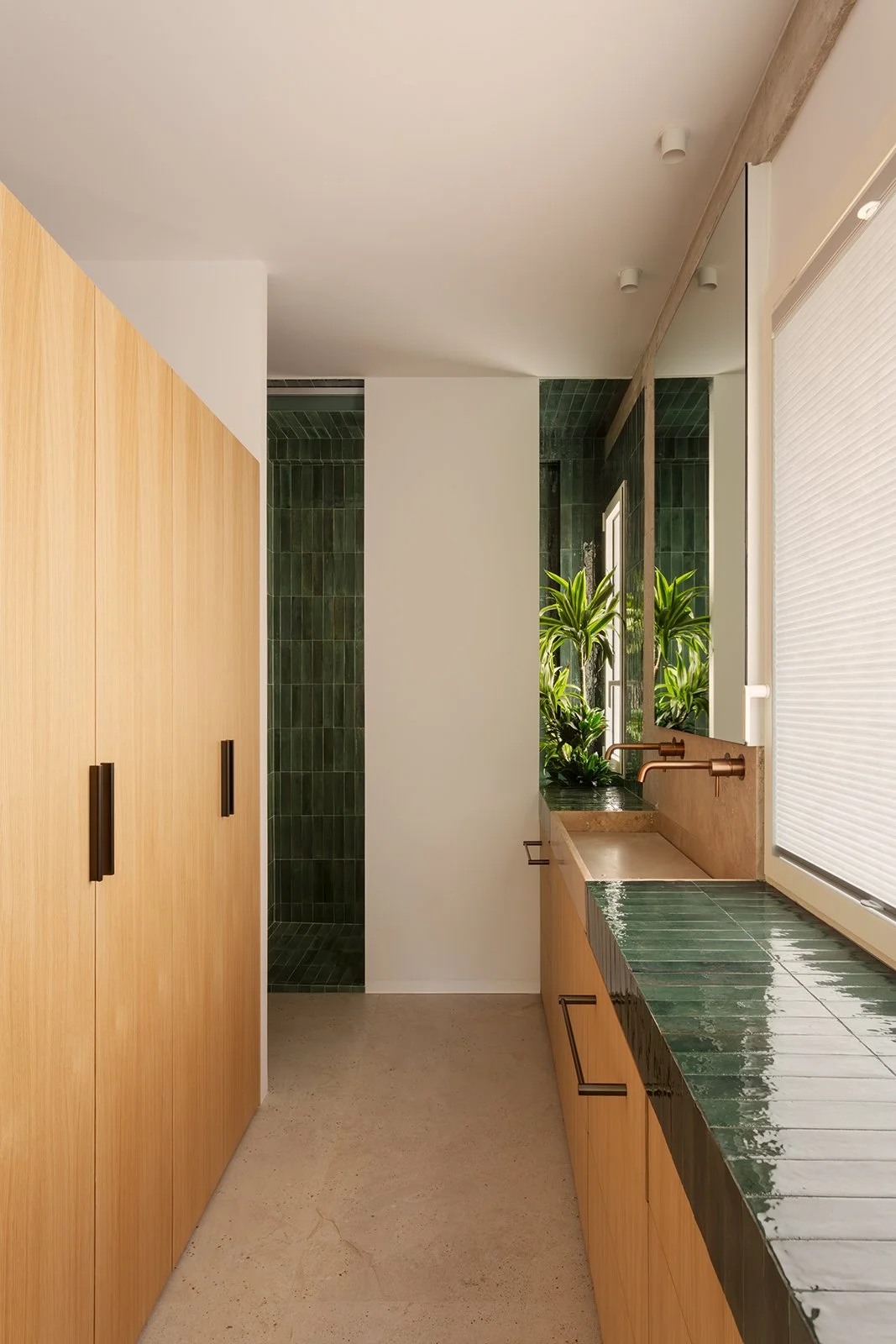
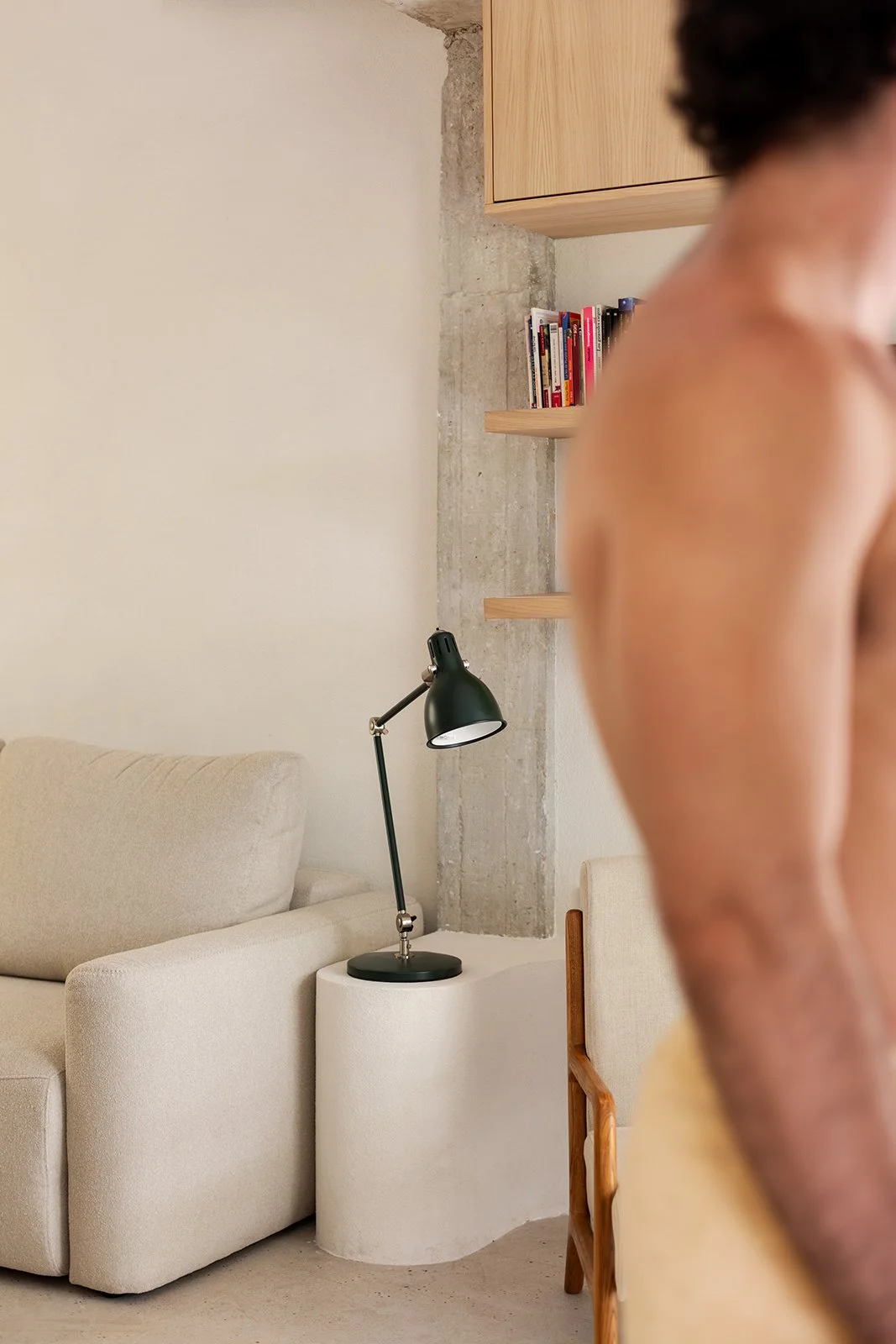
Guarida II by Omar Miranda, Photos by Adrian Cuerdo
GWF: How does your architectural training influence the way you think about scale, proportion, and intimacy?
Studying architecture and art history more broadly has greatly helped me expand my perspective on intimacy and its relationship with scale. I think that an awareness of space and the relationship we establish with it is very important—or sometimes the relationship that space allows us to have—because often space dictates, or is designed to dictate, how we behave within it.
Within the scales I usually work with, I like to play with the proportions of spatial volumes and alter them in specific ways to see how users confront or experience them. For example, I love immensely large showers—expanding these spaces of water as much as possible within domestic environments. In housing, these spaces have increasingly been reduced, almost becoming residual rather than central. I like to give prominence back to this space where the body comes into contact with water, in order to re-signify it.

GWF: When you design an object versus a space, what changes in your creative process?
The crucial difference is that architecture is usually commissioned by a specific client, whereas when you design an object or experiment at another scale you are not imposing its use or enjoyment on anyone. The user can choose whether that object becomes part of their life or not, so in a way I feel more freedom.
The material and technical requirements for carrying out an architectural project are also very different from those of an object, although sometimes I find myself using the same tools and processes. In terms of process, however, I’m not sure the difference is that great. There is usually a premise, a search for something, and then different paths are explored through which an idea gradually takes shape.
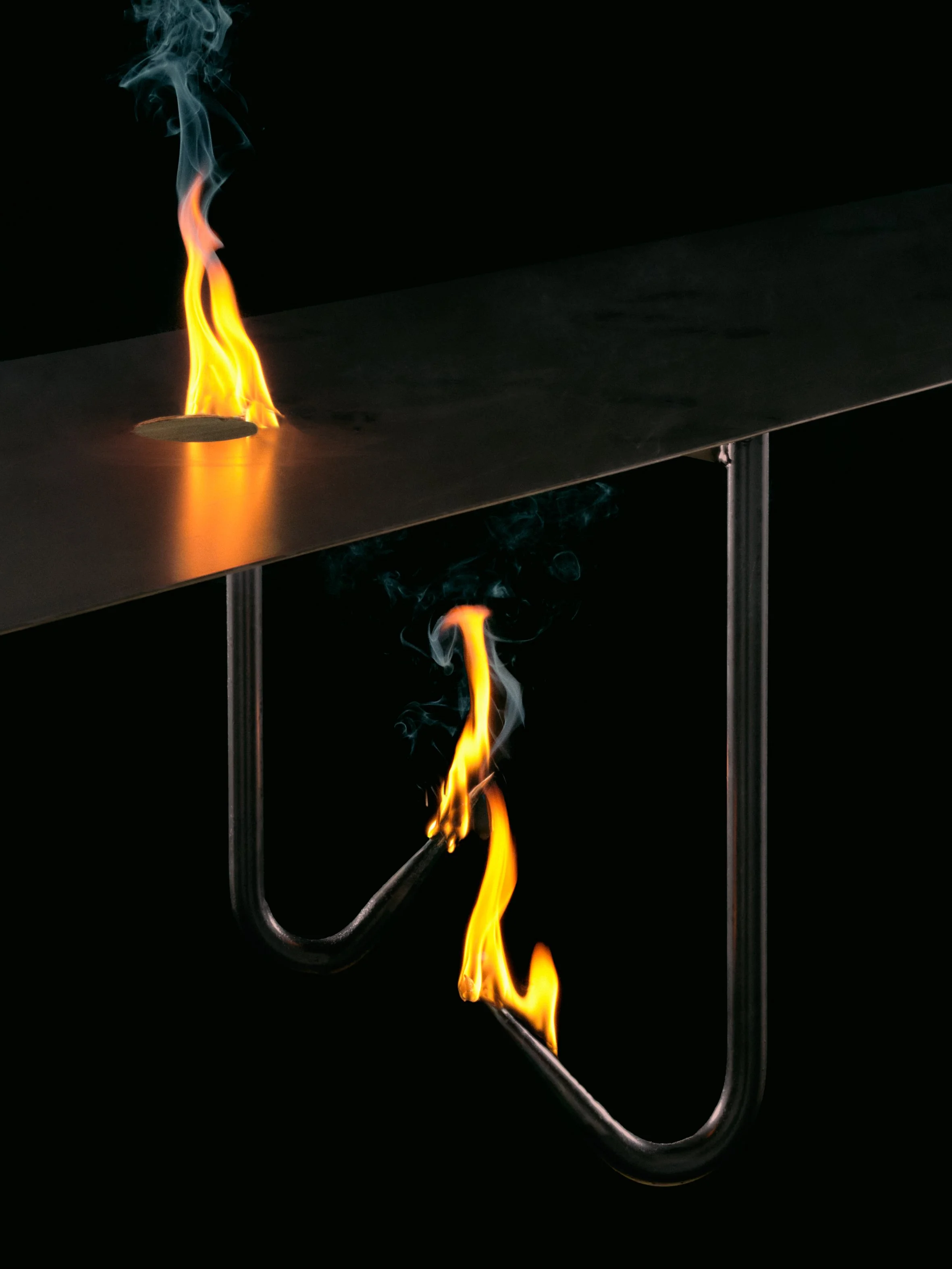
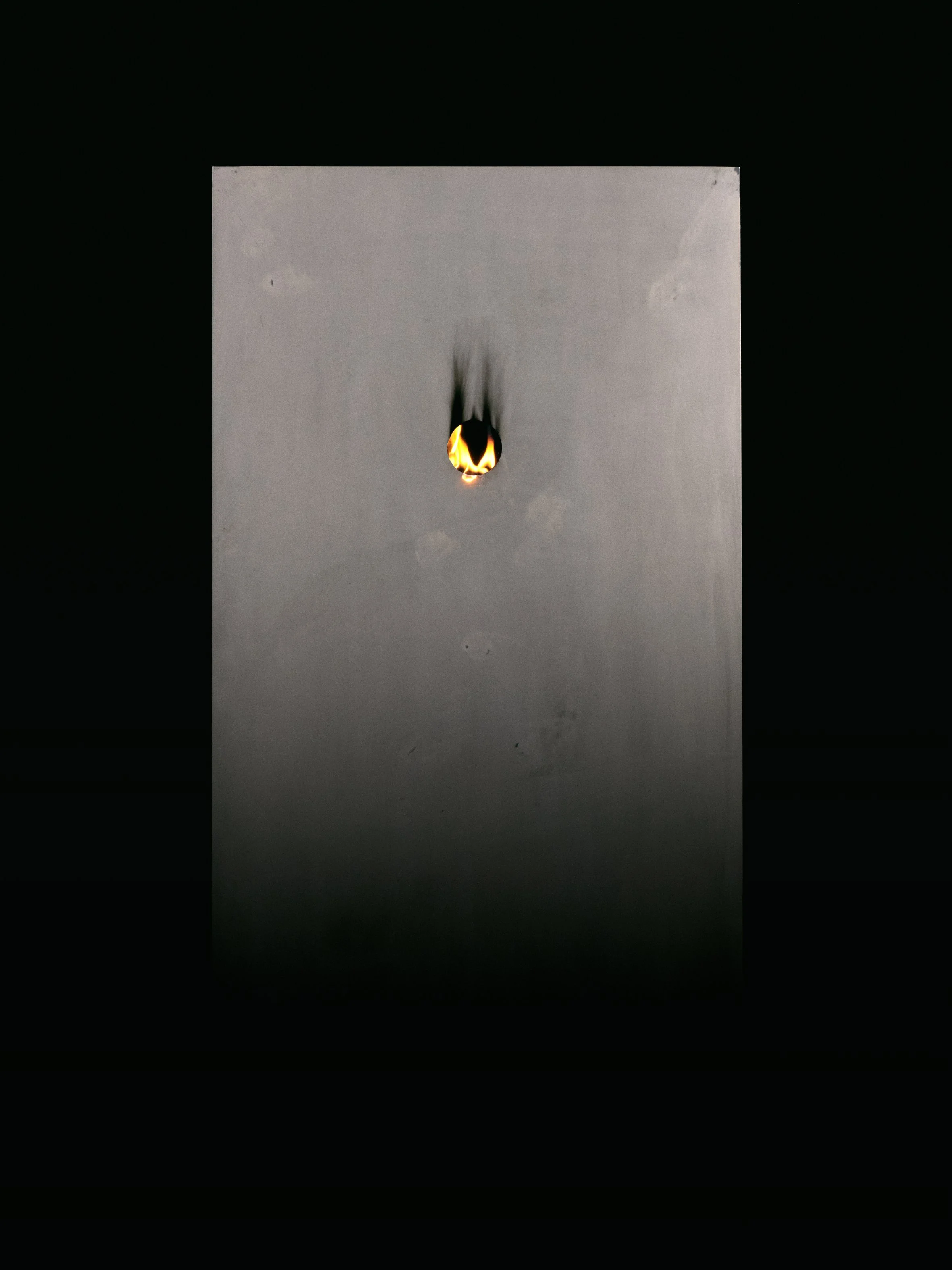
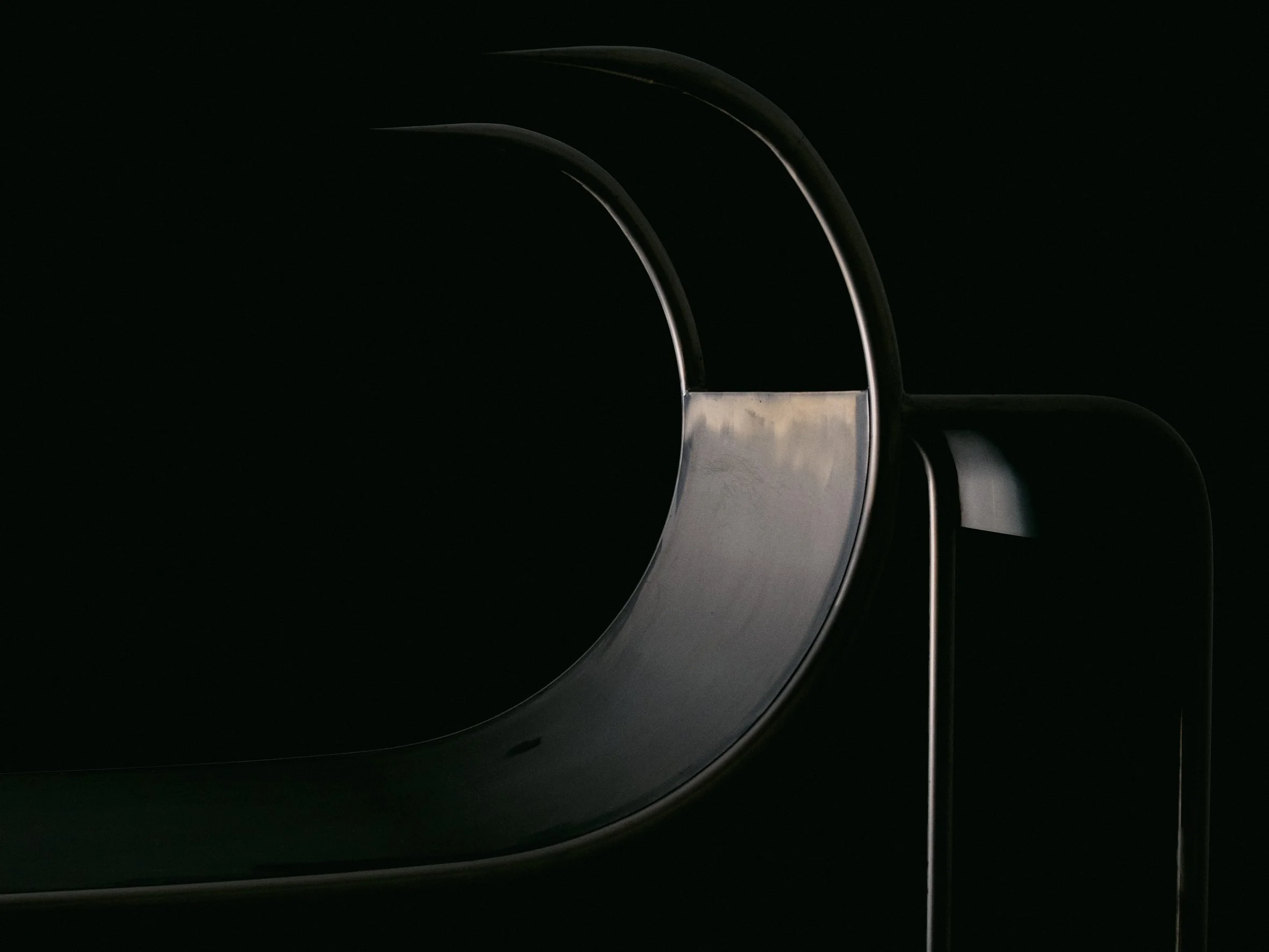
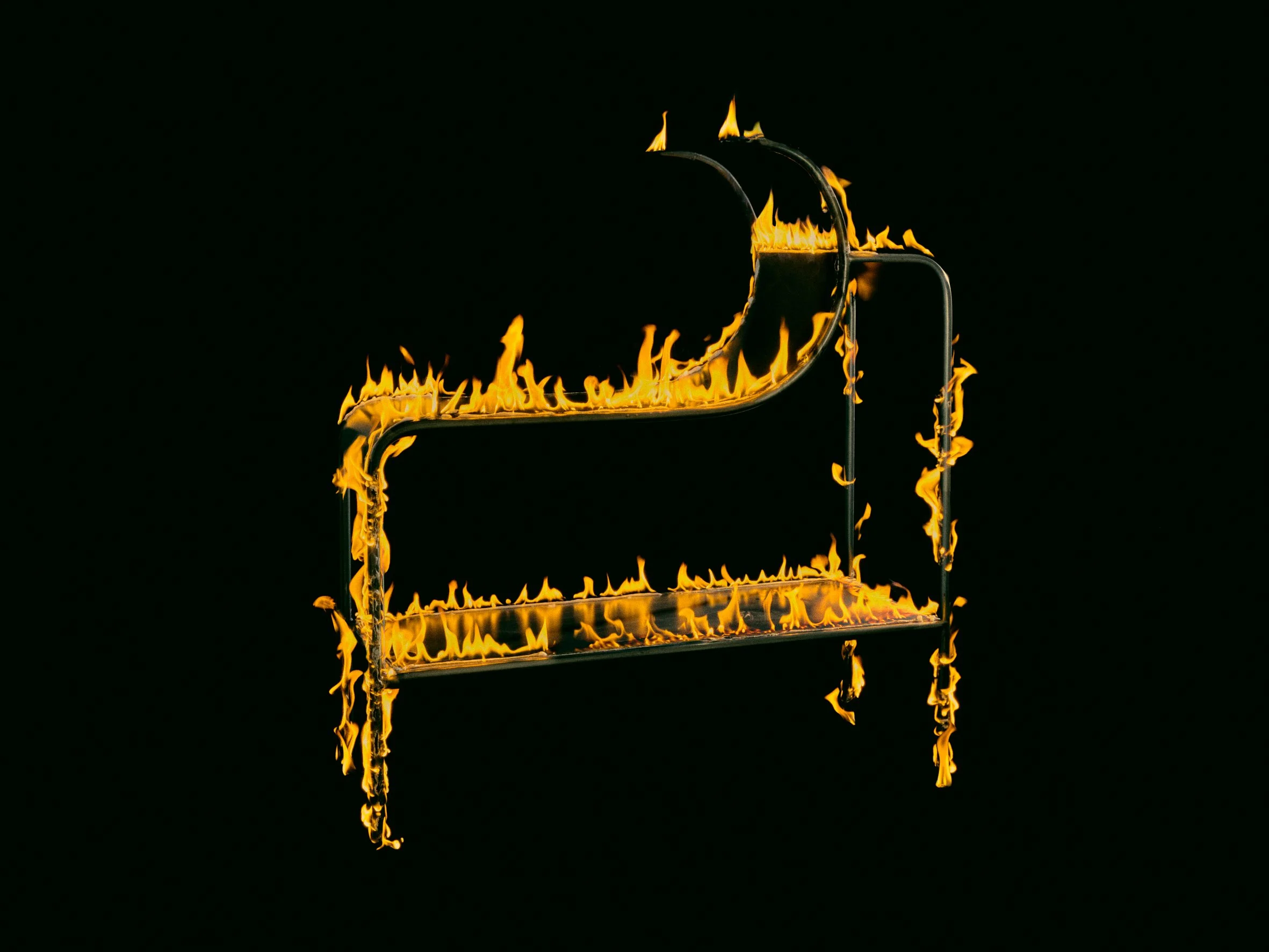
Glory hole furniture by Omar Miranda, Photos by Marcos Alejandro
GWF: Is there a clear boundary in your mind between architect, designer, and artist — or do they naturally merge?
For me there isn’t a clear boundary, and often being between several disciplines helps me in the others. In my case, none of them could exist on their own—I would die of boredom.
Seeing how I approach a more artistic project often helps me understand what I do as an architect and the kind of relationship I establish with it. At the same time, having all these different forms of work and expression active means they are constantly in tension with one another, almost competing. In a way, this keeps them from becoming stagnant—they remain alert, provoking and nourishing each other’s existence.
GWF: Are you more inspired by the human body within space, or by the space that surrounds the body?
For me there is no difference—everything merges. As I mentioned before, what fascinates me most is the inseparable relationship between them: discovering or creating moments in which the body becomes space, and where space becomes pure body.

“There is something about the relationship between the hand and the mind that feels very basic and primordial; they work together in a very direct way”
GWF: When starting a new project, what is the very first step in your process?
I always try to go back to the origin of the question in order to understand what I need to do from the very foundation. I research the paths others have taken in relation to the issue that is being presented to me—studying, reading, trying to understand it, and thinking about how I want to approach it.
It also depends a lot on whether it is something I need to think about on my own or in collaboration with someone else. I love drawing because it helps me think. When I’m collaborating, I really enjoy talking and exchanging ideas—when someone turns something you say into something even better, and vice versa. Ideas become like snowballs, growing larger and more powerful as they move forward.
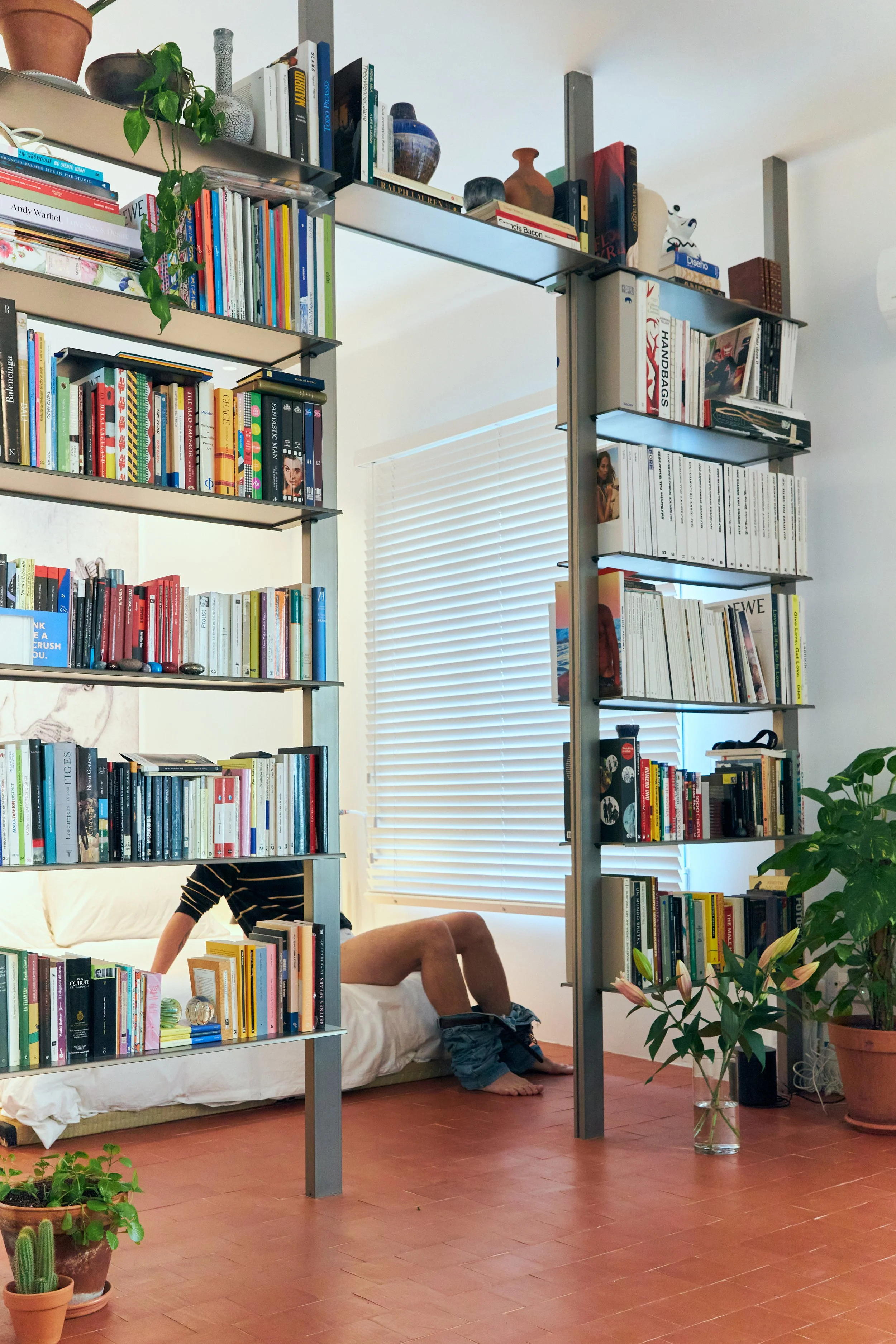
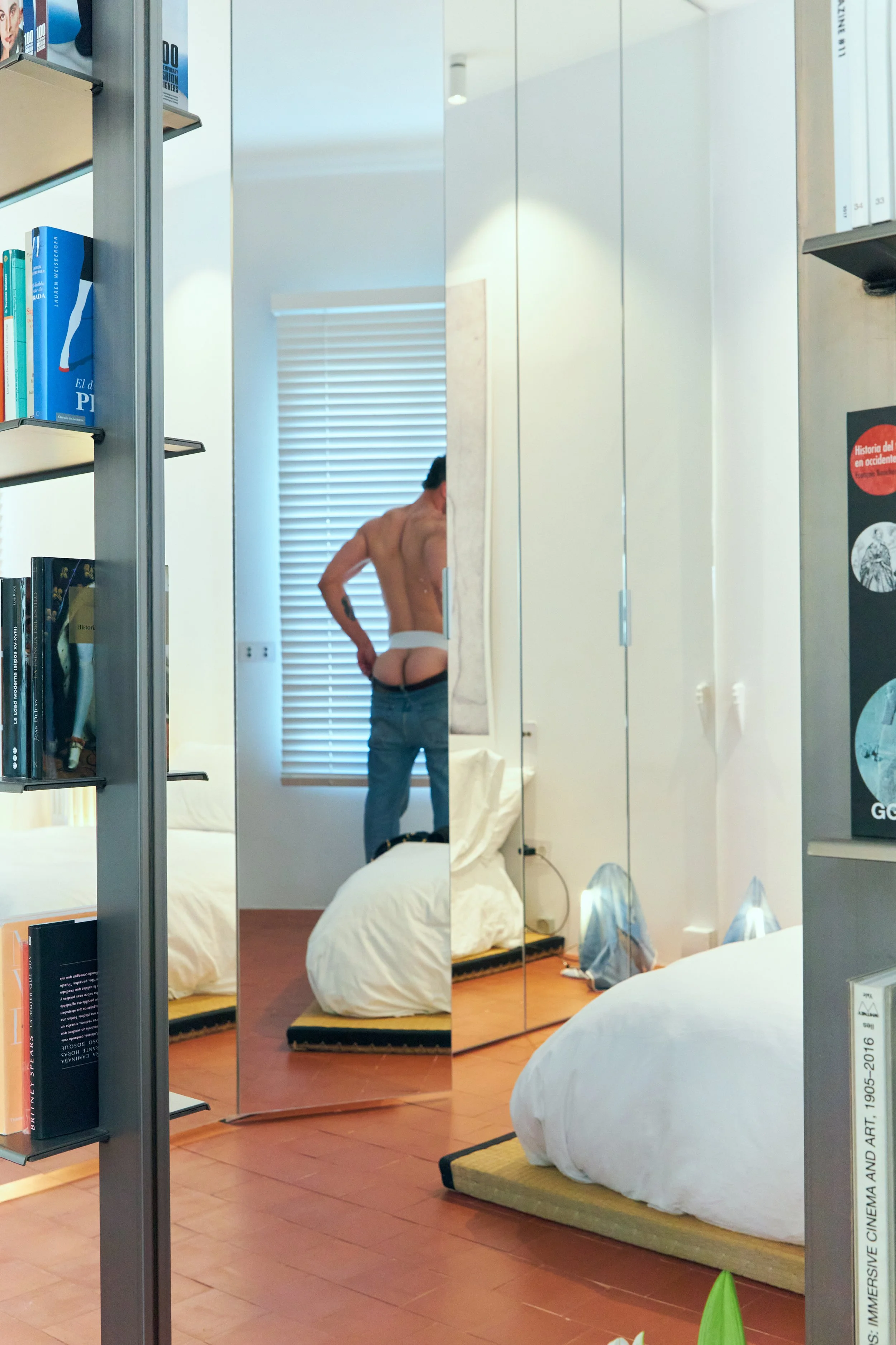
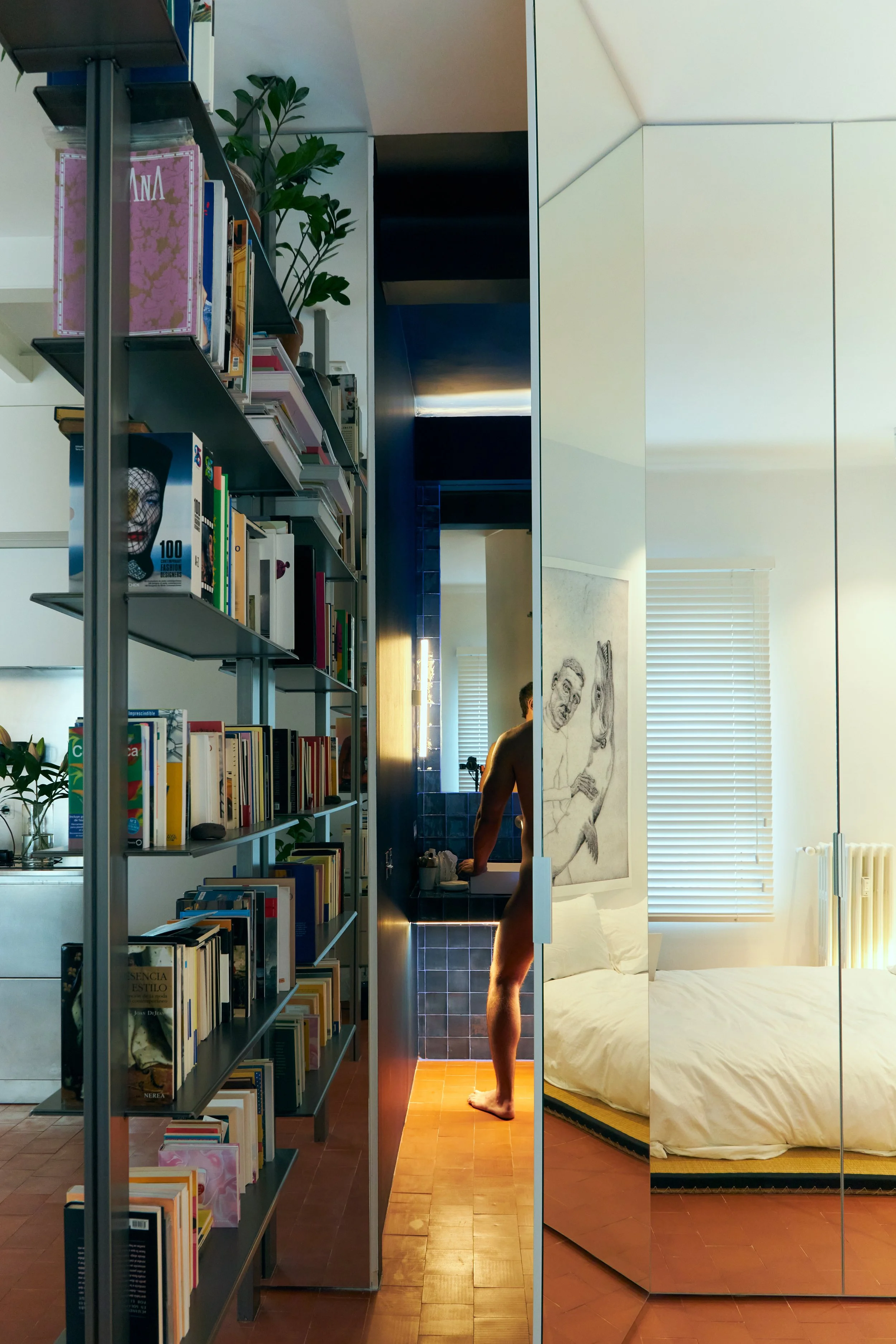
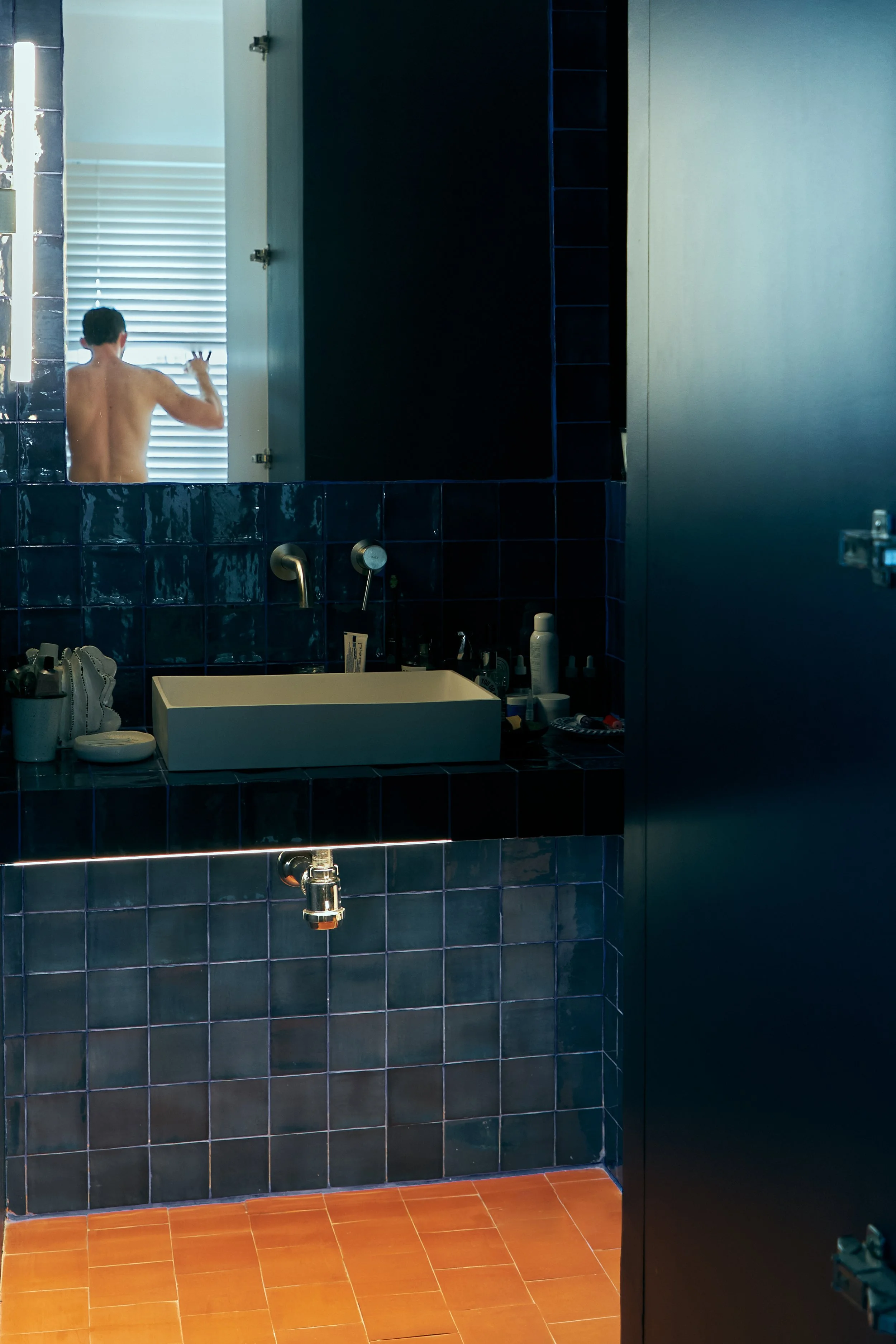

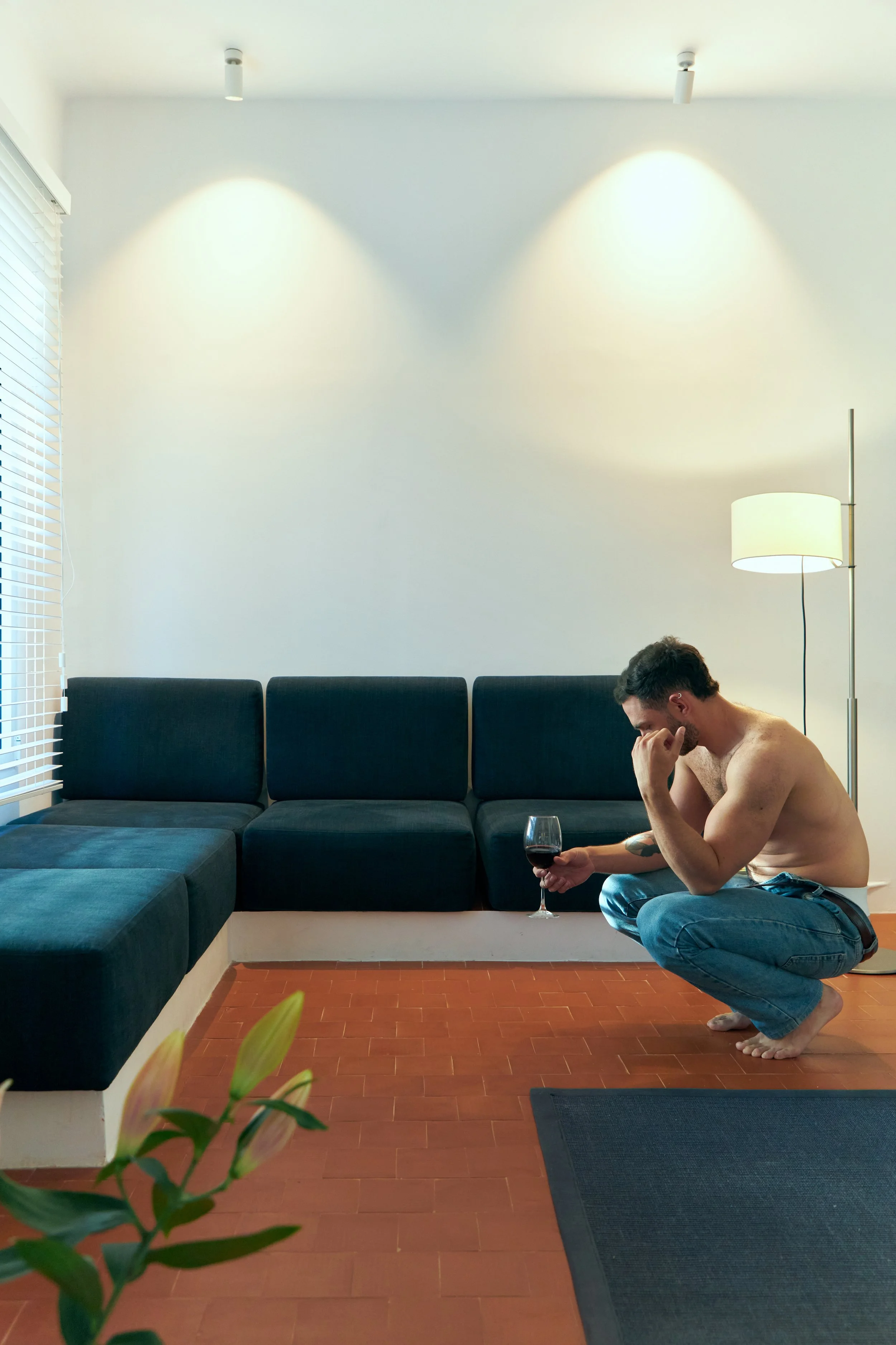
Guarida I by Omar Miranda, Photos by Adrian Cuerdo
GWF: What tools do you rely on most — digital software, hand sketches, physical models?
It depends on the stage of the process, but at the beginning I love drawing by hand—it helps me think. After that, most things become almost entirely digital. Still, there is something about the relationship between the hand and the mind that feels very basic and primordial; they work together in a very direct way.
I’m fascinated by physical models, and I wish I made more of them.
GWF: What materials are you most drawn to, and why?
It’s a difficult question—it’s like asking me for my favourite song; there’s one for every moment. Materials have their own materiality, their own time, and their own form of expression. I like to transform them. For example, in one project I made a table by recycling all the scraped gotelé from the walls.
I love producing my own materials whenever I can and experimenting with them. I think it’s one of the universes that fascinates me the most, because materials have an infinite expressive capacity.
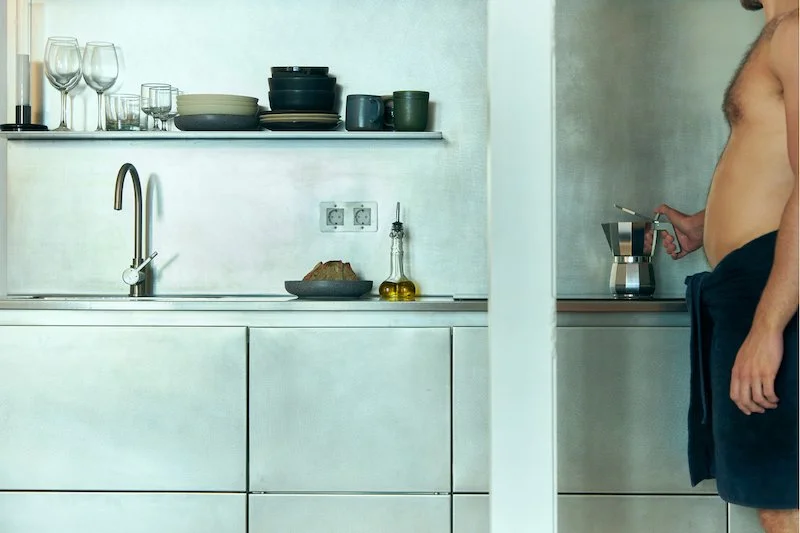
Guarida I by Omar Miranda, Photo by Adrian Cuerdo
GWF: What is the biggest challenge you face when designing for real clients versus creating artistic work?
The biggest challenge is meeting a client’s expectations without betraying your own vision—being satisfied with what you have done despite having very specific and often strict requirements in order to create. It’s about finding the value in the process and understanding where you are being faithful and consistent with your own ideas.
I think the most important thing is honesty with yourself.
GWF: How do you think physical space shapes identity and human interaction?
The physical conditions of a space are fundamental to understanding how people feel within it—not only the space itself, but also the context in which that space exists. Architecture both constructs and frames identity. Architecture in a tropical Latin American context is not the same as architecture in Central Europe or in North Africa; each context produces forms of architecture that manage and shape interactions in different ways.
There are also very specific architectural typologies through which interactions between the same type of people can become radically different. To give two very distant examples: a gay techno club in Berlin and a hammam in Marrakech. Both are leisure spaces, both often occupied by men, and while we might find some points of connection, the practices and ways of inhabiting these spaces are profoundly different because of the architecture that frames them.
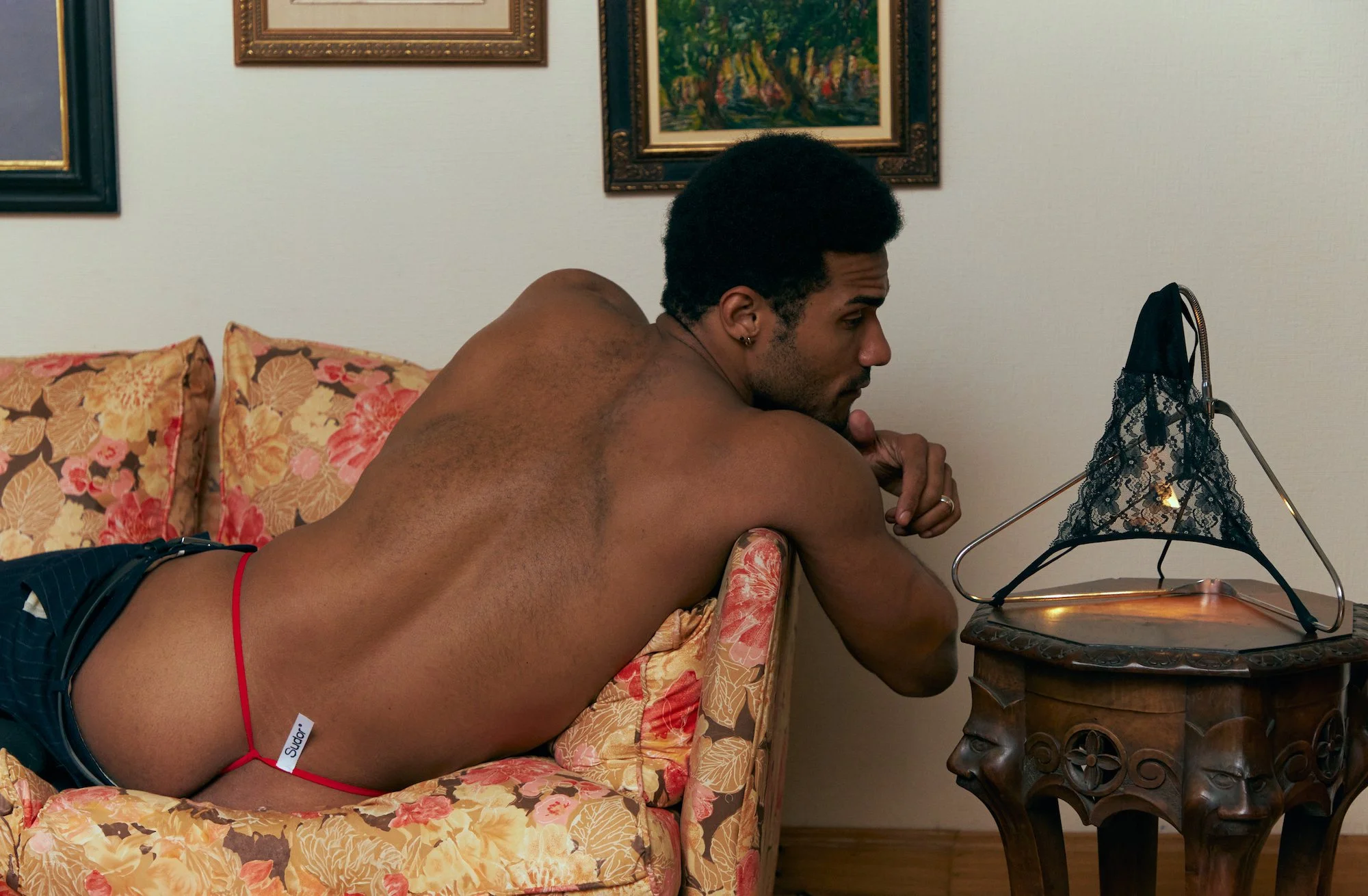
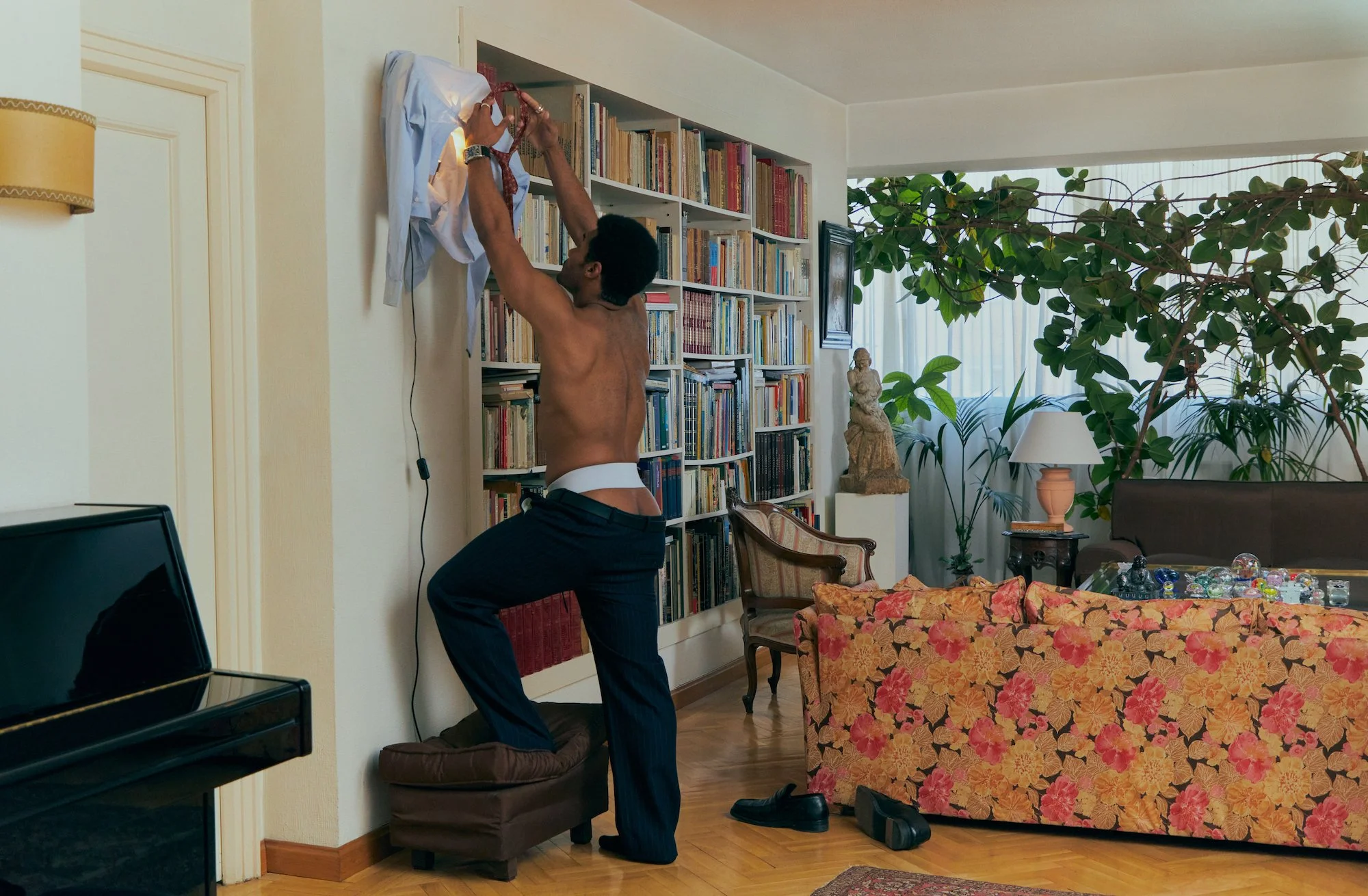
Sudor by Omar Miranda & Ruben Gomez, Photos by Adrian Cuerdo
GWF: Is there a building and a design object, that you consider favourites — and what draws you to them?
There are many objects and buildings that I love—really countless ones. For example, I’m very drawn to industrial buildings because they often allow multiple possible uses. They are like spaces of possibility: almost anything can happen inside an empty power plant. Their dimensions and scale can remind you of a great temple or a monument, but at the same time there are always corners where you can find more intimate, enclosed spaces. There is the well-known case of Ricardo Bofill’s house in a former cement factory, which I find fascinating. I love the reappropriation of these kinds of spaces.
In the world of objects, I’m especially drawn to domestic objects because they are like small sculptures that fulfil a function in our daily lives. Some objects are almost infinite—like the chair. The capacity of a chair to become something new is endless.
I’m also fascinated by objects that change the way we inhabit the world, or help us experience it differently—like a hammock, which makes us hang, sway, and move. There is something playful about these kinds of objects, something almost childlike, that I find deeply captivating.
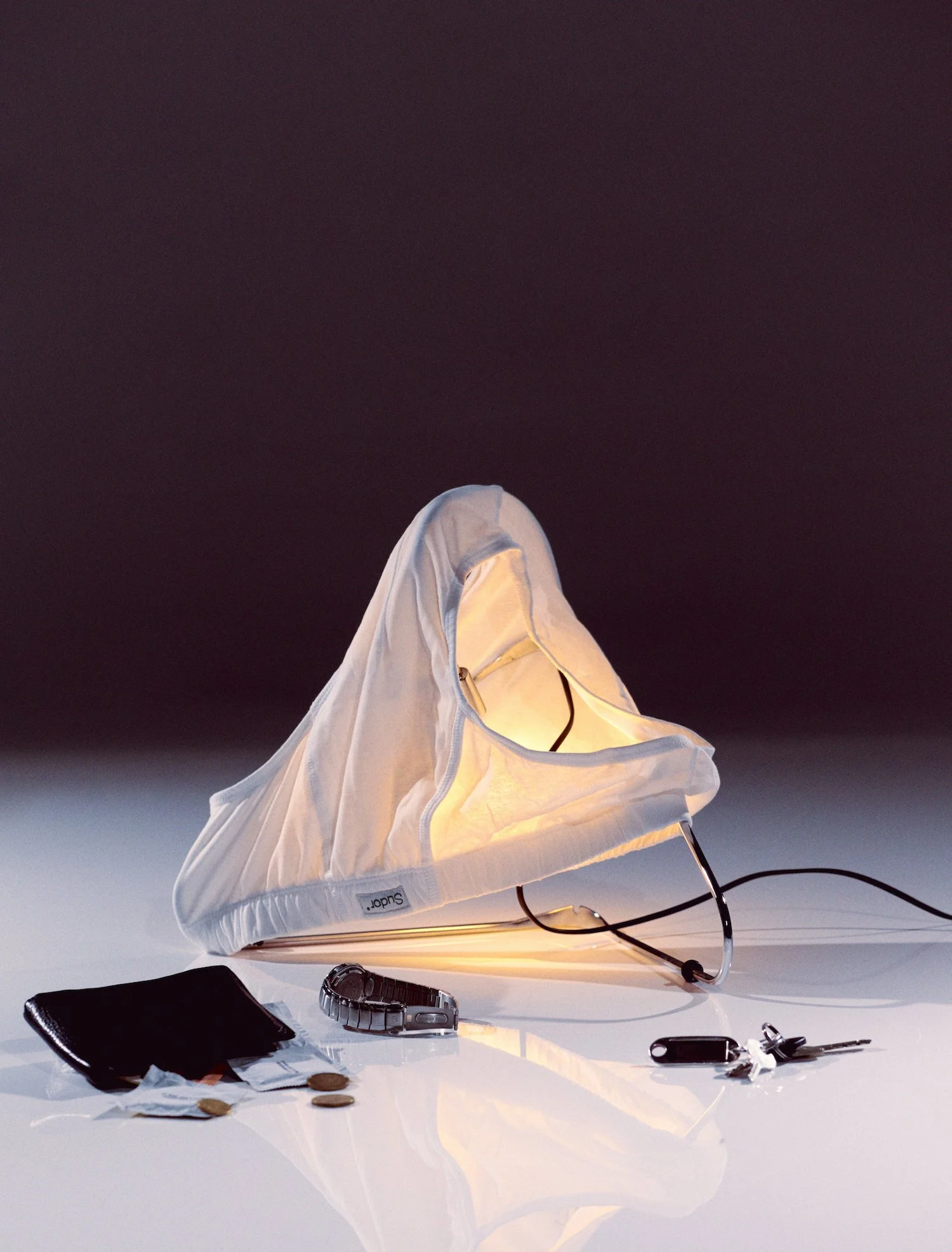
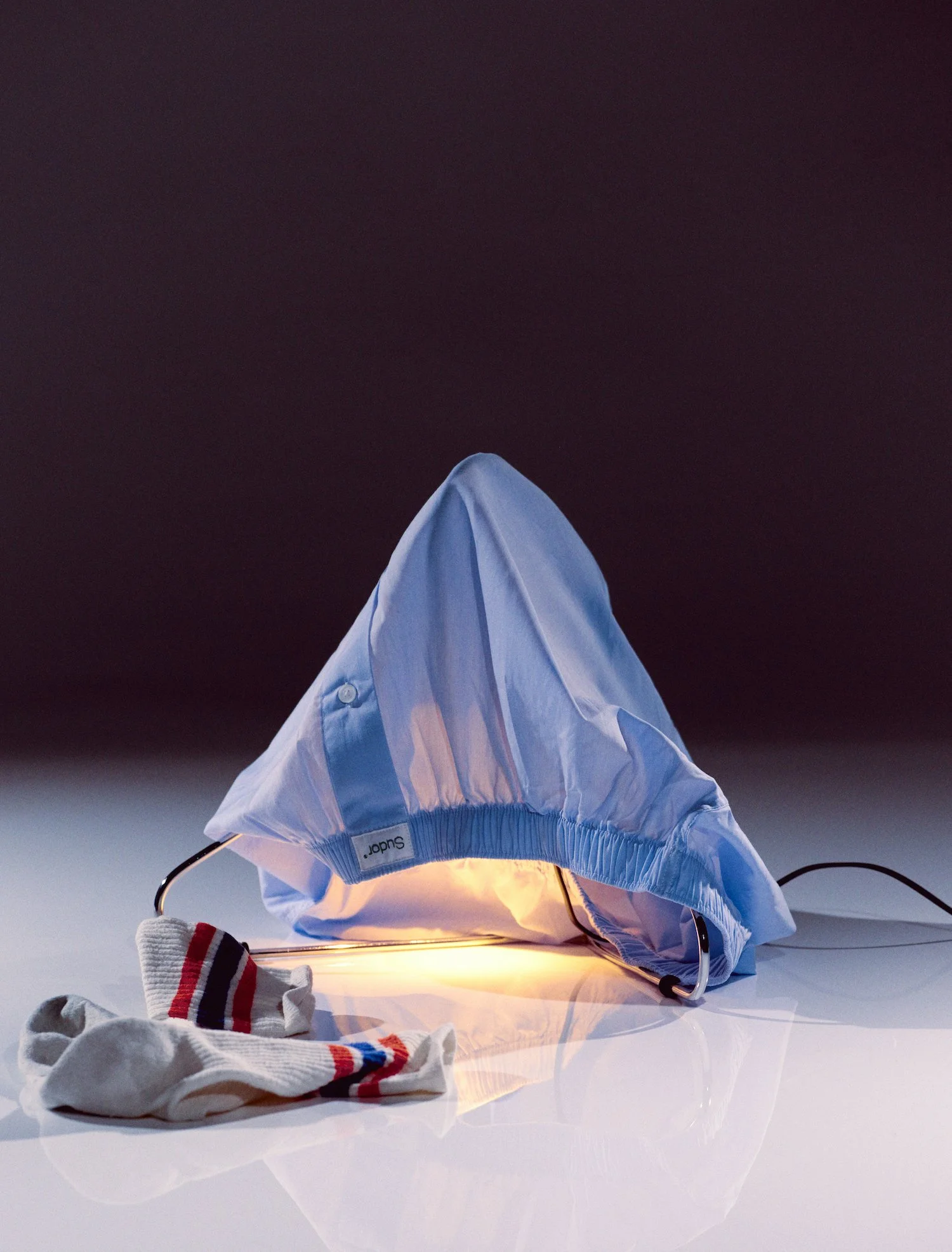
Sudor by Omar Miranda & Ruben Gomez, Photos by Adrian Cuerdo
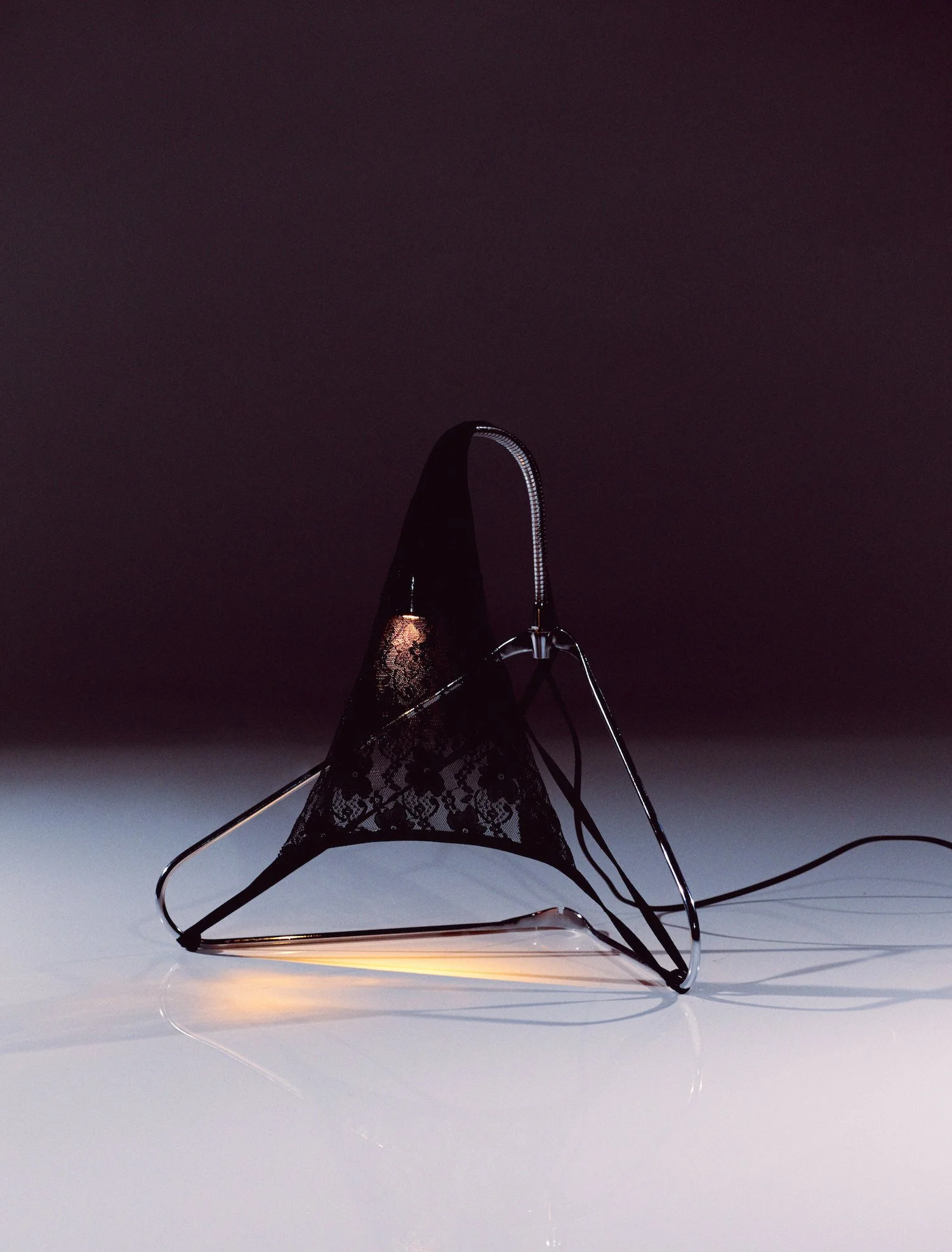
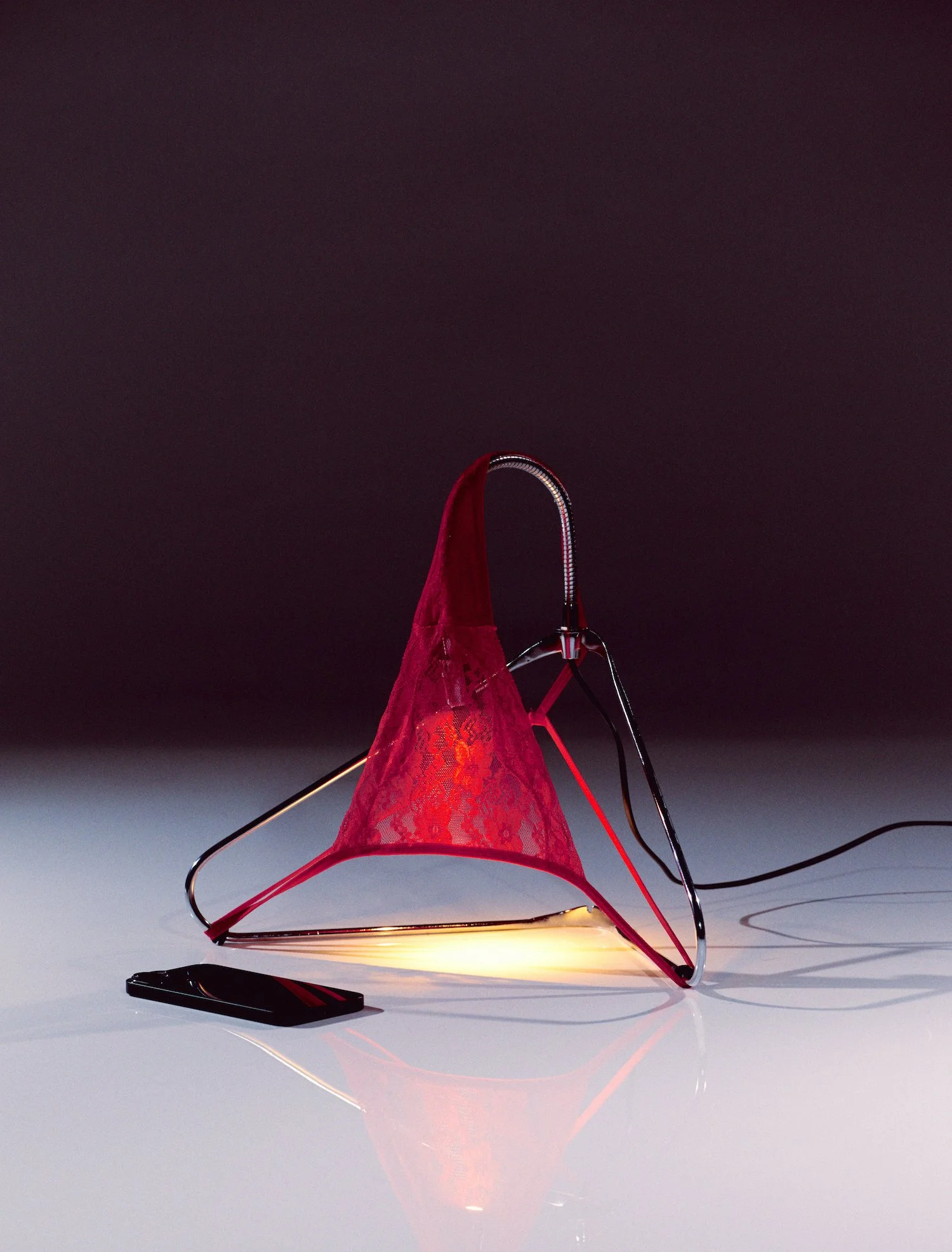
GWF: Some of your most striking objects are the underwear table lamps you’ve created. Since underwear is such an intimate, body-close garment, how did the idea of transforming it into lighting objects emerge?
This is a project developed together with Rubén Gómez, who is one of the people I most enjoy thinking and creating with. We feed each other’s ideas very naturally and create the kind of “snowball effect” I mentioned before, where ideas grow as they move between us.
The lamp emerged from the desire to design a lamp together, and it has several origins. I think the most direct one came from a conversation about domestic gestures—about handkerchiefs, and the gesture of softening or filtering light with a piece of fabric when it feels too harsh. We started thinking about how beautiful it would be if that simple gesture could happen with the clothes you return home with, sweaty from the street—after work or after leaving a club late at night. You arrive home exhausted, take off your clothes, and throw them over this structure, which works almost like a hanger. In that way, the light that accompanies you when you come back home carries something of the outside world. The light becomes softer, preparing the atmosphere for domestic retreat—for rest, for sex, for whatever might come next.
“…decision to use underwear also relates to the idea I mentioned before about the Arab roof tile”
I also remember that we were looking at many early twentieth-century lamps, for example some designed by Adolf Loos—structures covered with fabric garments, something very simple but also very sophisticated.
The final decision to use underwear also relates to the idea I mentioned before about the Arab roof tile: transforming a part of the body into an object. Underwear is designed to cover our pelvis; in a way, the lamp also becomes a pelvis. It is a fragment of the body turned into an object that accompanies us and illuminates us.
Follow Omar on Instagram @omar_amor__ @omarmiranda_studio @s_u_d_o_r_

@omar_amor__ by @papagnimega
