
ADAM KRAFT: When the Photographer Becomes His Own Muse
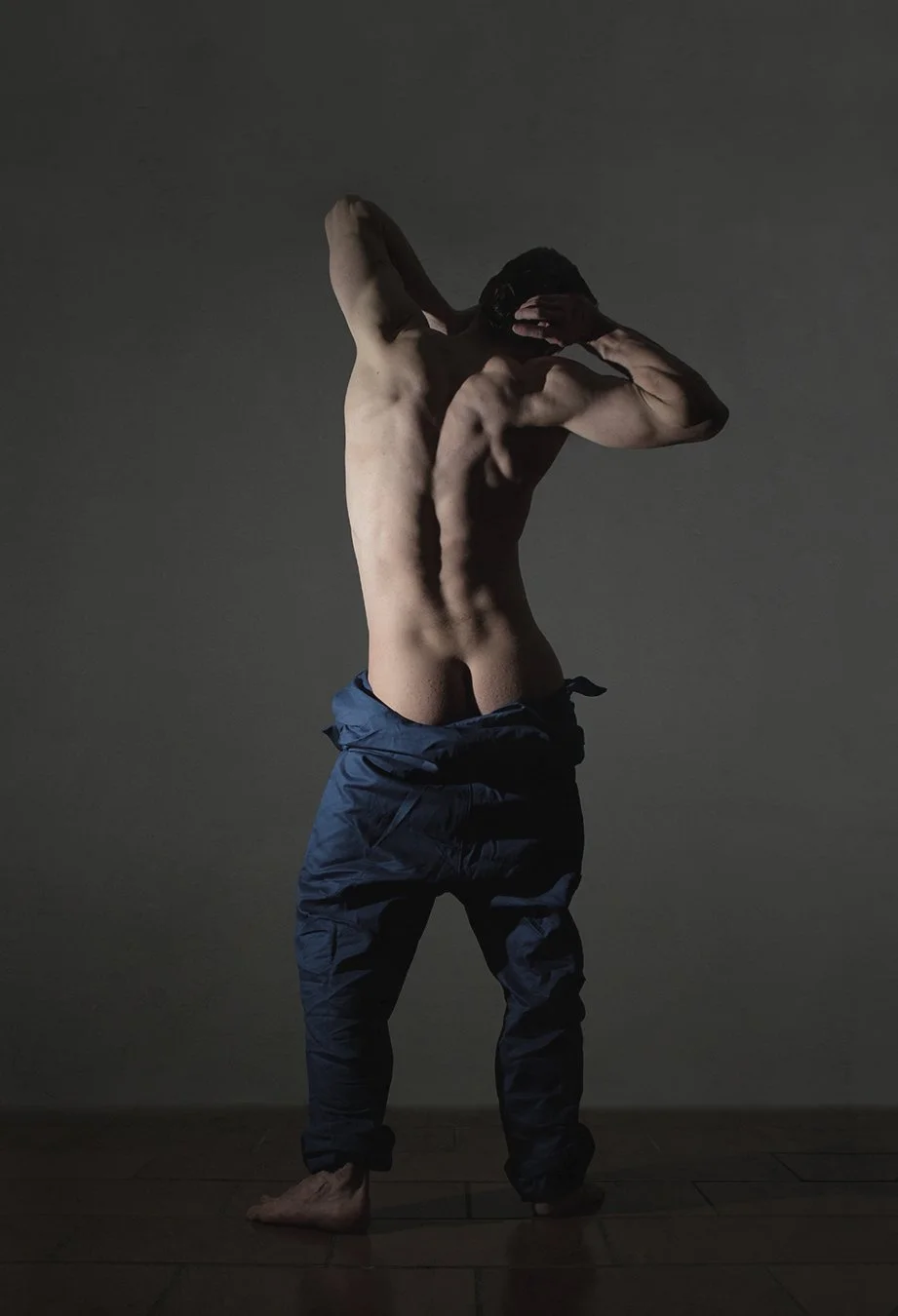
Photographer Adam Kraft turns the camera on himself, creating intimate self-portraits that blend erotic tension, classical art influences, and dramatic chiaroscuro lighting. In this interview, he reflects on discipline, vulnerability, and the creative freedom of becoming both artist and subject.
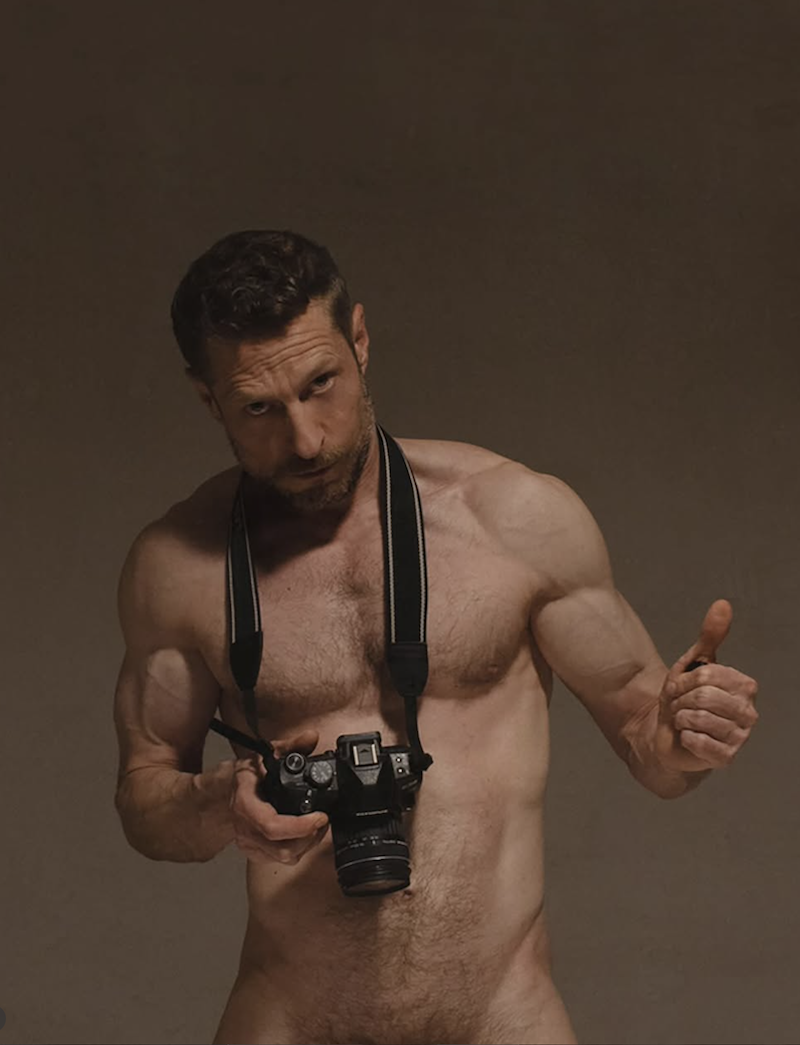
GWF: Tell us about the creative journey that led you to focus on self-portraiture.
As a child, I was obsessed with dance and the performing arts, but my parents didn’t foster that interest, and I was too shy and insecure to push for dance classes. Later, I studied art and photography. I was never interested in making big statements about “the state of the world.” I’ve always focused on expressing my own emotions, first through landscapes and still lifes.
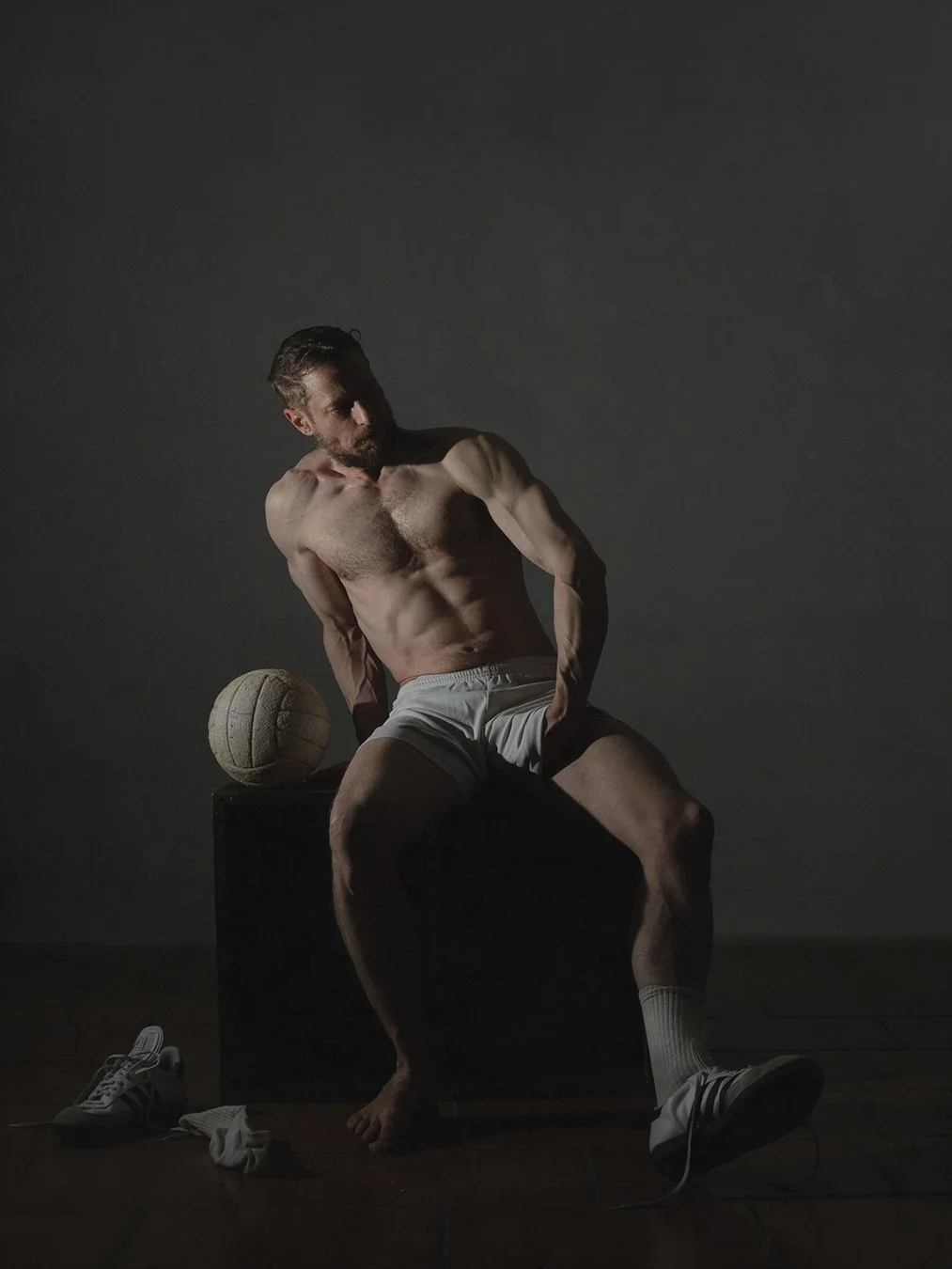
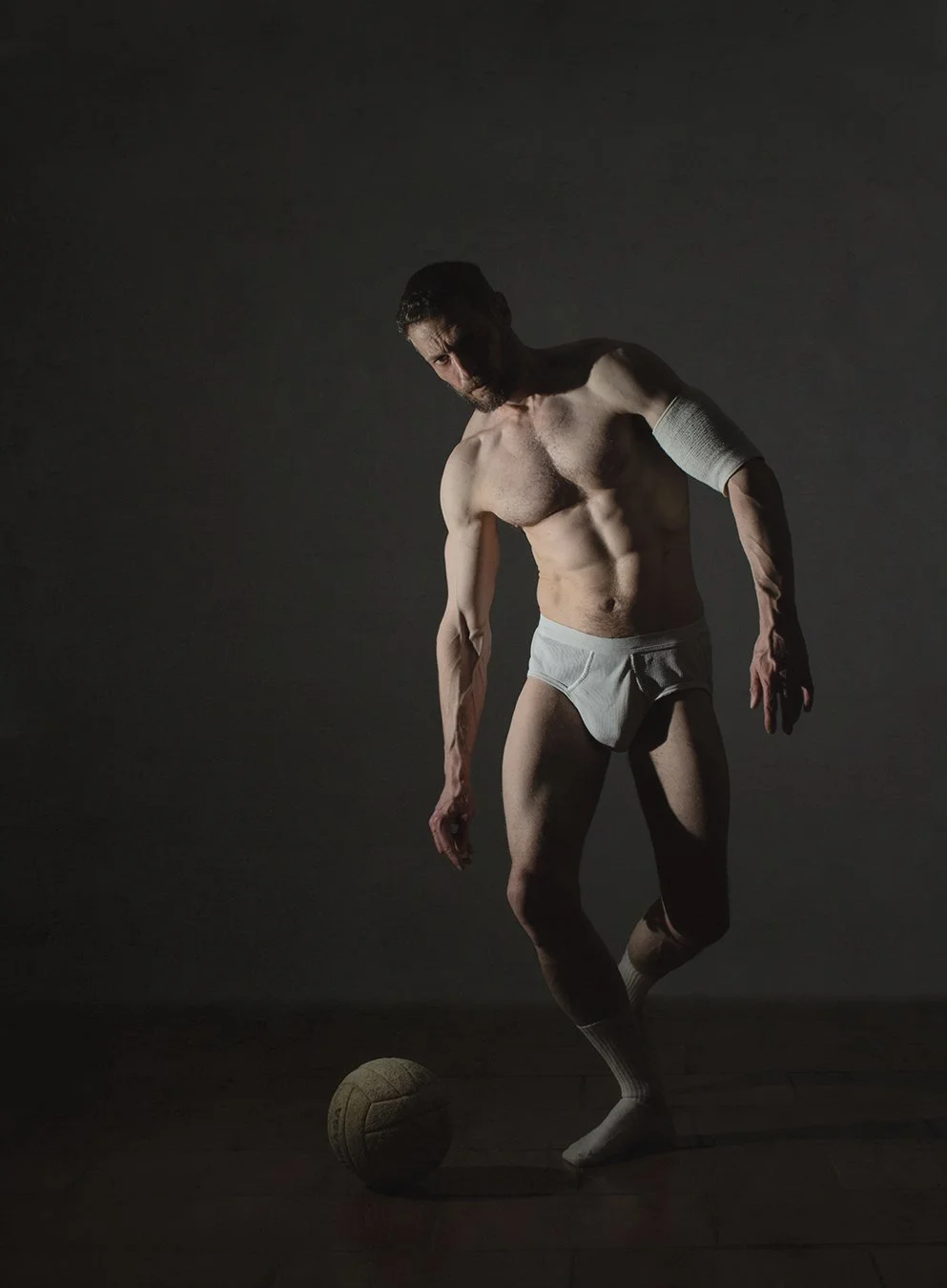
By the way, I think my flower compositions are great works and reveal a lot about me. One might argue that classic self-portraits are the lowest form of self-expression. But then the era of social media and gay dating apps began and my flowers didn't attract that many guys... That’s when I started taking pictures of myself. Naturally, I used the same sense of aesthetics and the same kind of lighting that I had already used for my still lifes.

GWF: How has working solo in front of the camera shaped your relationship with your own body and identity?
That’s not easy to answer, but I’ll give it a try. You might want to think twice before you take pictures of your body. You might feel great about yourself, but it can also be a painful experience. There are many factors involved: theme, location, lighting, body angle, facial expression, and of course body shape.
I’d be lying if I said I didn’t care about low body fat and building muscle. I’m definitely not free from the pressures that come with ideal body images. For every good picture you produce, you will also produce a bunch of bad ones. But if you persist, there will eventually be a good one—and that motivates you. Working in front of the camera has also made me much more aware of food and nutrition. I cook my own meals, eat clean, and drink less alcohol. I work out four times a week. That’s great, and I never managed to do that before. I thrive on discipline, and it has changed my body shape.
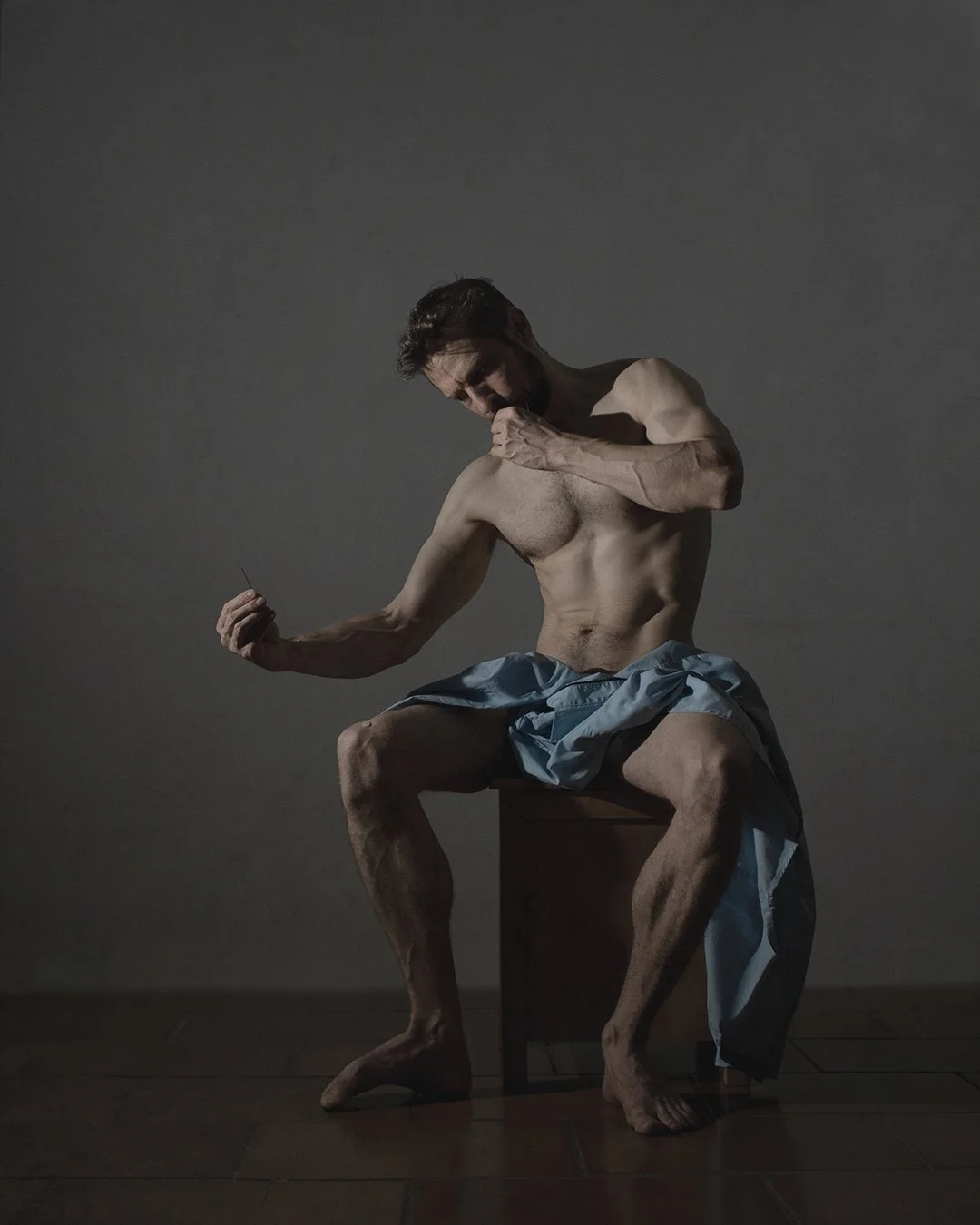
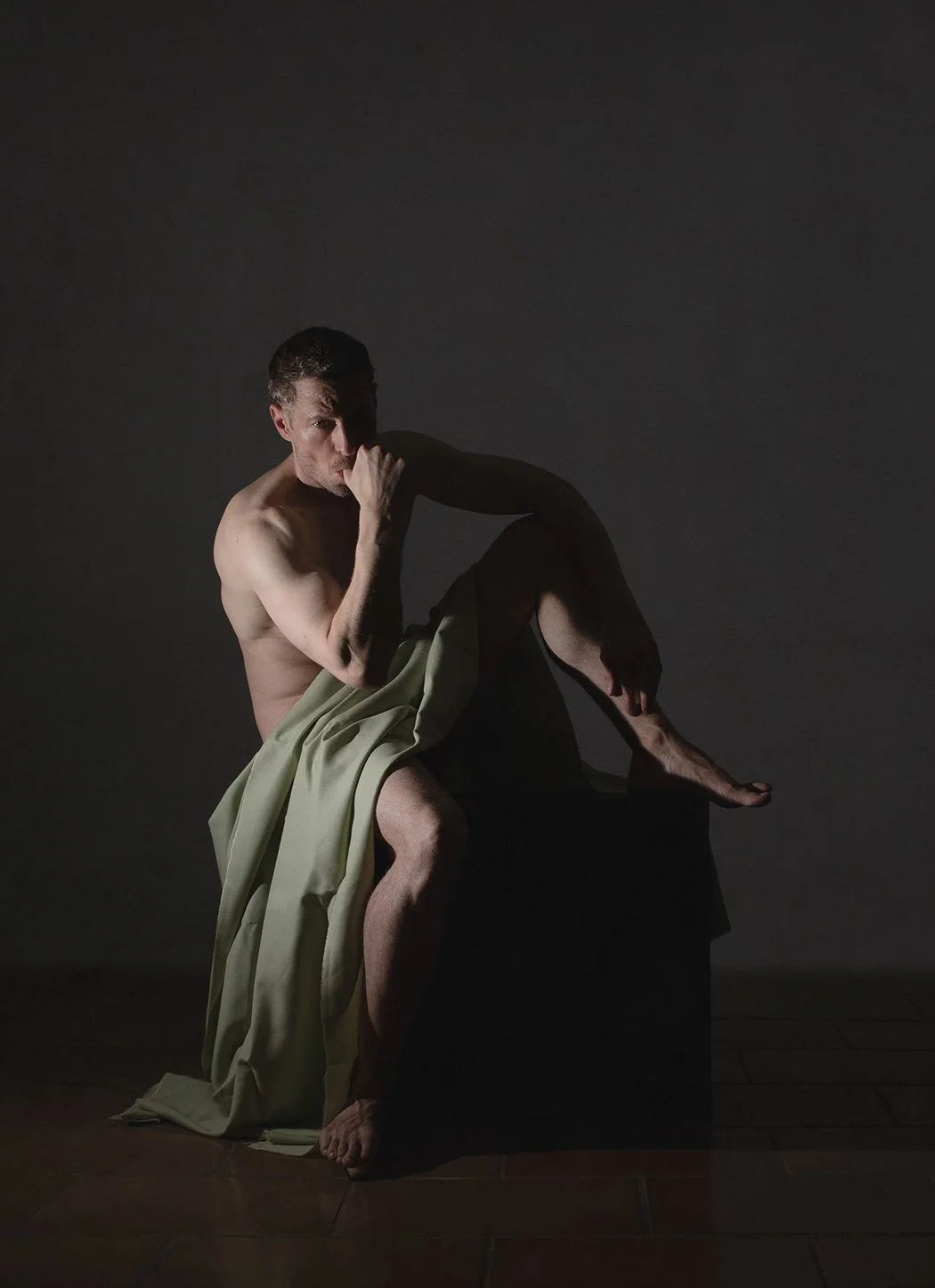
GWF: Many artists explore the nude form, but your work balances sensuality and artistry. How do you approach that balance in your self-portraits?
If you’re not just the photographer but also the model, it becomes very intimate and perhaps more “honest.” I won’t do things I don’t feel like doing, and I won’t fake a smile because a photographer asks me to. I bring my own themes and fantasies, sometimes inspired by paintings, stories, and myths, and I won’t stop until I get it right. I can be very relentless, and I wouldn’t feel comfortable putting a model through this.
I don’t like the term “photoshoot,” but let’s say I have one at night at my place. It starts with a routine of preparations—moving things around and setting up equipment. Then I’ll have an energy drink and do a short home workout to feel more physical. It’s a good idea to practice sexual abstinence for a while. It changes your mood and your energy.

When I finally turn on the big light, it can be an amazing feeling, almost like being on stage. Do you remember what I said earlier about the kid who wanted to perform? It suddenly makes a lot of sense to me. It’s physically demanding, liberating, and totally satisfying. I love falling asleep afterward.

GWF: OnlyFans allows for more personal and intimate distribution of content. How has that platform influenced your creative freedom compared to Instagram or traditional galleries?
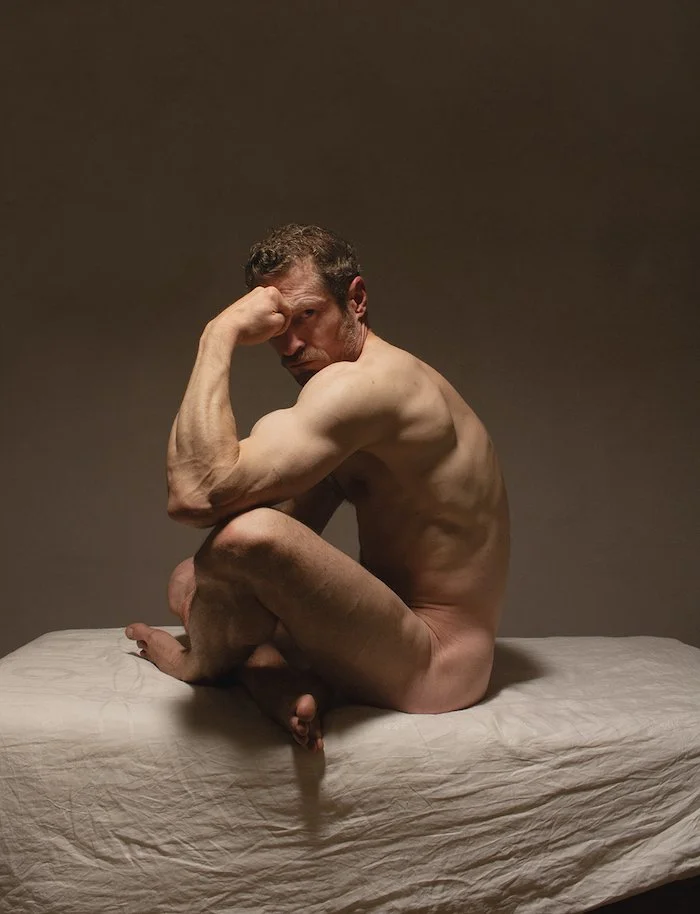
Well, obviously I’m allowed to show more nudity and be more explicit. I like to think of it as a take on Renaissance and Baroque paintings. Those are full of naked men in various situations, showing bare butts and pubic hair. I’ve heard that museums in Vienna share an OnlyFans account so they can show artworks that wouldn’t be allowed on Instagram because of showing too much flesh. An interesting move that sparks a conversation about art, adult content and censorship.
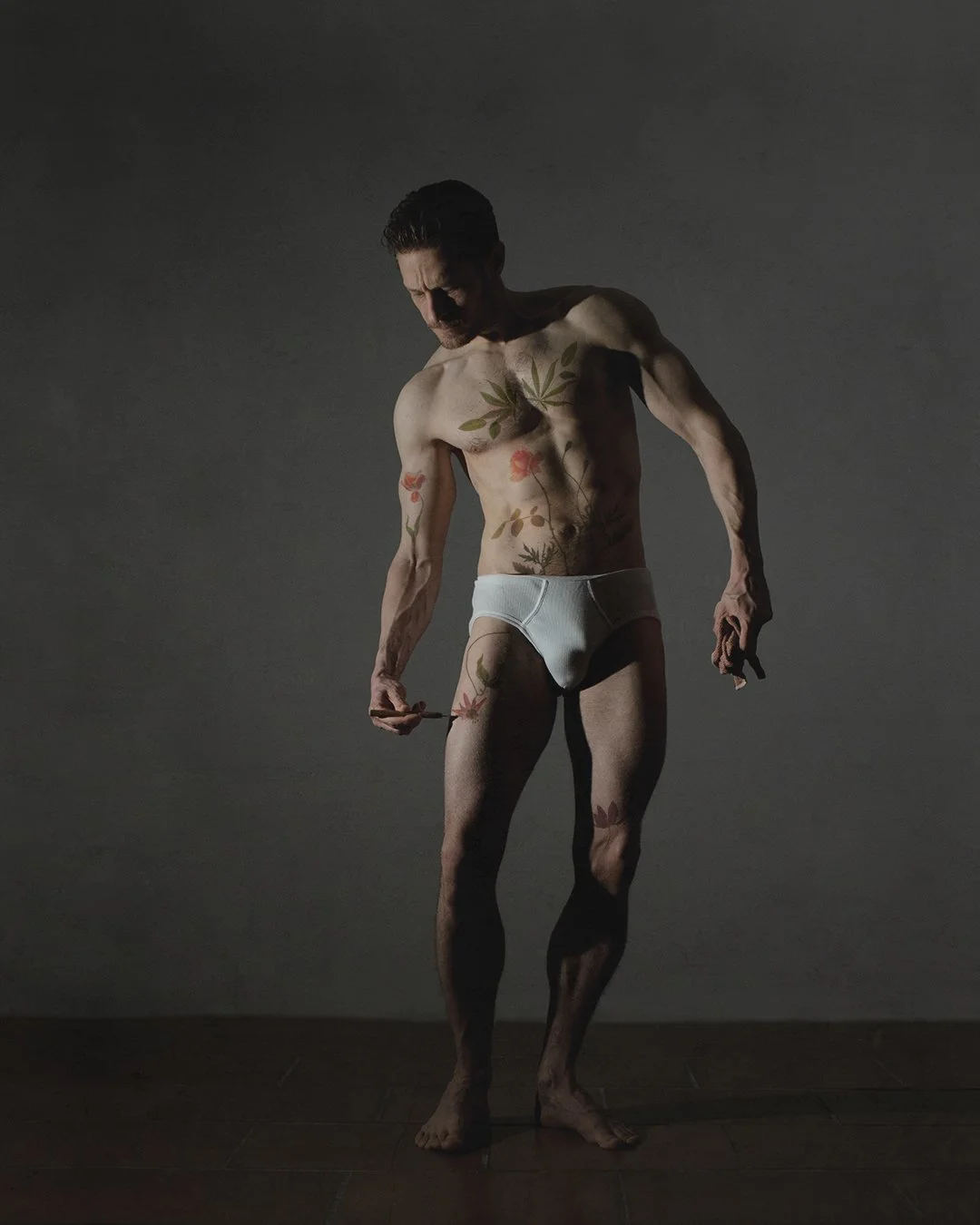
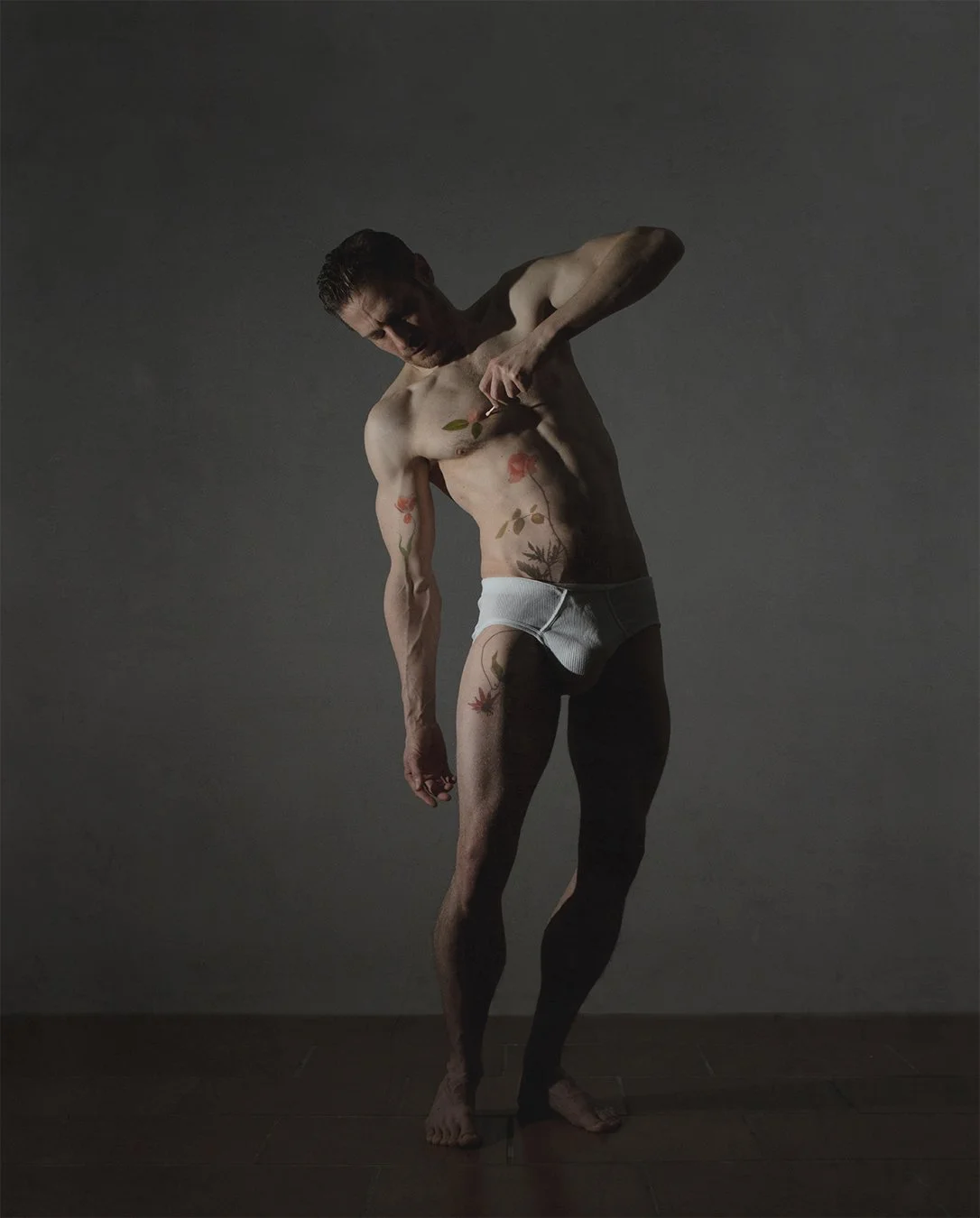
Many subscribers on OnlyFans expect nude and explicit content, which can also create some pressure. Still, I want to preserve the essence that makes my work special and unique: an erotic tension combined with a dense atmosphere, lit with chiaroscuro lighting. That’s a challenge.
I’m currently exploring additional creative formats that support my approach—video, text, and audio. I believe there is an audience that appreciates eroticism that is more subtle than the usual close-up of genitals. Another aspect is that followers on OnlyFans pay for content, which means they expect you to deliver. They appreciate quality, and they deserve quality. As a creator, you can’t just lean back—it is work.

GWF: Do you ever incorporate narrative or storytelling into your self-portraits, and if so, how do you build that concept from idea to final image?
I love doing that. Usually there’s a theme at the beginning, which might turn out as expected or change during the process and lead somewhere completely different. I keep a notebook where I write down ideas. For example, I did a series centered around the classic fig leaf. It’s a great symbol of censorship, nudity, shame, and sin to play with. Sometimes I also return to earlier themes and revisit them. For that fig series, I ended up stalking all the fig trees in my neighborhood. As a result I now have a little fig tree growing at my place. It might have a cameo in one of the next pictures.

GWF: How do you experiment with props, textures, or clothing (or the absence of it) to enhance the visual impact of a self-portrait?
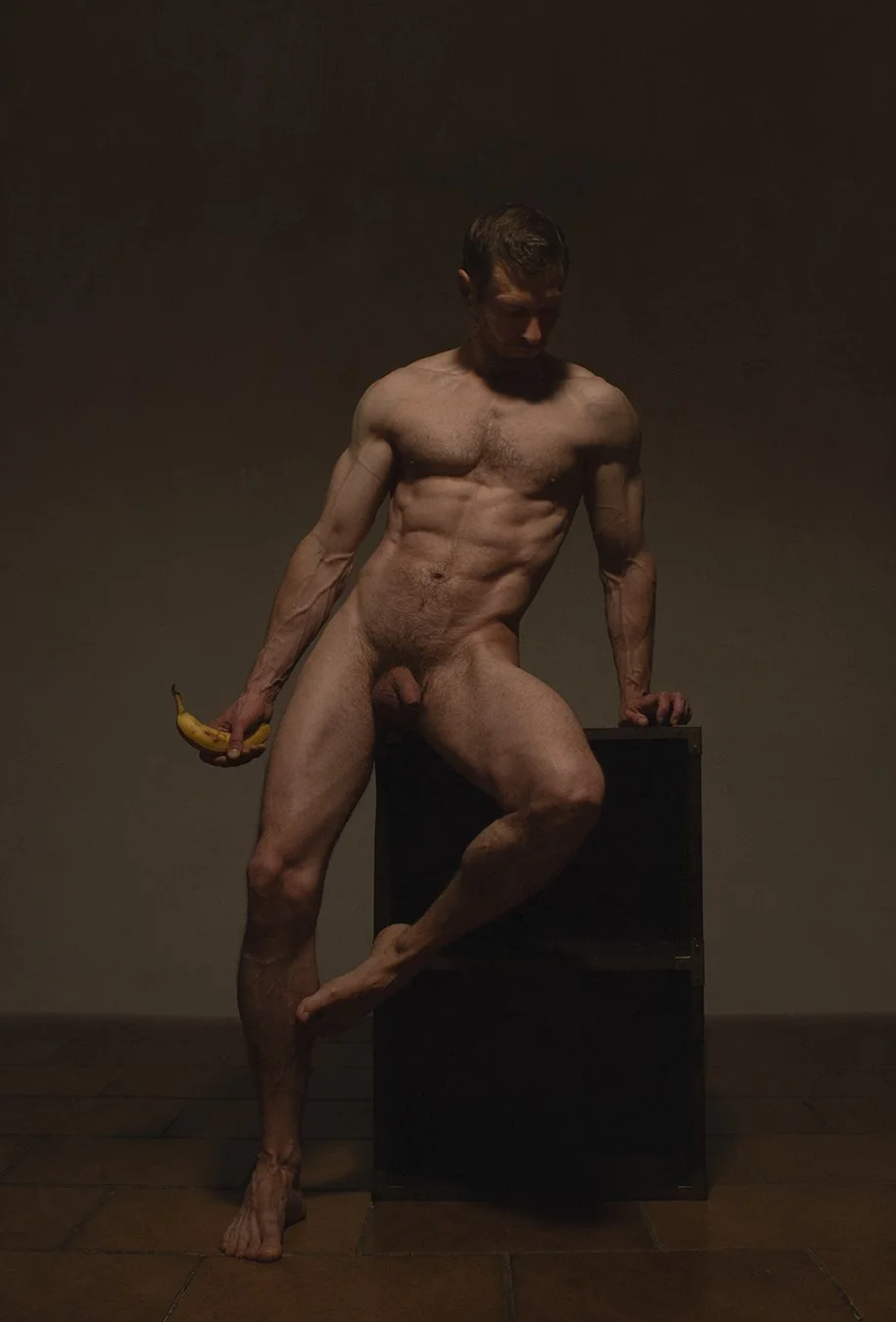
Props are very important to me, and I’m always on the hunt for them. They set the theme. Last summer I ordered a red toy Ferrari on Amazon because I wanted to create something revolving around the stereotypical and almost fetishistic love that many men have for their cars. The order turned out to be a total bad purchase. But eventually I found the perfect toy car in a box at the crazy Scavengers’ Market in Athens. I always keep my eyes open. Today I passed by a discarded Coca-Cola cup with a straw and McDonald’s takeout packaging that caught my attention.
I love watching men indulge in fast food. So this might become a future theme. Clothing is an interesting topic. I wear very little to none clothing in my pictures, and that’s not only because OnlyFans is primarily a “nude” platform. I would actually love to have more clothing as props, but I struggle to find suitable and affordable pieces.
In my work, I try to create a timeless or even retro atmosphere, which can be quite limiting when it comes to textiles. Ideally, I would become friends with the owner of a costume rental. I would love to channel my inner equestrian or maybe a 1960s office worker. But back to nudity: Why are there so many naked or semi-naked models in paintings? I don’t think it is solely because of eroticism but because it has always been a popular subject for artists: the study of the human body. There is something pure and fundamental about it.
GWF: What role does editing and post-production play in your self-portrait process? Do you try to keep things natural, or is manipulation part of the art?
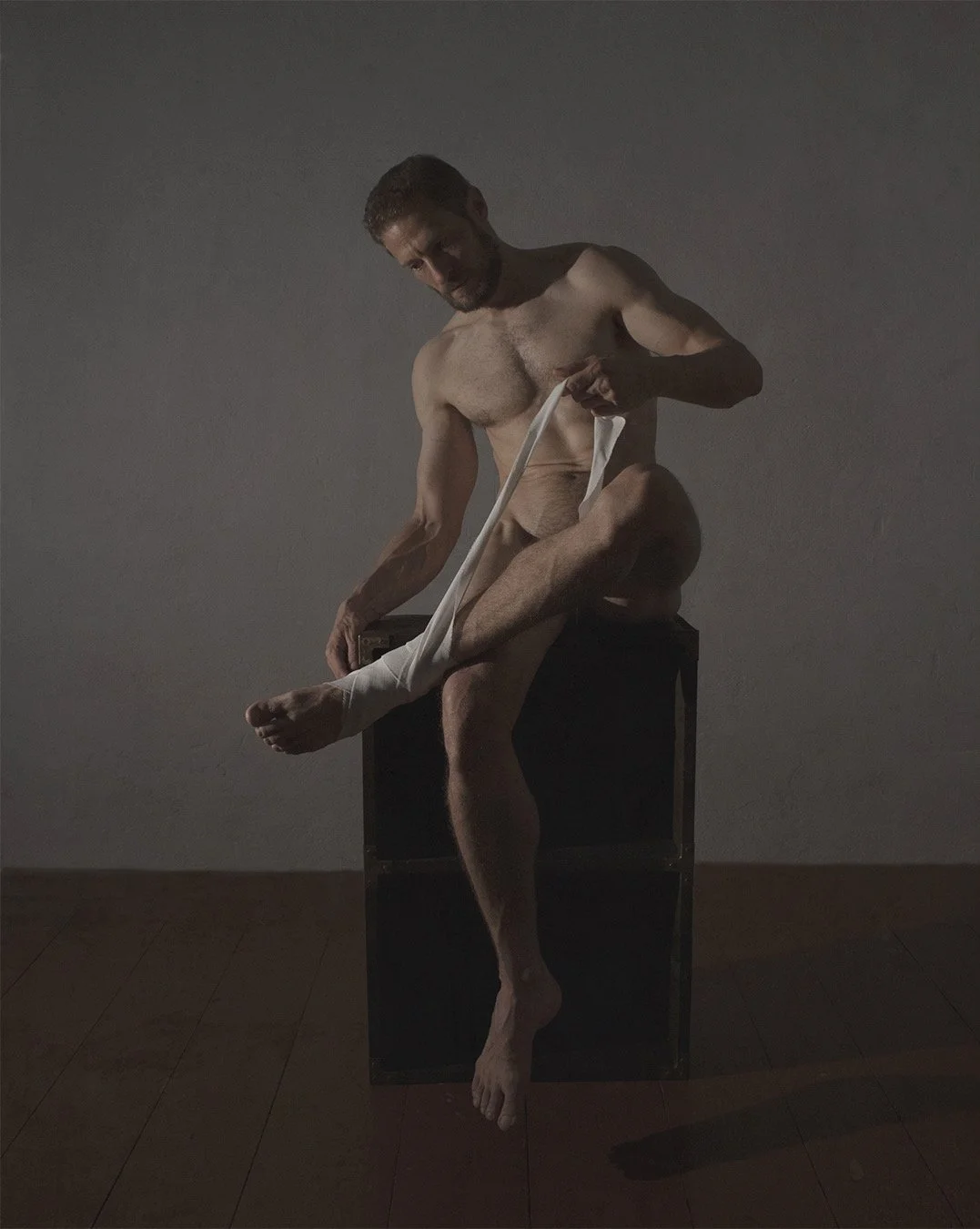
I have never been interested in documenting reality. I’m creating a mood and a scenic atmosphere. That’s why chiaroscuro lighting is key in my work. In my heart, I often feel more like a painter than a photographer. So yes, there is post-production. Your question also raises bigger issues: How fake is social media? In terms of scenery and situations? In terms of image selection and filters? In terms of our emotional state? In terms of our interactions? And are artists fake—or is their work fake?
GWF: How do you stay inspired and avoid creative repetition when you’re your own model, photographer, and director?
I’ve been working creatively as an artist for 25 years, and I’ve never reached the point of not knowing what to do or not feeling inspired. Here are two pieces of advice for staying creatively “lubricated.” First: walk. Walking does wonders for the brain. Second: don’t have sex and don’t jerk off. It’s astonishing to see where inspiration comes from after two weeks without an orgasm. There is also repetition, but I don’t see it as a lack of inspiration. It’s part of the creative process. Interesting themes offer various aspects to focus on. I might feel like there is something to add or ways to improve. Also, over the years my body has changed, and that makes me return to a topic.
GWF: How do you see your erotic self-portraits as part of a larger conversation about sexuality, consent, and visual culture?
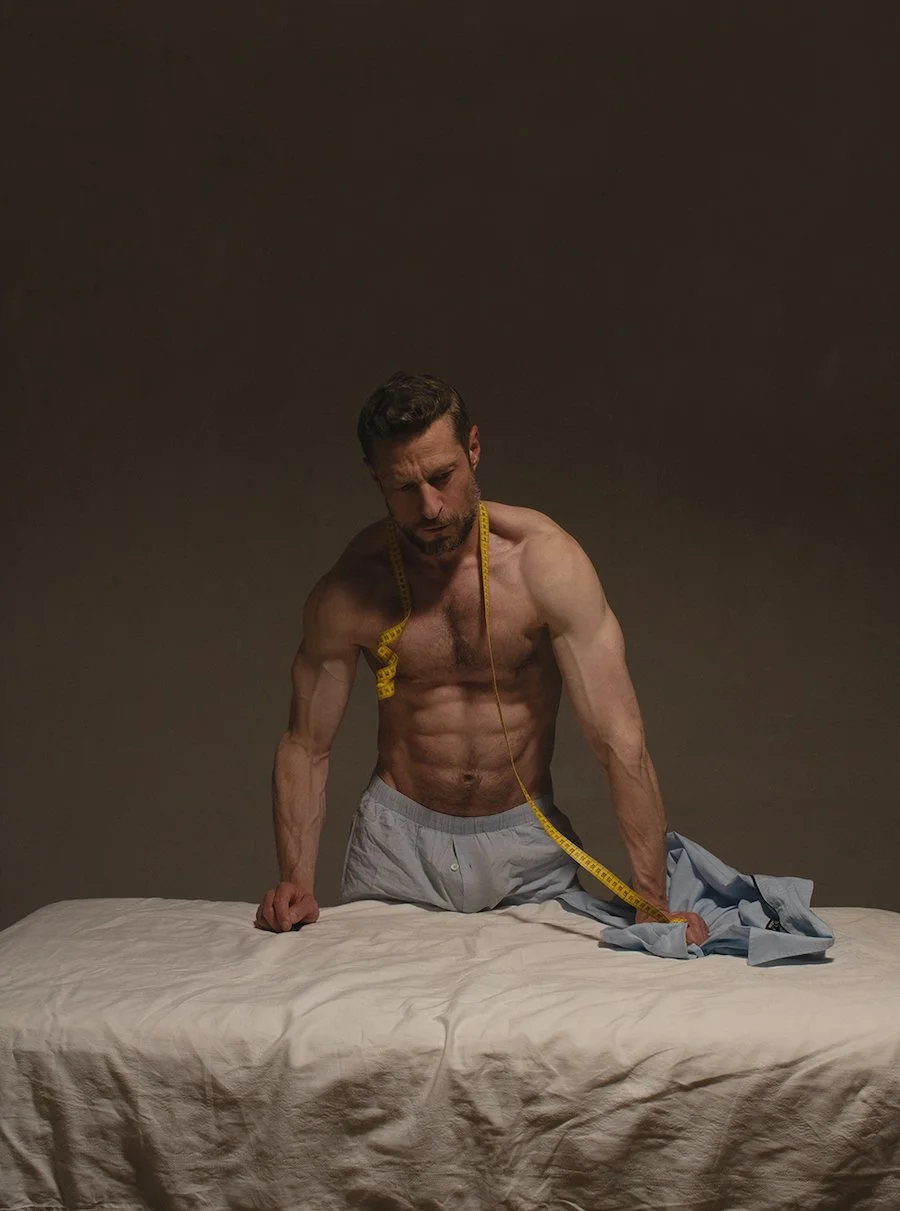
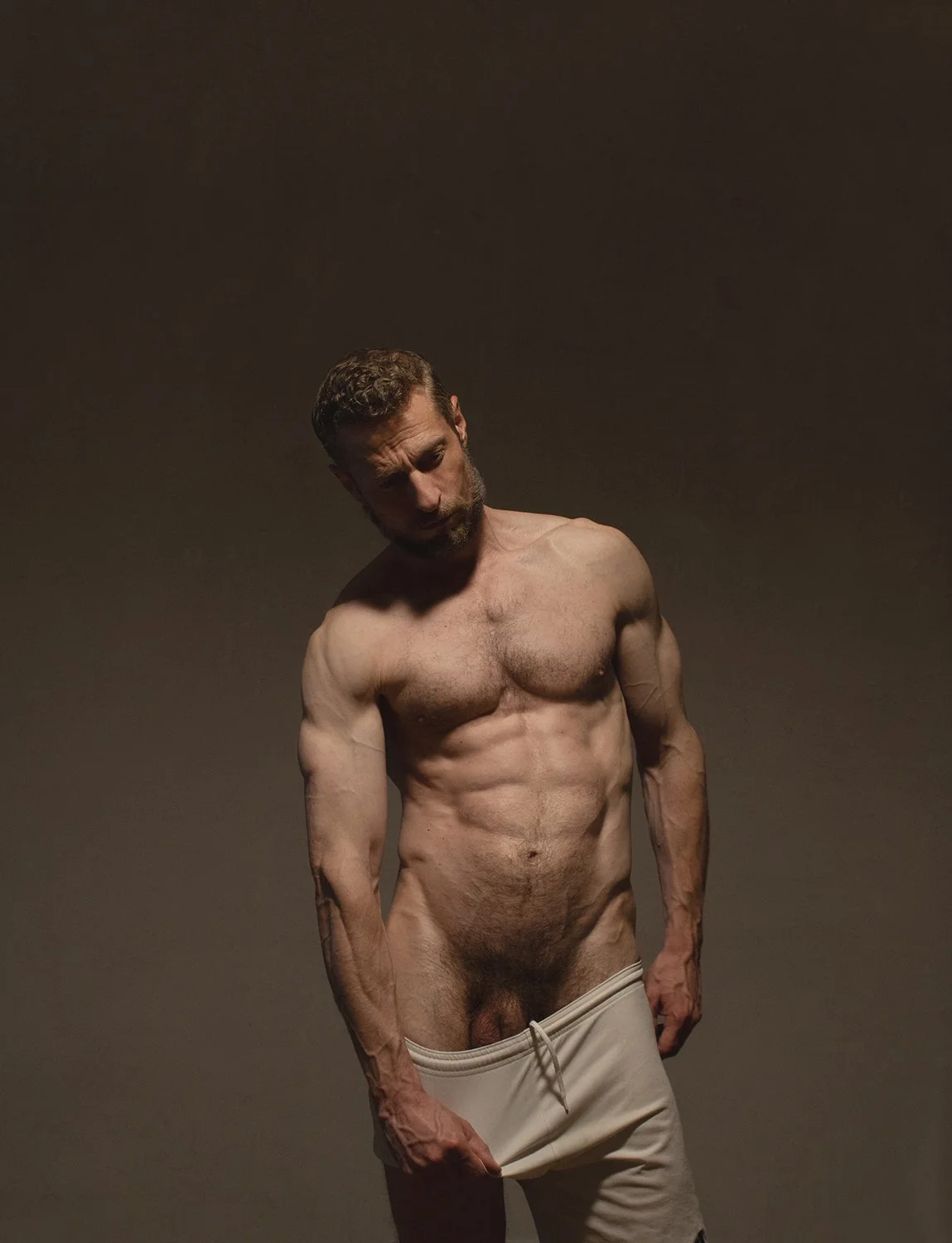
It’s my way of digesting things. You could call it therapy, and I think I’m a pretty open book. There’s a series where I’m standing naked with a measuring tape, and I don’t look particularly proud in those pictures. I’m sure some men can relate to that. Answering these questions here actually makes me reflect and realize that there is meaning and a story behind the images. Thanks for that! Right now I’m thinking about my first boyfriend. He had a hard time because when we had sex, I would never completely take off my underwear. That’s how insecure I was. I’ve come a long way since then.
Today I’ve spent many hours naked in front of the camera. I’ve also gotten used to walking around naked in my apartment, and I’m glad I did. Not only because I like the pictures, but also because of the routine. It’s simply not a good feeling to be uncomfortable with your own naked body. It's hard to avoid it. I am aware that my works contain “traditional” or “common” gay themes and might be less appealing to a queer audience. But it’s important to me to include insecurity, shame, frustration, and hurt, which might conflict with the hypermasculinity that is flourishing on social media.
GWF: Looking ahead, are there new styles, themes, or concepts you want to explore in your self-portrait photography that you haven’t tried yet?
As I mentioned before, I’m very inspired by Old Master paintings, and I recently came across the five-part Allegory of the Five Senses by Peter Paul Rubens and Jan Brueghel the Elder. I’m thinking of doing a series that focuses on the senses of sight, hearing, smell, taste, and touch. That screams ‘OnlyFans’, doesn’t it?
