
PHILIP HEWSON: Classical Mythology Meets Queer Vulnerability
In a quiet South London studio, Philip Hewson is rewriting art history — one nude male figure at a time. Blending classical mythology with queer experience, vulnerability with strength, and sensuality with political defiance, his paintings challenge how we see the male body — and what it’s allowed to feel.
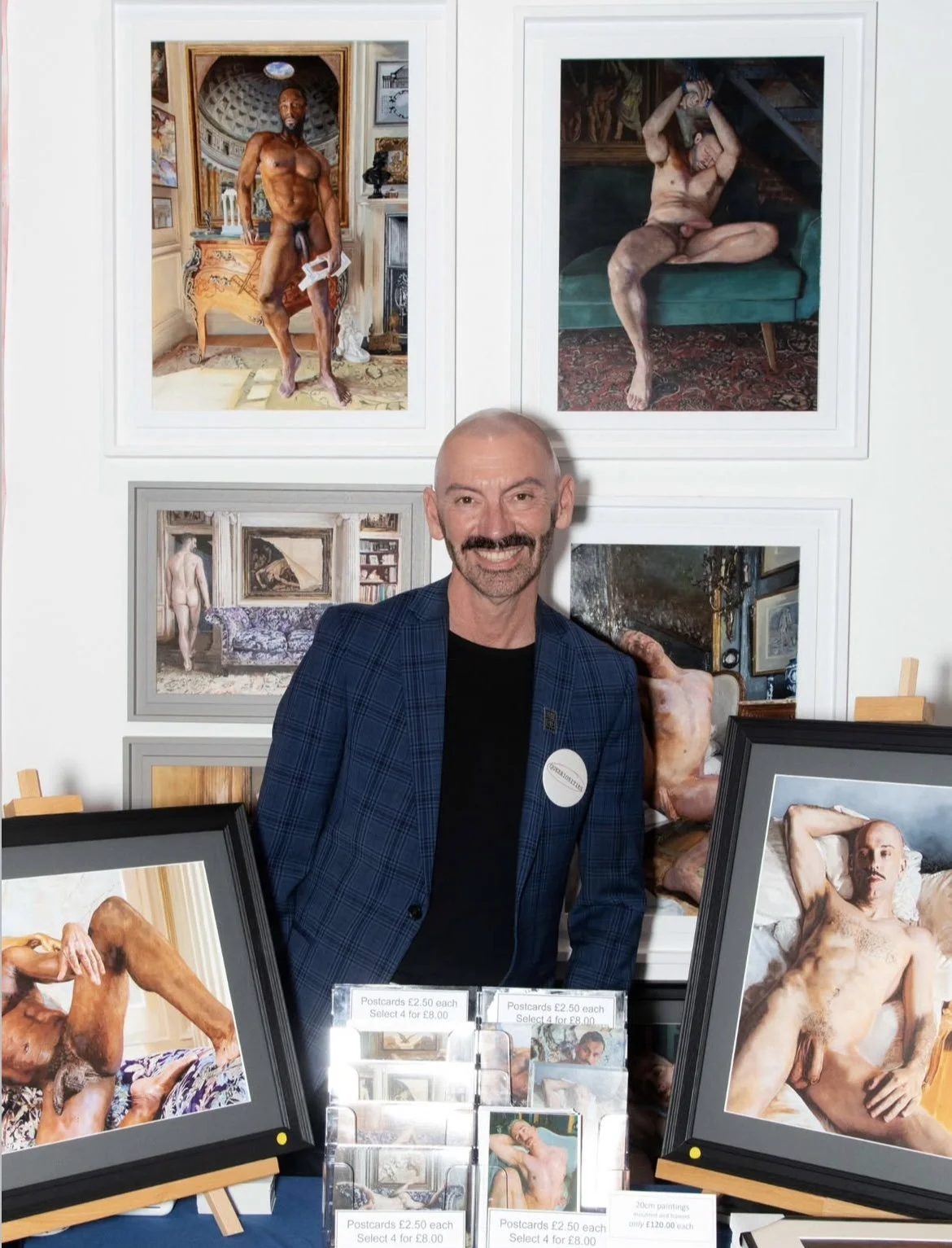
GWF: Who are you, where from and how did you become a visual artist?
Hi! I’m Philip Hewson – I live in Crystal Palace, a small, artistic neighbourhood in south east London, UK. I have always been creative. I consider myself very lucky that my parents were very different – my mum being more academically minded while my dad could, and did, make anything from anything. He made us toys, made our costumes for school plays and was always drawing and making. So for me it was always natural to express myself, and my interests of the day in the form of making, drawing or painting. However, my family was also practical working class and so it was always expected that I’d “get a trade”. I was apprenticed at 16 to a process control company and I studied for four years to gain my qualifications in Digital Engineering – relieving the technical studies by performing and designing sets and costumes for an amateur drama company.
I have always painted and created in my spare time. In 2018 I separated from my civil partner of 18 years and determined to get back to being more truly me. From 2022 I changed jobs and was able to spend more time painting and in April 2025 I was able to realise my goal of giving up my corporate life (latterly as Director of Procurement for the Queen Elizabeth Olympic Park in London) and become a full-time painter.
“I want to take the “classical” male form, and the tropes of western art history and represent them to tell a more complete version of the male experience”
GWF: How would you describe your artistic journey, and what led you to focus on the male form?
As I mentioned above, I’ve been used to expressing my feelings, interests and indeed desires through the processes of visual representation while also being interesting in a taking part in drama and dance. It has only been recently that I connected these ideas and have been able to identify that my urge to create figurative art, and indeed the nude male form is closely tied up with my love of dance and drama; that in my mind the human form can be used to convey a wide range of emotions and needs. I feel that the human form always creates a narrative. My job, collaborating with my model is to shape that narrative and convey the story and the emotions evoked. A painting is like a moment from a ballet – the meanings being expressed through the sets, props and most of all the human form, shapes and expression.
I do think that this is true of all human forms; but I choose to work exclusively with the male form. In part this is because while the male form has been present in art, especially Western Art, since the first marks made, it has often been through a very narrow lens. The male form could represent power, dominance (perhaps in hunting or war) or for the classical Greeks, Civic Virtue and purity of mind and intent. I want to change the viewpoint.
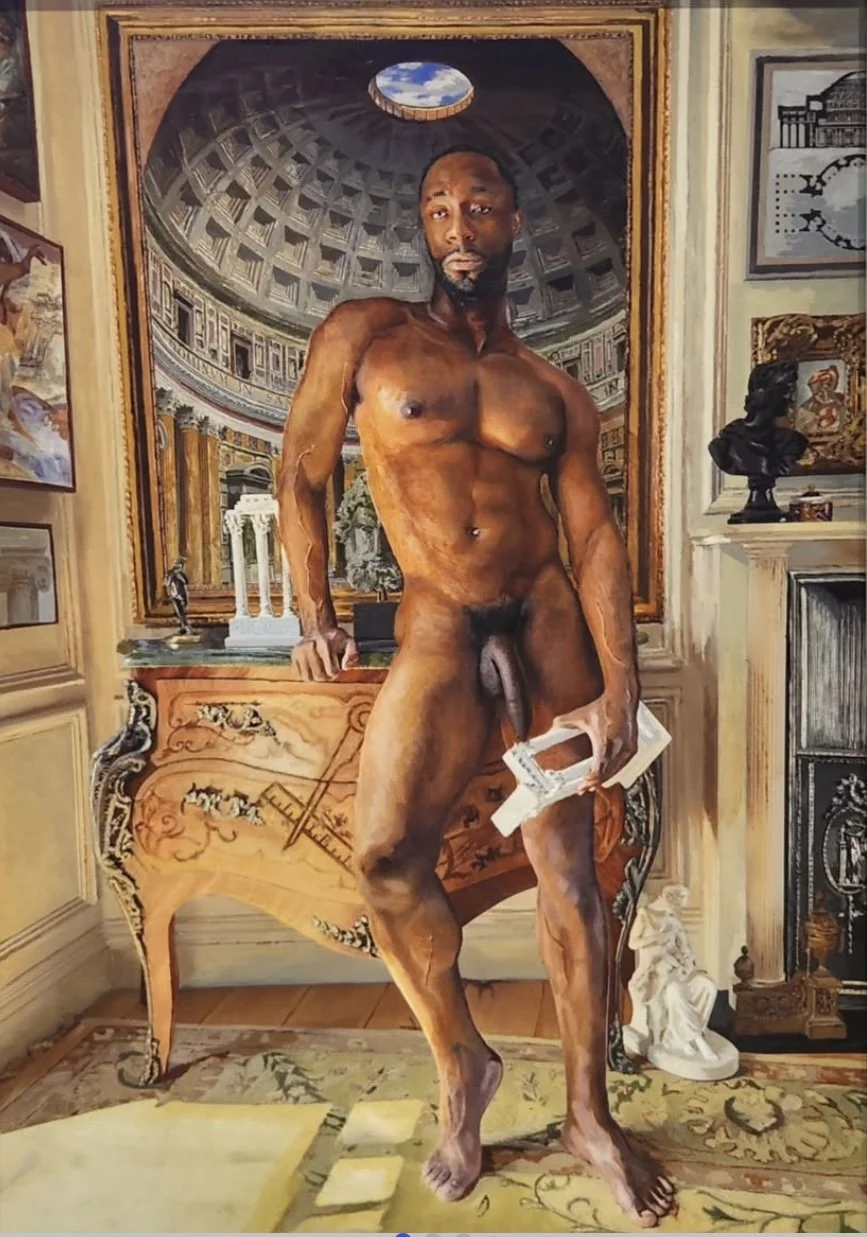
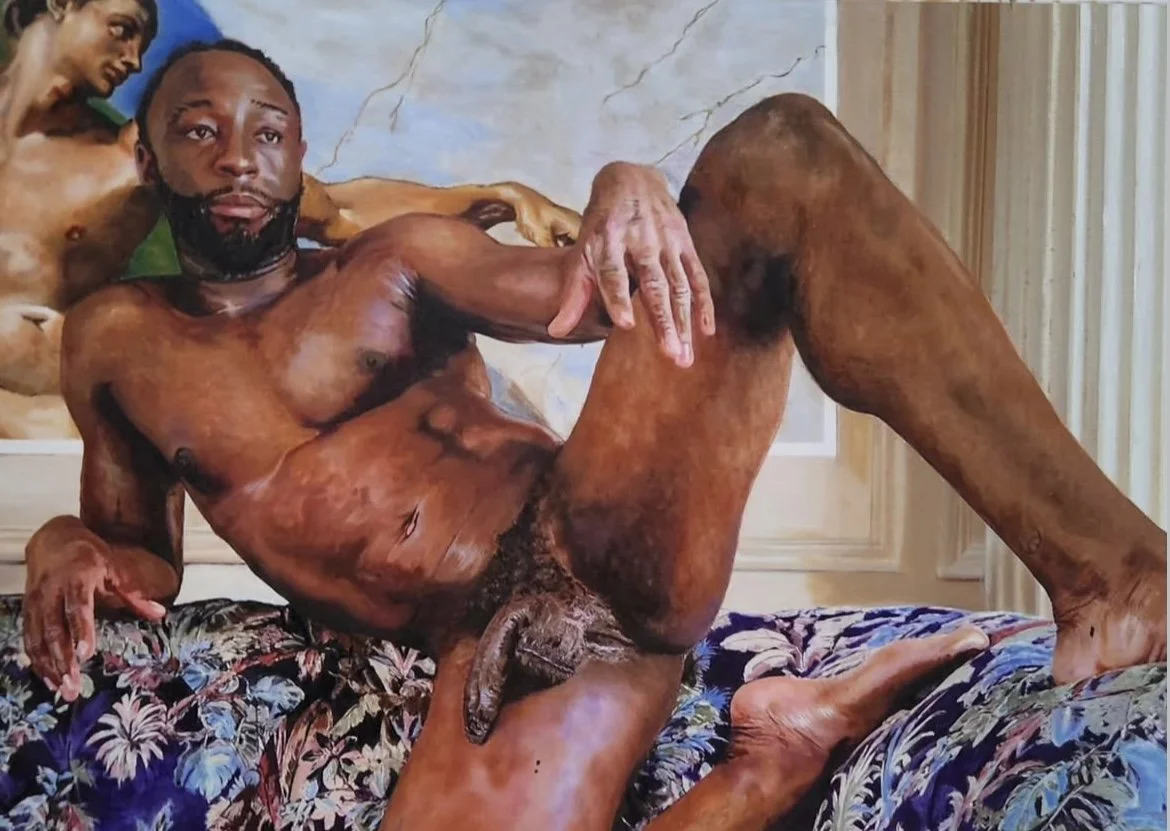
GWF: In your bio, you say you explore “allegorical narrative through the male form.” What does that mean to you in practice?
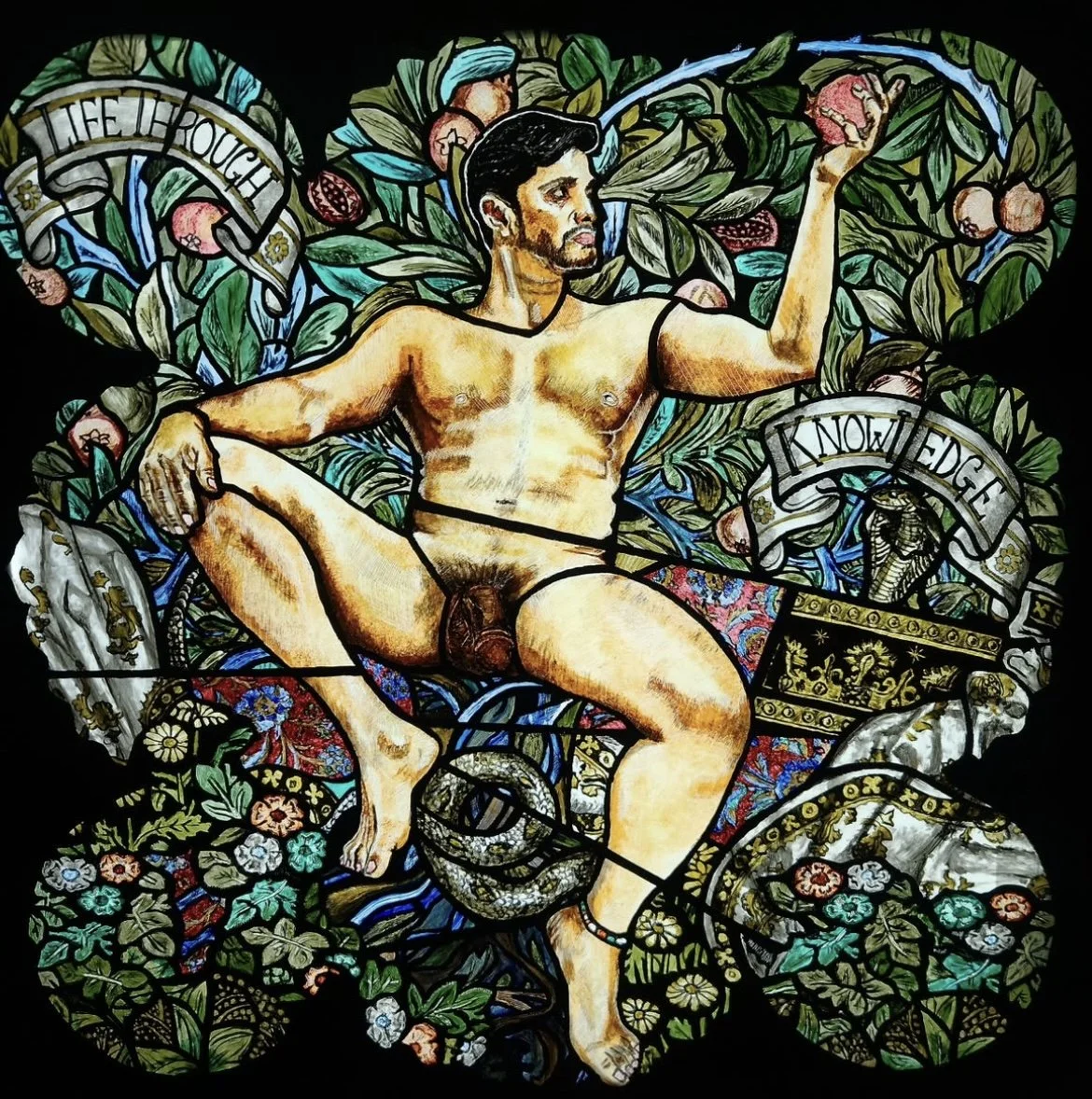
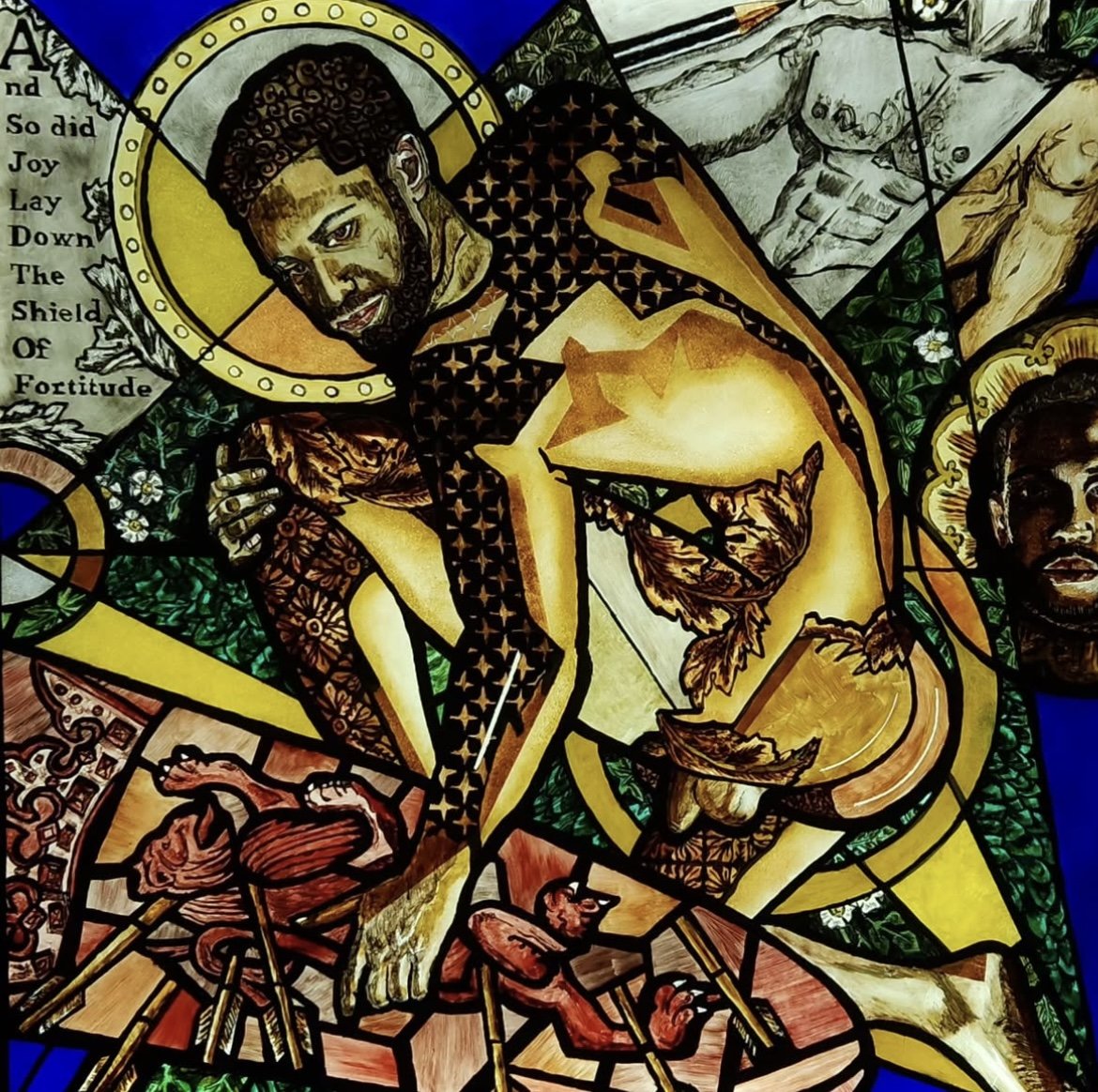
I want to take the “classical” male form, and the tropes of western art history and represent them to tell a more complete version of the male experience. Vulnerability, care, loneliness, sensual or romantic love – as well as the strength necessary to be a man, and while not exclusively, in particular as queer men; the fortitude to endure on going bias and prejudice; the risks of a highly commercialised queer economy and our need for true human connection. My work uses symbolism and allegory to inform the narrative/story being told. For example my painting of Prometheus Chained is visual metaphor (allegory) for the queer experience. Like Prometheus, who’s liver is eaten out every day by the Eagle of the god Zeus’s vengeance, each day we are attacked and assaulted – in the media, in micro-aggression in the workplace or my the judgement of family or wider society; but each night we, and like Prometheus who’s liver grows back, we take time in our communities, our friends and lovers; or sensibilities and our own places – allowing that regrowth that sustains us through the attacks to come. And like Prometheus, who’s very name means Foresight – we know that in the end, no matter how long it takes, we will reach justice.
“To represent the male nude is so counter-cultural to so many people that the politics are increasingly evident”
GWF: What themes or emotions are you most interested in expressing through the nude male body?
Whilst my work covers a range of concerns, informed by what is happening in my life, the world around me or even by discussions the process of collaboration with my model, the themes that I find myself drawn back to are those closest to my own experiences. Inward reflection; the hope for love and reciprocated kindness; the experience of isolation but the enduring power of inner resilience.

GWF: Do you see your work as political, personal, erotic, or something else entirely?
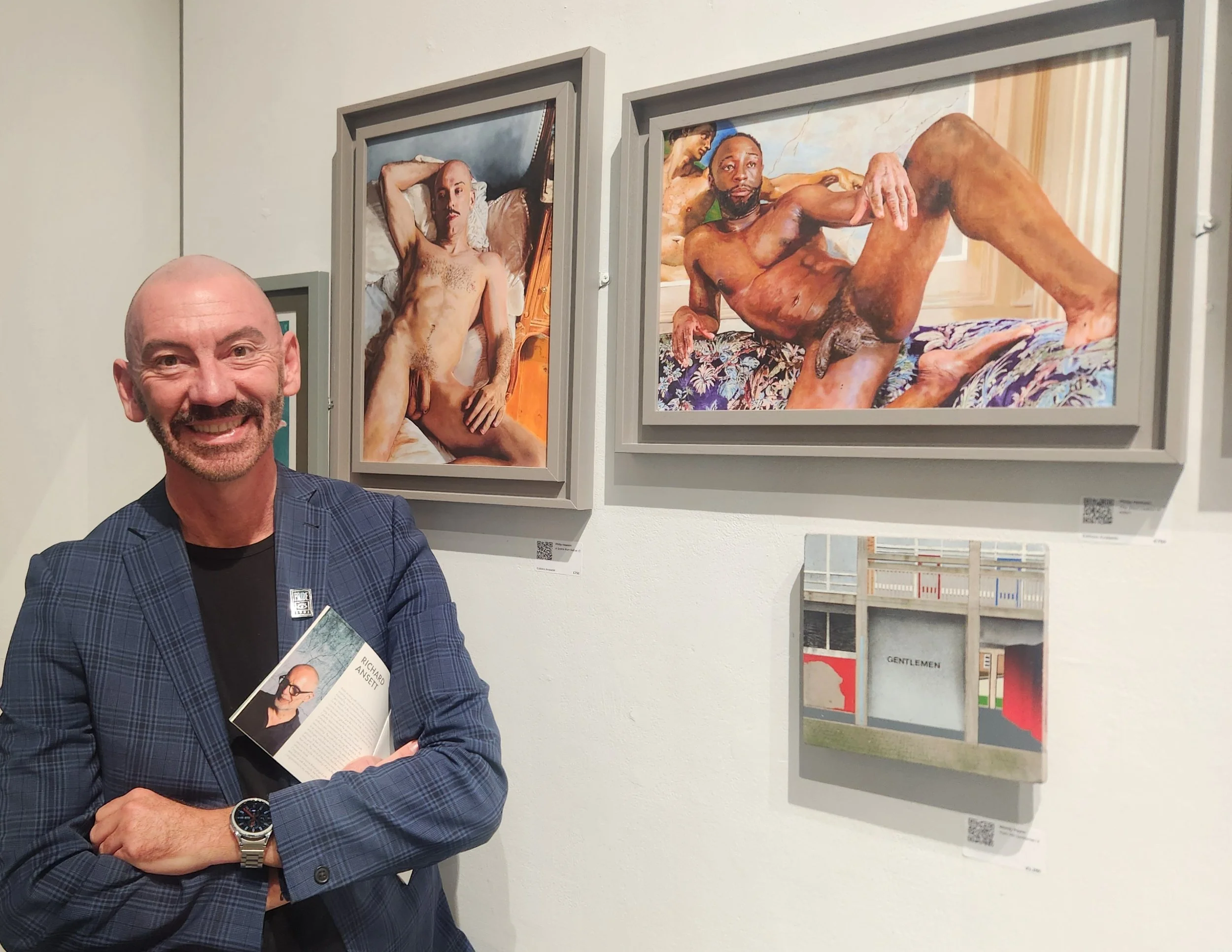
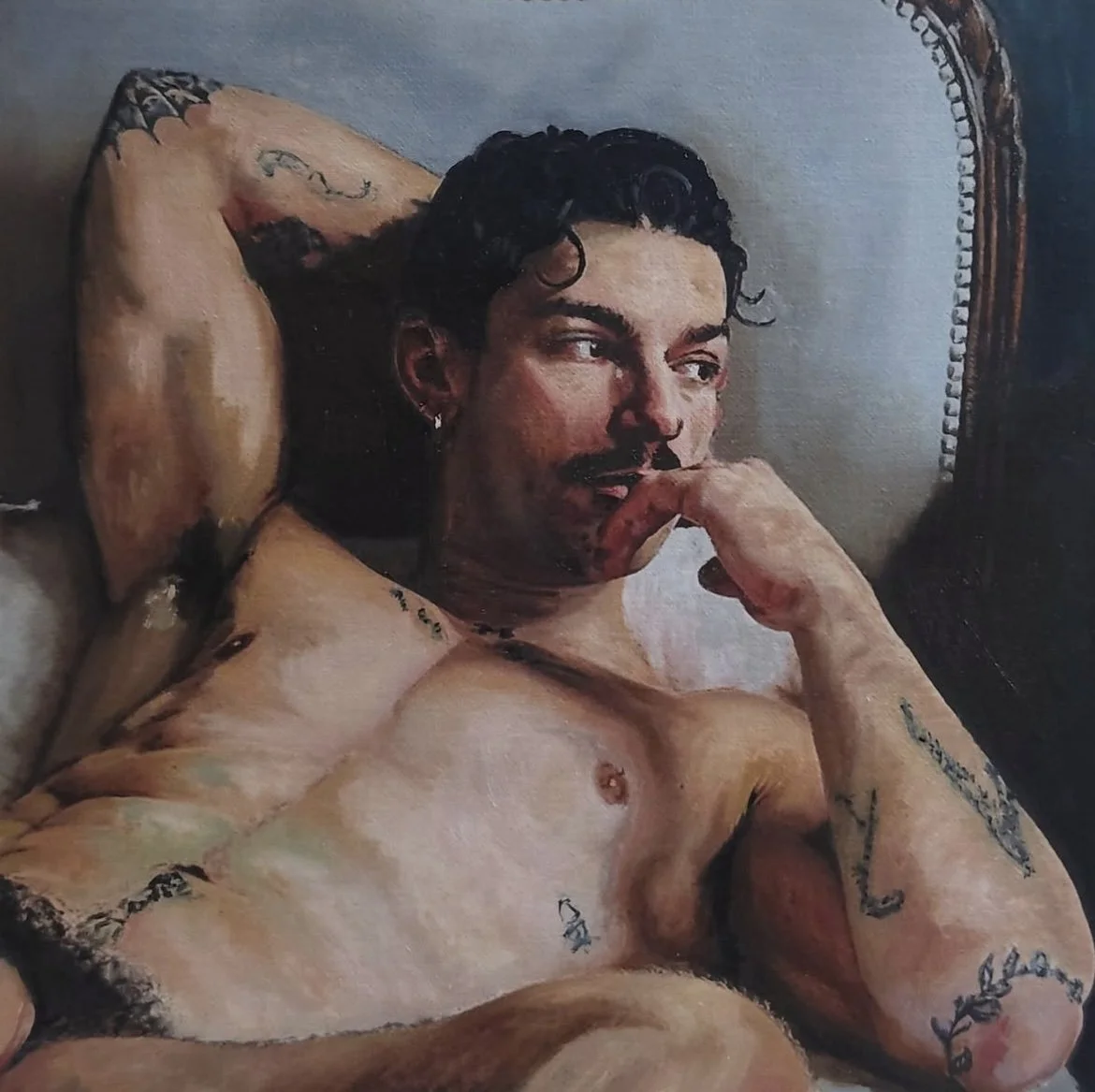
All creative work is personal; we cannot help but bring our own selves into what we create. The hundreds of decisions made in making a painting from concept to practical details of composition, choices of light, shade and colour are all informed by our own personalities. In the past I have said that I don’t think of my work as either intrinsically queer or political – indeed I’ve had lively conversations with straight visitors to my studio and exhibitions about why they consider a painting of a sensitive male nude to be itself gay – but of course my work is actually always autobiographical. And even the act of being a visible queer man is itself a political act. To represent the male nude is so counter-cultural to so many people that the politics are increasingly evident. Occasionally I will paint a subject that is more overtly sensual – more rarely erotic. Of course I’m happy for the viewers of my paintings to take from them what they will – and some will see the eroticism first and foremost but to me the sensuality is always bound up with other feelings of connection, of intimacy or love.
GWF: How do you balance vulnerability and strength in your subjects?
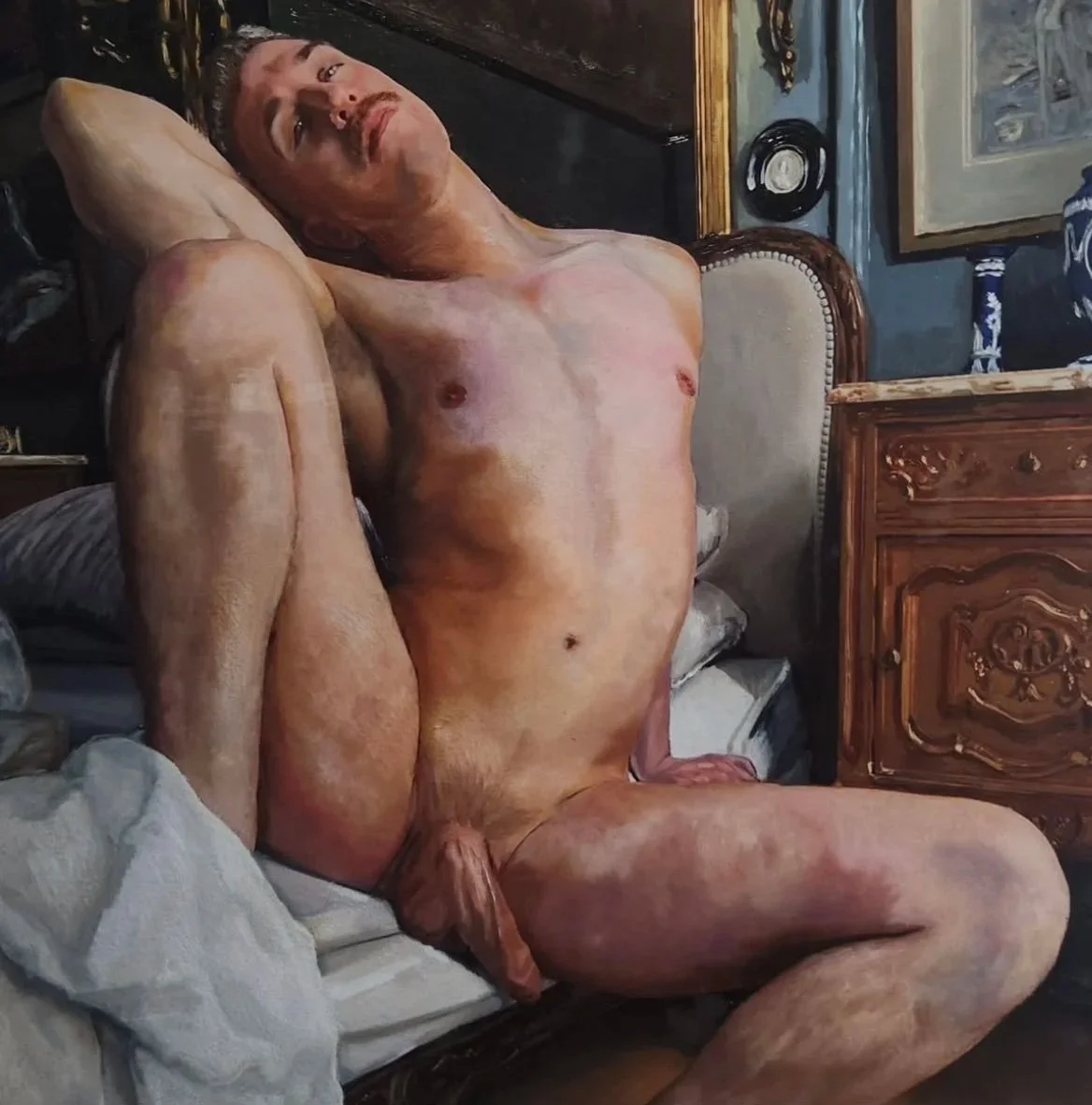
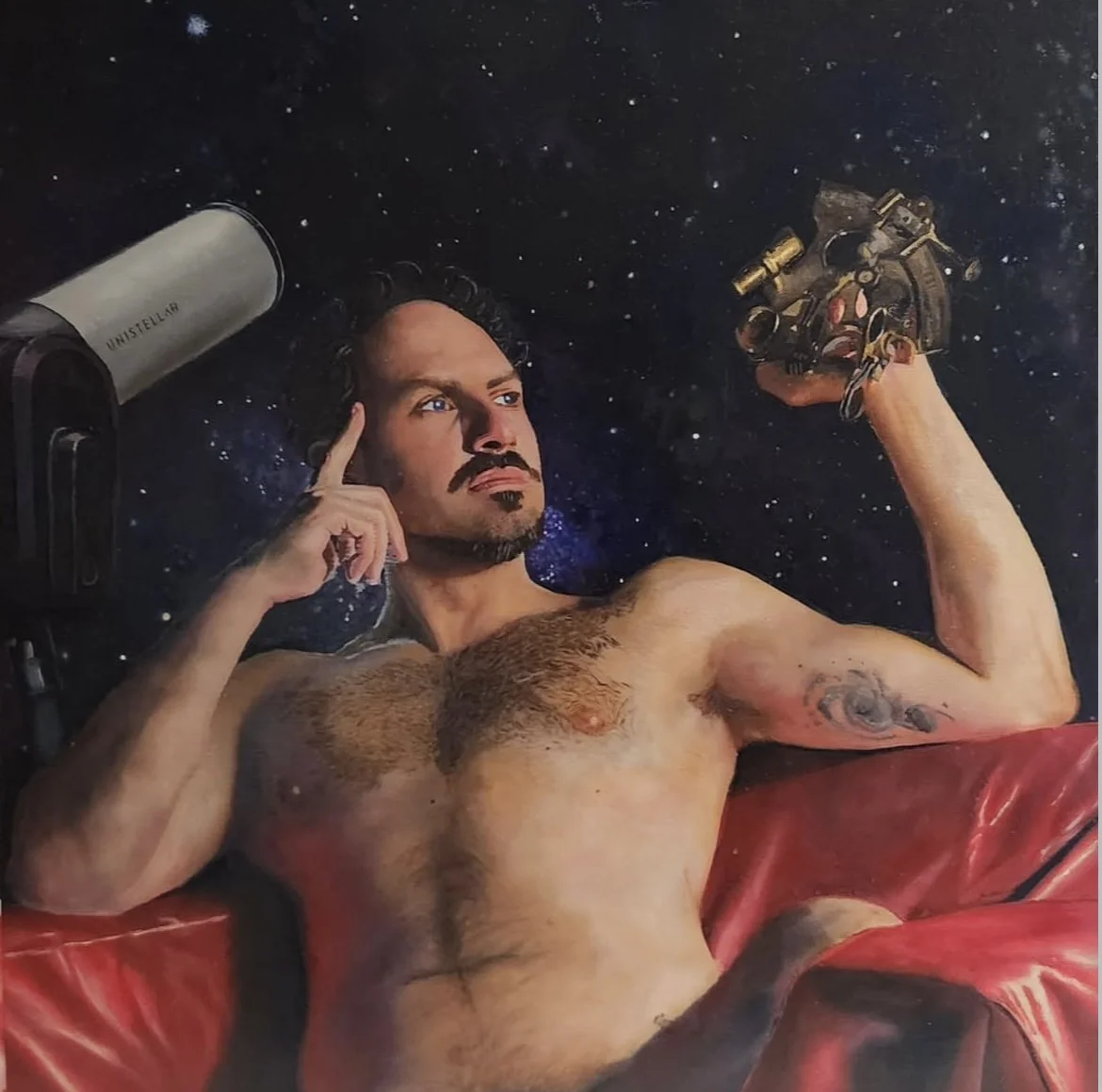
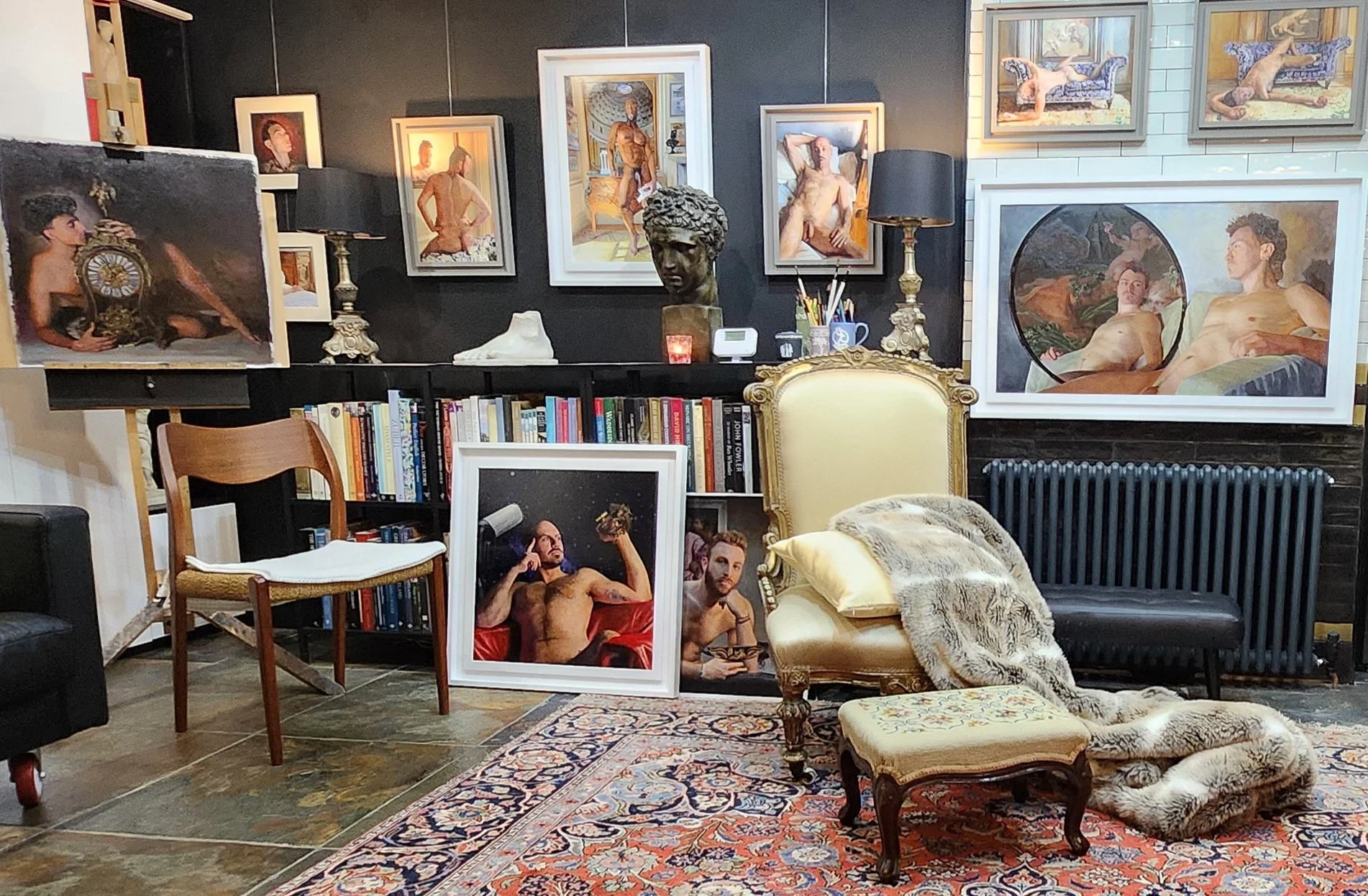
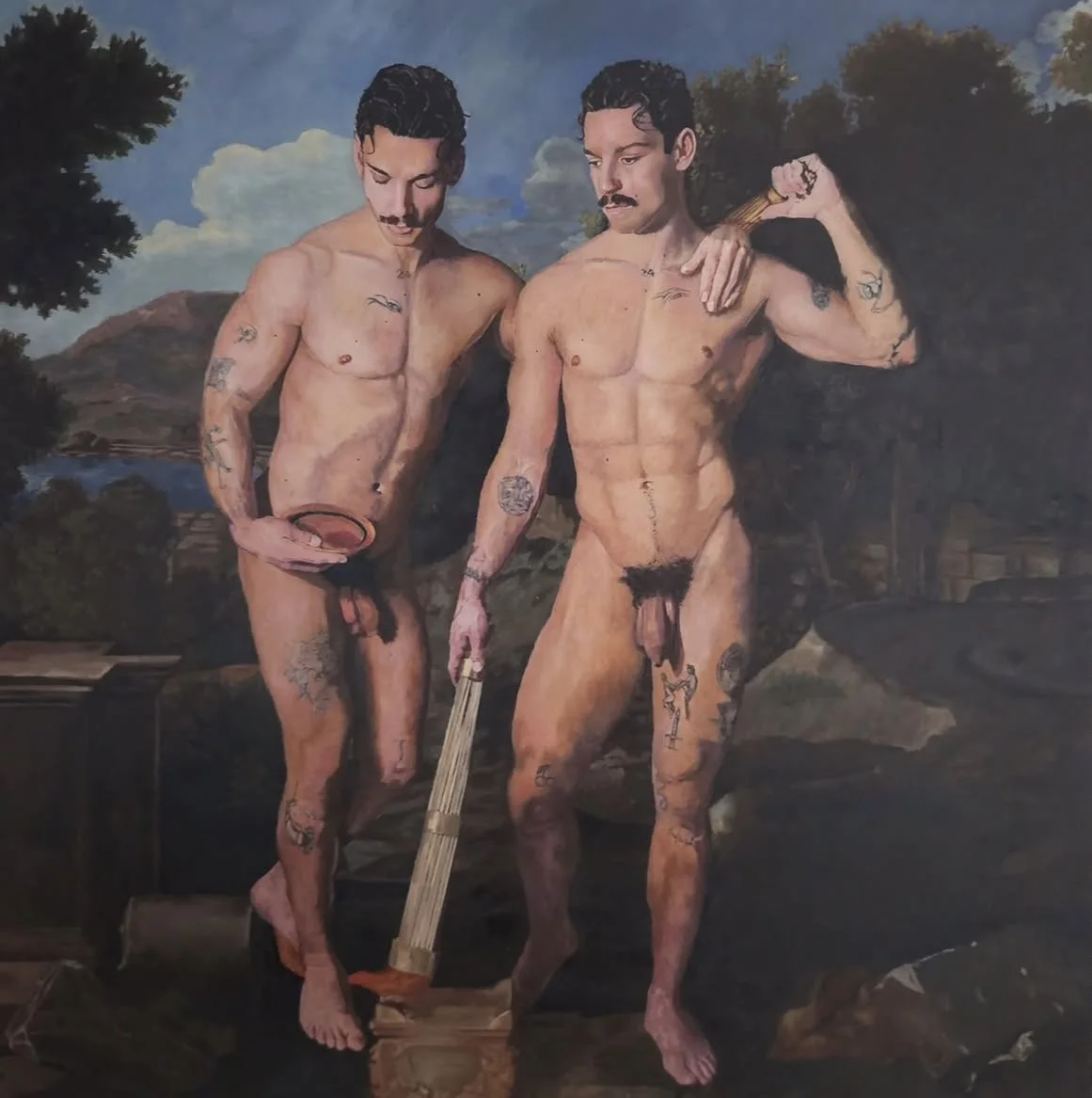
I have been asked why I tend to paint “fit” or “athletic” men – and have been challenged about not being more “representative” of wider body types. But that is to miss the point. My work deliberately picks up quotes from western art history – in particular the classical male form – but then subverts that representation in a number of ways. For example I often set my paintings in my own domestic space – bringing the figure from the classical to the here and now; I may show a nude in a classical landscape but include his very 2026 tattoos – or I may use black or other POC models to represent characters tradionally showen as white. I seek to juxtapose the idealised “male” form – in the past used to convey strength and dominance – or in the case of black and brown bodies to represent the vanquished or subservient – and imbue these familiar forms with new meanings that speak to our actual experiences as men which don’t conform to typical gender stereotypes. I’ll show vulnerability, nurturing, care, tumult, wistfulness – indeed the emotions and responses more associated with the female form in Western Art. I therefore work with my models to show off their physical strength but also their inner life and the fact that even a muscular or strong male form can be gentle, warm and simply beautiful without threat.
“In my paintings the characters are often inspired by female characters from the books, but rendered as men to show that men, especially marginalised or “othered” men may have more in common with these women…”

GWF: What inspires your compositions — mythology, personal experiences, literature, relationships or something else?
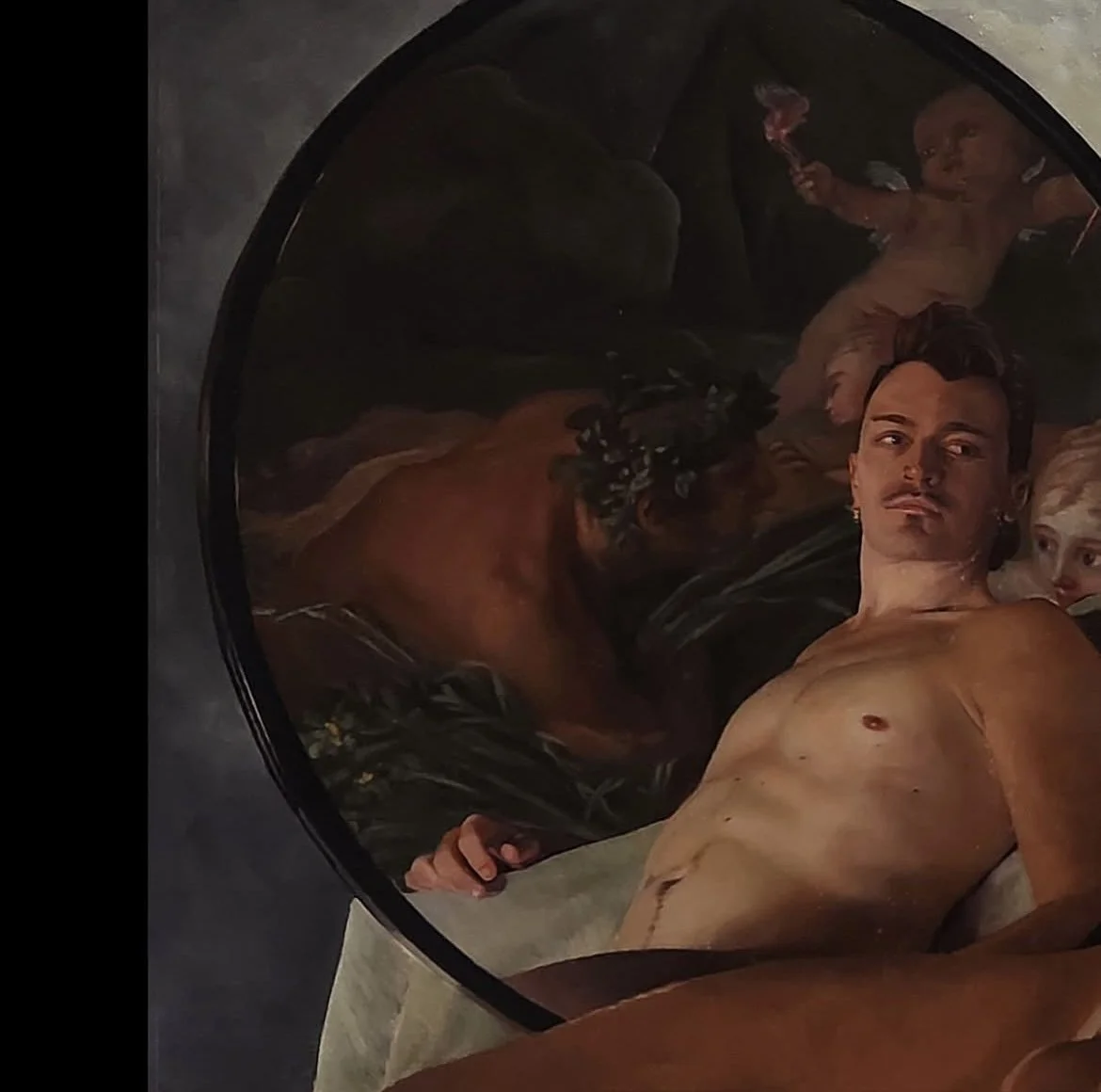
Ideas for works can start in different places. Sometimes I have a very clear idea of the concept and I’ll look for a model who I think will help embody that idea. Those ideas may be inspired by stories or myths. The Greek myths – sometimes as retold by Roman writers such as Ovid – are perennial sources of work not only because the subjects are interesting to represent physically but because the Greek myths were told and retold as thought-experiments to test ideas around behaviours, actions and reactions – “what should we do in the face of this situation”. Sometimes I will respond to images from art history – retelling the story from a personal – and therefore modern, queer perspective. I’m also inspired by 18th and 19th century literature – a period from the enlightenment into the industrial world when ideas of morals, identity and agency were being tested. A current series, “Scenes from Balzac” is inspired by the demi-monde represented in Honore de Balzac’s “Human Comedy” cycle of novels with their psychological investigation into the motivations, strengths and foibles of Parisian society – high and low – in early 19th Century Paris.
In my paintings the characters are often inspired by female characters from the books, but rendered as men to show that men, especially marginalised or “othered” men may have more in common with these women than past readers of Balzac would recognised. To me these charactures were always available as “coded” queer figures.
Another way to respond to art history is a more direct approach – to take the form of abstract ideas as allegory – for example my recent painting of a very beautiful, slim younger model wrapped around my own early 18th century antique clock as a representation of the Impermanence of Youthful Beauty. The clock represents time of course – but it also looks, in 2026, much as it did when it was made in Paris in the 1730s and in a hundred year’s time, it will still look the same; our hero, the beautiful Callum, will not.
GWF: What is your creative process like from concept to finished painting?
Once I have a starting point for a painting – and that may be a story, myth, or other idea, I’ll then find a model who I think will best embody that idea. I tend to meet my models at life drawing groups although occasionally friends may get roped in if they have the look that’s needed. Sometimes I’ll meet the model first and their presence will suggest a subject or composition.
I’ll then book the model in to come to my studio. We’ll work for a few hours, testing poses and compositions. I’ll do some rapid sketches to capture ideas, then when we are finding the right pose, I’ll do more detailed drawings. The process of drawing from life is so important – it really makes you look hard at the subject, truly understanding their unique form and finding the exact position and light that makes a composition come to life and “sing”. After drawing I’ll then take a huge number of reference photos from slightly different angles to record the composition in a way that gives me a “3d” model to paint from. I may capture tiny variations in the positions of fingers, limbs or the head / eyes. I’ll usually review my sketches and reference pictures over a week or so to allow my mind to fill in the blanks of the composition and decide which details to include – or not. Once I’ve decided (for now) I’ll make the under-drawing. This may be very detailed if the background is complex, or simpler if possible. I’ll then paint, using a combination of my sketches and a range of reference photos which I have up on a large screen in my studio. Sadly I can’t afford to pay professional models for the hours it takes my to make my work.
GWF: How does being a gay man (if applicable — or part of the queer community) influence your artistic lens?
As I mentioned before, all creative work is to some extend personal and/or autobiographical. But to me with much of my work it’s more even than that. Each of my paintings, and the process of creating them is a mini-love affair. It’s why I like to work with models that I know or who I’ve met via a drawing experience. Looking good is simply not enough. There must be that human connection, that joy in collaboration, a form of intimacy in creating that makes the act of creating the representation an act of love. I hope that love, that appreciation and care for my subjects comes out in my work.
In western art we are all too familiar with the straight male gaze. Even today I have challenges showing my work in certain spaces or galleries who would be all too happy to show the same image with a female form.
GWF: What conversations do you hope your work sparks within the LGBTQ+ community?
I hope that my work is accessible to a wide range of people both queer, LGBTQ+ and not. Yes, my work represents men; yes my work is concerned with the experiences and feels of men – as that is my own experience; but these concepts, feelings, emotions and responses are not limited to those who identify as men or male; they are human feelings and experiences and I hope that the messages within the work can be understood more widely than by other gay men. I’m always happy to engage in questions of representation and how and why – or why not – this speaks to different audiences.
Even potential clients sometimes aver: “I love your work but I could NOT have this in my home as my mother/sisters/family visit and they can’t see a full male nude”. I want to challenge the idea that the male nude is unacceptable; that male nakedness is only sexual or somehow obscene. I want others to feel what I feel; a response to male beauty that speaks to intimacy; to kindness, gentleness and to love.
Follow Philip on Instagram @studio.8.a
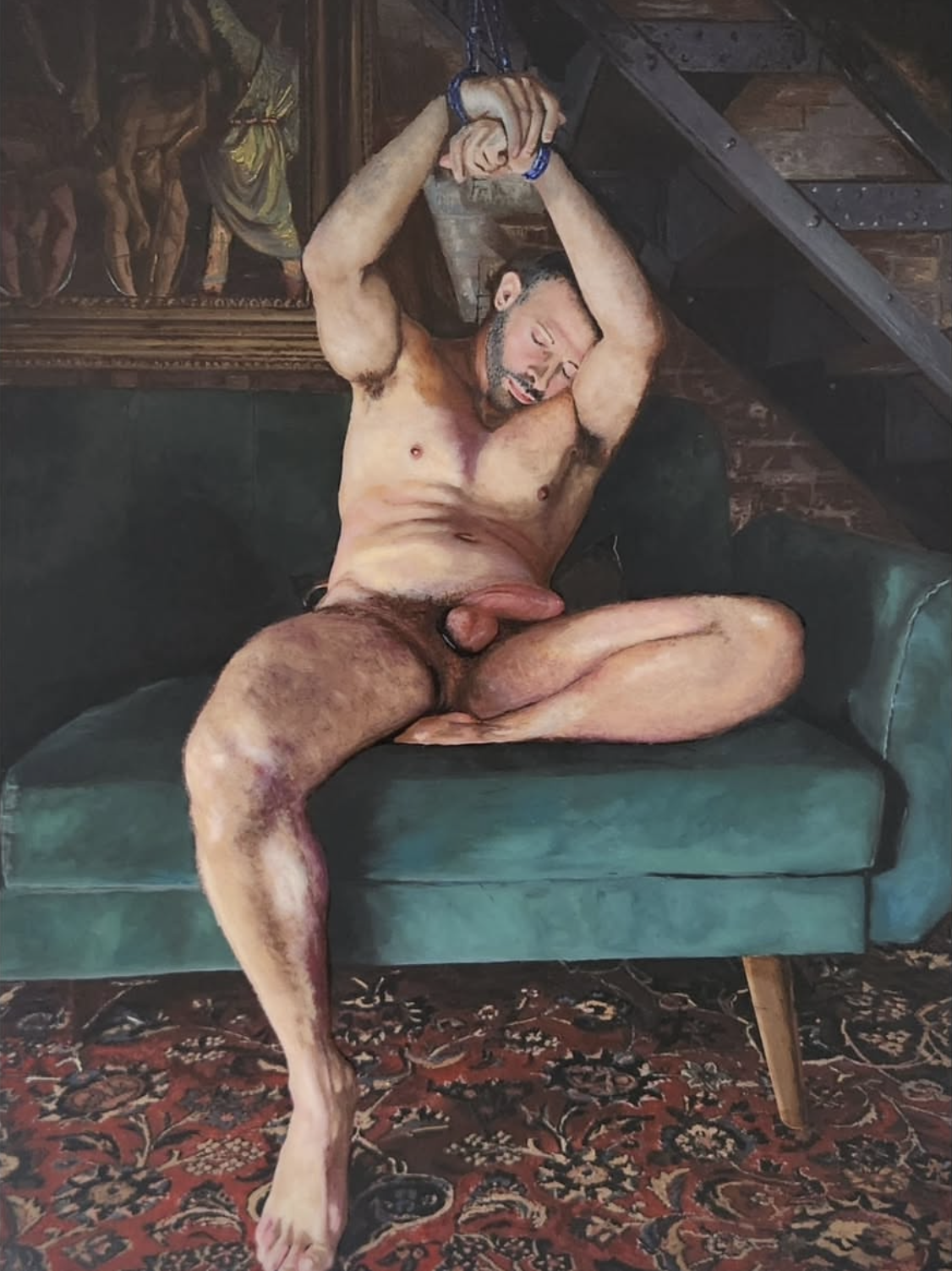
“Saint Sebastian bound ready for martyrdom” Oil on board
