
DR. LUDOVICO PALLA: Looksmaxxing, Male Beauty Standards and the Truth About Cosmetic Surgery
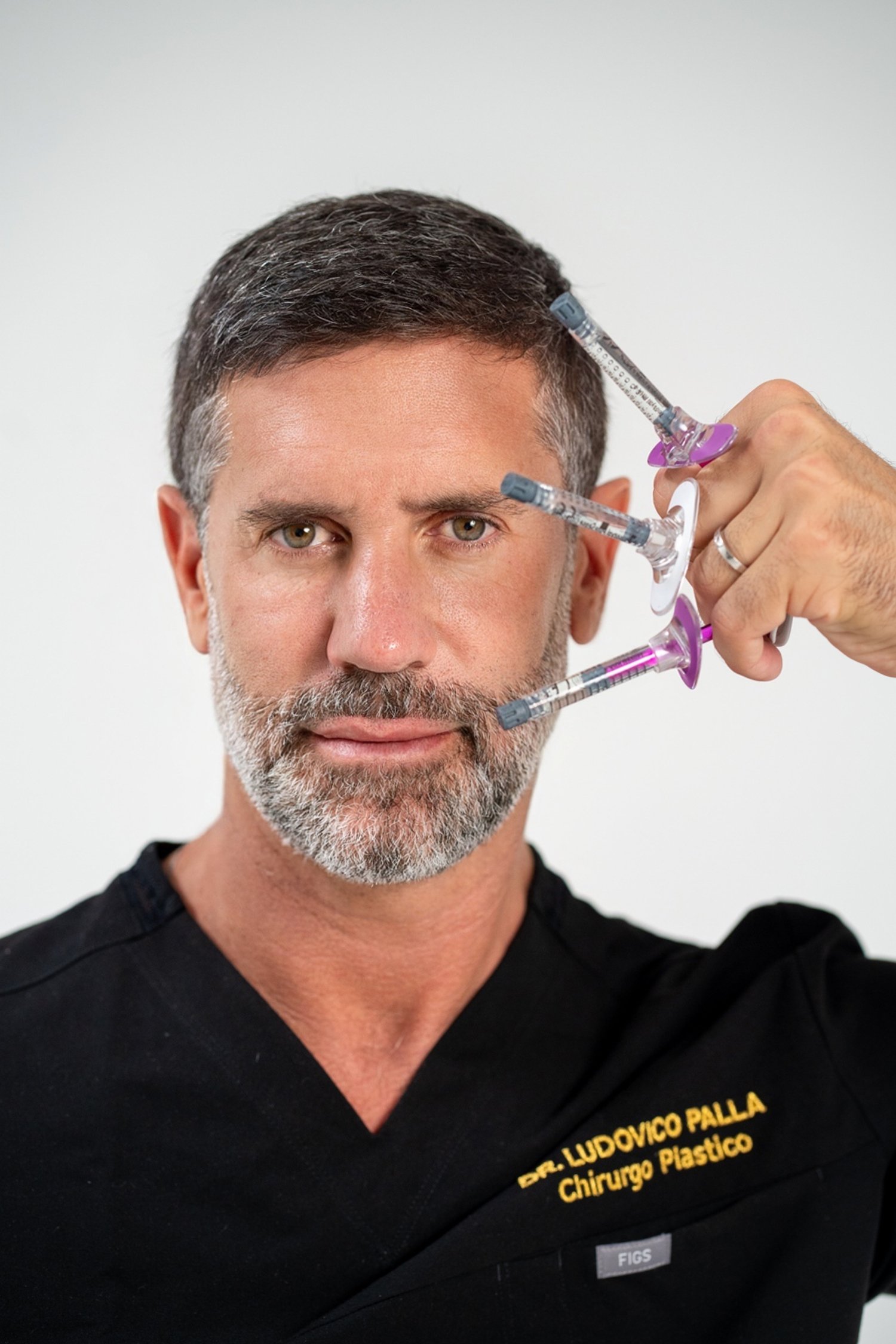
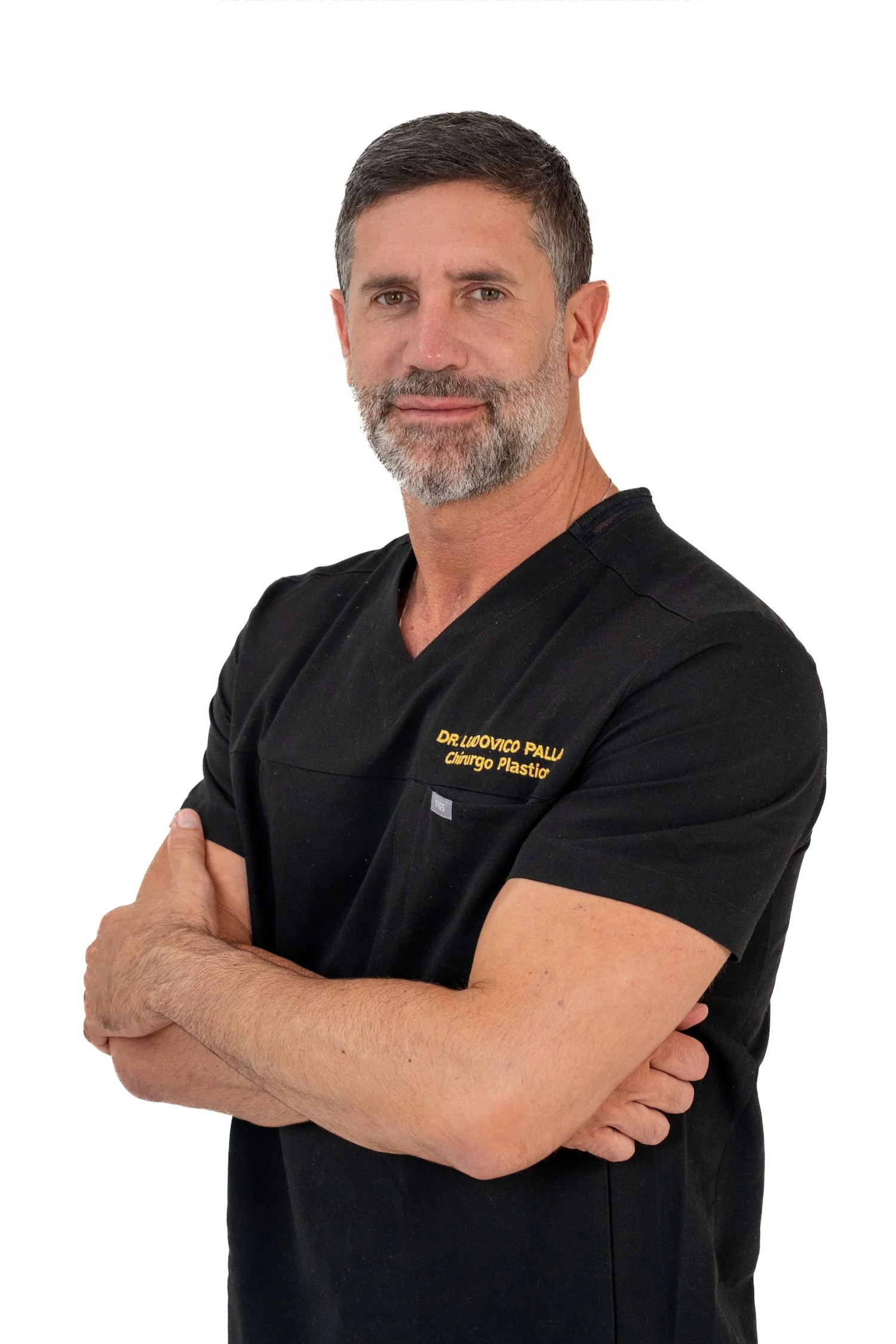
The word “looksmaxxing” started as an internet niche. Today it is a multi-billion-dollar conversation happening on TikTok, in DMs, and increasingly inside aesthetic clinics. We sat down with Dr. Ludovico Palla — specialist in plastic, reconstructive and aesthetic surgery with over fifteen years of experience between Rome and Milan, trained at Sapienza and at the prestigious Clinica Planas in Barcelona — to cut through the noise. What is actually driving young men to optimize their faces? What can surgery do, and what should it never try to do? And where does the line fall between healthy improvement and quiet obsession? His position is clear from the first minute: “Beauty is elegance and harmony. We are not here to create circus phenomena.”
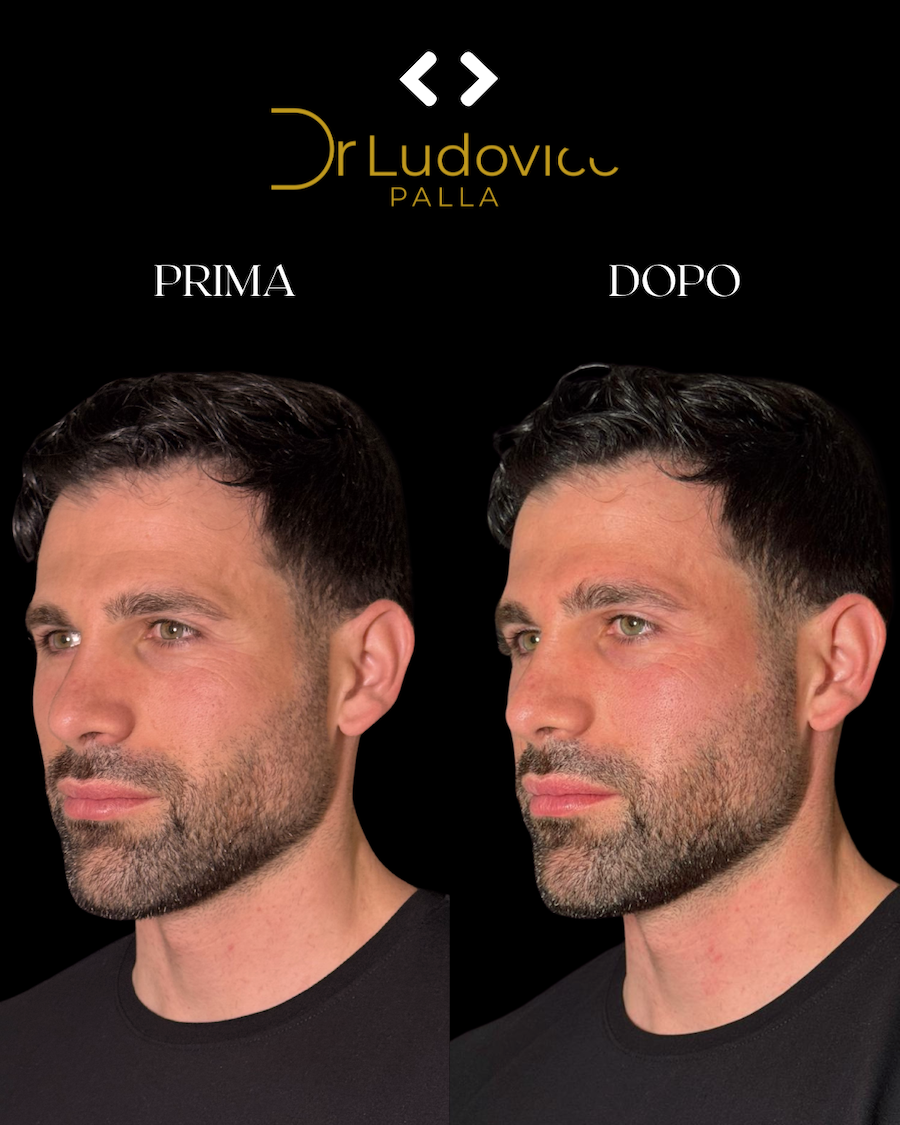
Before and after
GWF: “Looksmaxxing” has exploded online, especially among younger men — from your perspective as a plastic surgeon, what is really driving this trend right now?
Several forces are colliding at once. Men spend more time looking at themselves than any generation in history — front cameras, video calls, dating apps. That kind of constant self-scrutiny simply didn’t exist before. On top of that, algorithms have built a 24/7 comparison engine that ranks faces with brutal precision: AI rating apps, before-and-after reels, anatomical breakdowns of celebrities. And finally, men have been given permission to care about how they look — but without a real roadmap. They reach for the loudest voices online, which are usually the most extreme. I see it every day in consultation: the demand is real, the curiosity is healthy, but the cultural framing is often toxic. Looksmaxxing is filling a vacuum that culture left open for decades, and it’s our responsibility — surgeons and media — to fill it with better information.
GWF: How would you define “looksmaxxing” in a medical and aesthetic context, beyond the internet buzzword?
In a clinical setting I think of it as a spectrum. On one end you have what I’d call optimization: sleep, training, nutrition, skincare, grooming, posture — the foundations. In the middle, non-surgical aesthetics: injectables, lasers, hair restoration. At the far end, structural surgery: rhinoplasty, genioplasty, orthognathic procedures, sometimes facial implants. Looksmaxxing online tends to flatten all of this into a single arms race. My job is to put it back on a spectrum and help the patient understand which level actually addresses their goal. Most of the time, the honest answer is several steps below what they came in asking for. I tell my patients: surgery should be the conclusion of a conversation, never the starting point of one.
GWF: Are the men coming to your clinic today different from five or ten years ago — in terms of what they want to change or improve?
Dramatically different. They’re younger, more articulate about anatomy, and far less embarrassed. A decade ago a man in his thirties would whisper about wanting to “fix something.” Today a 22-year-old sits down with reference photos and talks to me about canthal tilt, maxillary projection, the ogee curve. The vocabulary has changed. What hasn’t changed is the underlying need — they want to feel at home in their own face. I understand that feeling personally: as a child I had a septoplasty after an accident, and it shaped how I saw my own profile for years. That experience is partly why I became a surgeon. The challenge today is that more information doesn’t always mean better decisions. Sometimes it means more anxiety dressed up as expertise.
GWF: Social media often promotes very specific male beauty standards — how realistic are these ideals from a surgical standpoint?
Most of those faces are a combination of genetics, lighting, lens compression, retouching and filters — sometimes all five in the same image. Surgery cannot give you someone else’s bone structure, skin quality and proportions all at once. It can refine, rebalance, bring features into harmony. What it cannot do is transplant an identity. I have a phrase I repeat often: we are not here to create circus phenomena. Television and reality shows have pushed models of beauty that have nothing to do with beauty — they highlight people who often display serious signs of body dysmorphia. Real aesthetic surgery is about elegance and proportion. When a patient shows me a celebrity reference, I never ask “can we achieve this?” I ask “what specifically about this face speaks to you?” Nine times out of ten the answer is something we can actually work with. The remaining one in ten is where honesty matters most.
GWF: Where do you draw the line between healthy self-improvement and unhealthy obsession when it comes to appearance?
The line is rarely about the procedure itself — it’s about the relationship the patient has with their reflection. Healthy improvement has a defined goal, a sense of proportion, and a life that continues normally around it. Obsession looks like this: nothing is ever enough, every new procedure reveals a new flaw, and the rest of life starts narrowing around the mirror. We screen carefully for signs of body dysmorphic disorder. If someone shows those signs, the ethical answer isn’t surgery — it’s helping them find the right kind of support first. This is exactly where low-cost, volume-driven clinics fail their patients. Plastic surgery was born from war surgery, from reconstruction — the aesthetic side came later. It remains a noble profession, and a good surgeon has to be willing to say no, and to say it kindly.
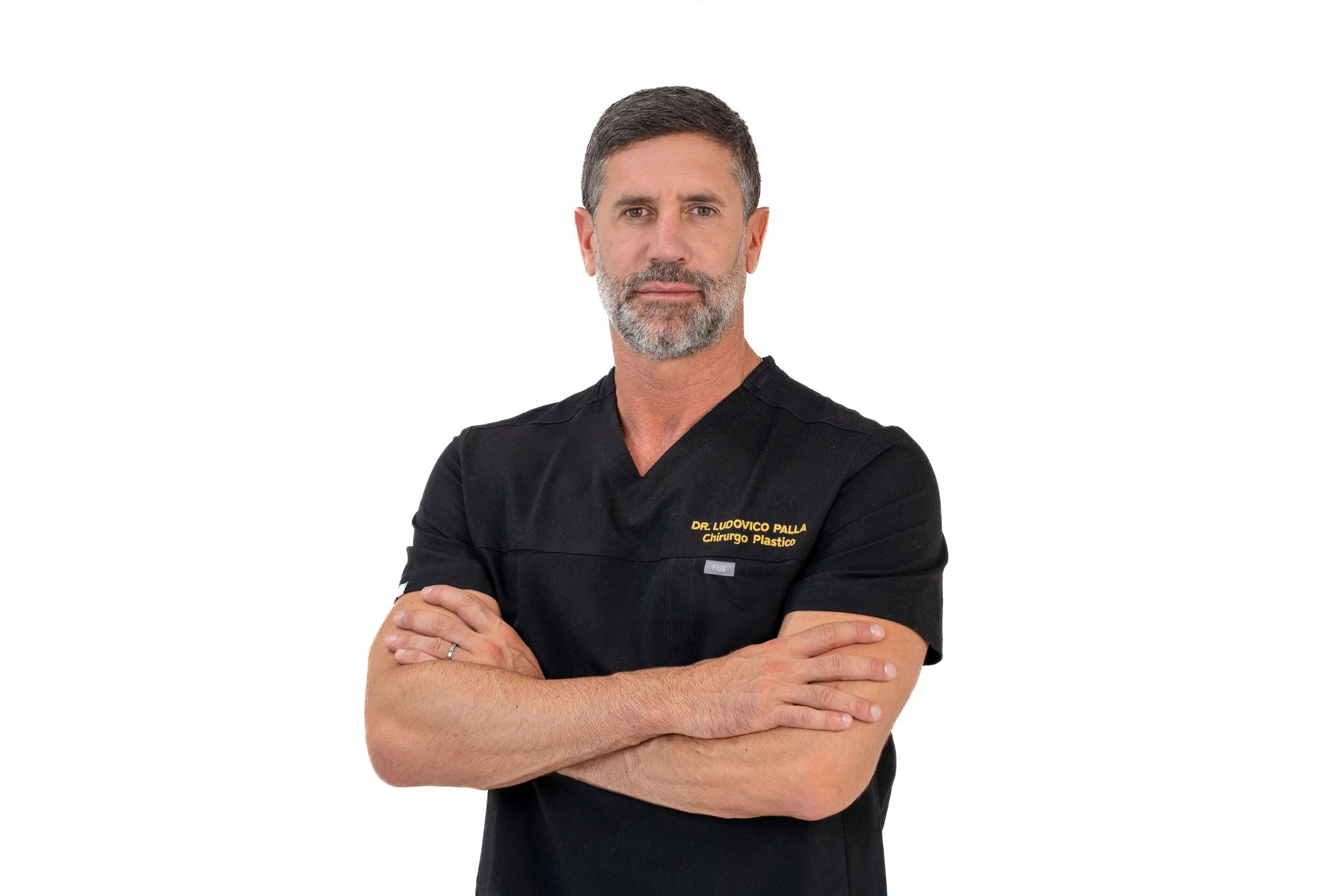
GWF: What are the most requested procedures among men today — and what do those choices say about modern masculinity?
Rhinoplasty is still number one — and it remains, in my view, the most defining facial operation we perform on men. Then jawline definition: filler, chin implants, or in selective cases orthognathic surgery. Gynecomastia correction is a constant. Hair restoration has exploded. The eye area is rising fast — blepharoplasty, brow positioning, under-eye work. What this tells me is that men today want to be seen, not hidden. They’re not trying to look harder or more aggressive — they’re trying to look rested, defined, intentional. Modern masculinity is less about performing toughness and more about looking like the most considered version of yourself. That’s a quietly positive cultural shift, as long as the execution respects the individual face.
GWF: Many “looksmaxxing” communities focus heavily on facial structure (jawline, eyes, symmetry). How much can these actually be changed safely and effectively?
More than people think, and far less than the internet promises. The nose is the central architectural element of the face — a well-planned rhinoplasty can transform the perceived harmony of the entire profile, and it’s the procedure I’ve refined the most over my career. Jawline: filler and masseter Botox can refine the lower third without surgery; a chin implant or a genioplasty can change projection permanently and elegantly; orthognathic surgery can reshape the entire midface and jaw, but it’s a major operation with real recovery, real risks, and a strict medical indication. Eyes: canthoplasty, brow lift and blepharoplasty can meaningfully shift the expression of the eye — but the “hunter eye” transformation you see online is often staged. There’s a sentence one of my patients said to me that I never forget: “Doctor, I don’t want to become another person.” That’s the philosophy. What looks correct surgically isn’t always correct aesthetically. The face has to remain yours.
GWF: Do you think the normalization of aesthetic procedures among men is empowering — or does it create new pressures?
Both, at the same time. It’s empowering because men no longer have to live with something that genuinely bothers them every day just to fit a script about masculinity. That’s real progress. But normalization also imports a problem women have lived with for a long time — the constant low-grade pressure of being looked at and measured. For gay men specifically, that pressure can be sharper, because the gaze isn’t only external — it lives inside the community itself. My honest view: the procedures aren’t the issue. The culture around them is. Empowerment requires the freedom to say no as much as the freedom to say yes.
GWF: What misconceptions do men often have before considering cosmetic procedures or treatments?
Three big ones. First, that surgery will change how they feel about themselves more than how they look — it usually does the opposite. Second, that “more is better.” Stacking procedures rarely produces a more attractive result — it produces a more done result, and men, more than women, suffer aesthetically from looking overworked. Third, that injectables are temporary and surgery is permanent — both are oversimplifications. Filler can migrate and create long-term changes; well-executed surgery, paradoxically, often ages more naturally than years of unmanaged injectables. And one more I always add: price. A surgeon’s fee is the easiest thing to compare and the most dangerous metric to choose by. Aesthetic surgery is not a commodity.
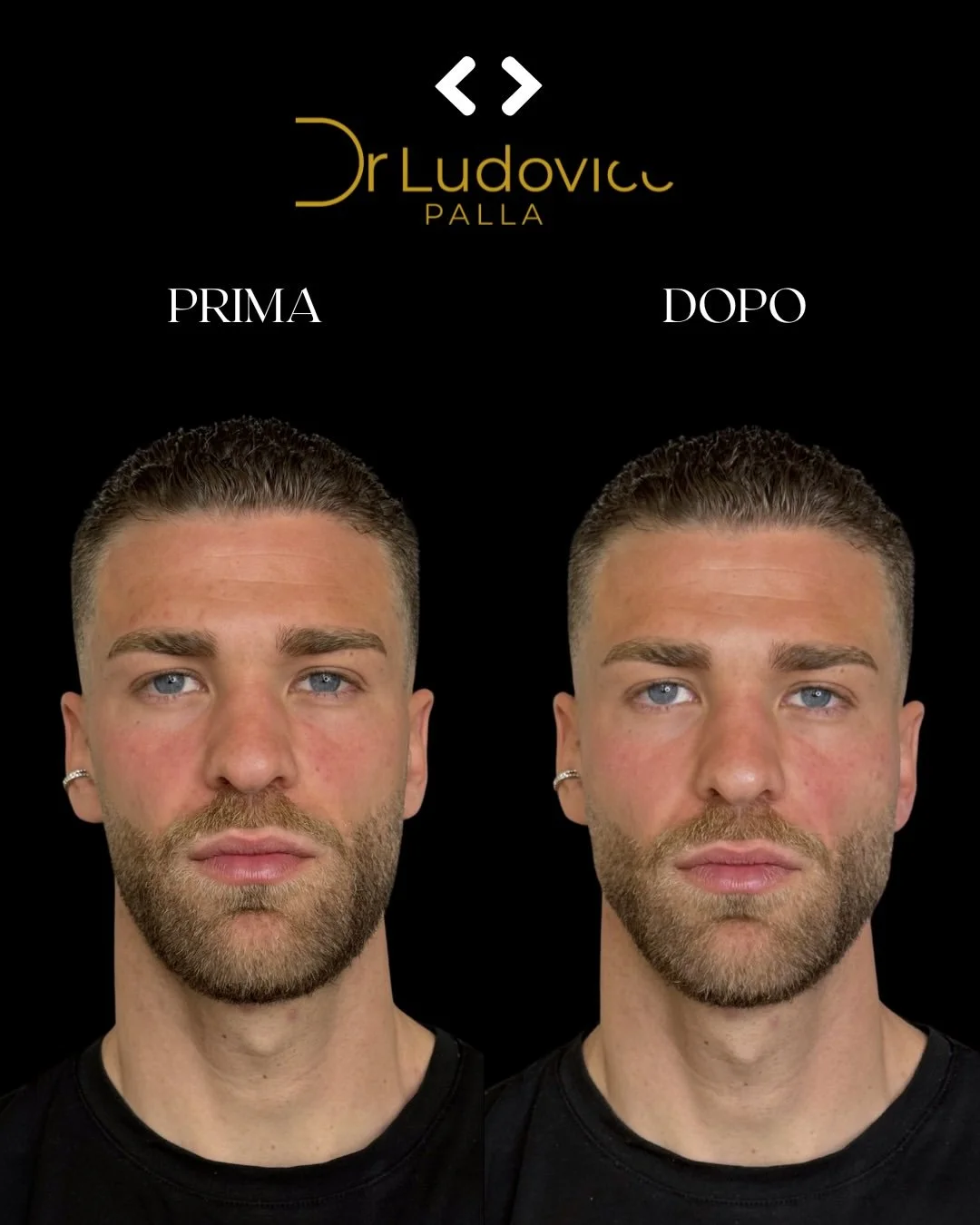
Before and after
GWF: For someone curious about improving their appearance but feeling overwhelmed by trends, what would be your most honest, grounded first advice?
Start with what’s free. Sleep, training, nutrition, sun protection, a basic skincare routine, a haircut that actually suits your face. You’d be surprised how many men book a consultation when what they really needed was three consistent months of sleep. If after that you still want to explore something specific, see one good practitioner in person — not five online. Bring a clear question, not a celebrity photo. If you can’t articulate what you want to change beyond “I want to look better,” wait. Clarity is the most underrated tool in this entire conversation. And remember: your face at rest isn’t a problem to be solved. It’s the starting point. The goal of surgery isn’t to make you a different person — it’s to let the best version of you show up more easily.
ABOUT DR. LUDOVICO PALLA
Dr. Ludovico Palla is a specialist in plastic, reconstructive and aesthetic surgery with over fifteen years of experience. He graduated in Medicine and Surgery at Tor Vergata University and specialized in Plastic Surgery at Sapienza University in Rome, with further training in Milan and at the renowned Clinica Planas in Barcelona. He is a member of AICPE (Italian Association of Aesthetic Plastic Surgery), SICPRE (Italian Society of Plastic, Reconstructive and Aesthetic Surgery) and AITEB. He practices between Rome and Milan.
Follow Ludovico on Instagram @ludovicopalla.md
Website chirurgiaplasticapalla.it
Clinics: Villa Brasini Beauty Clinic — Rome (Ponte Milvio & EUR), Milan (Piazzale Francesco Baracca)


Alessio by Raffaele Iaculli Walker
